Work · Beating resistance Today’s note
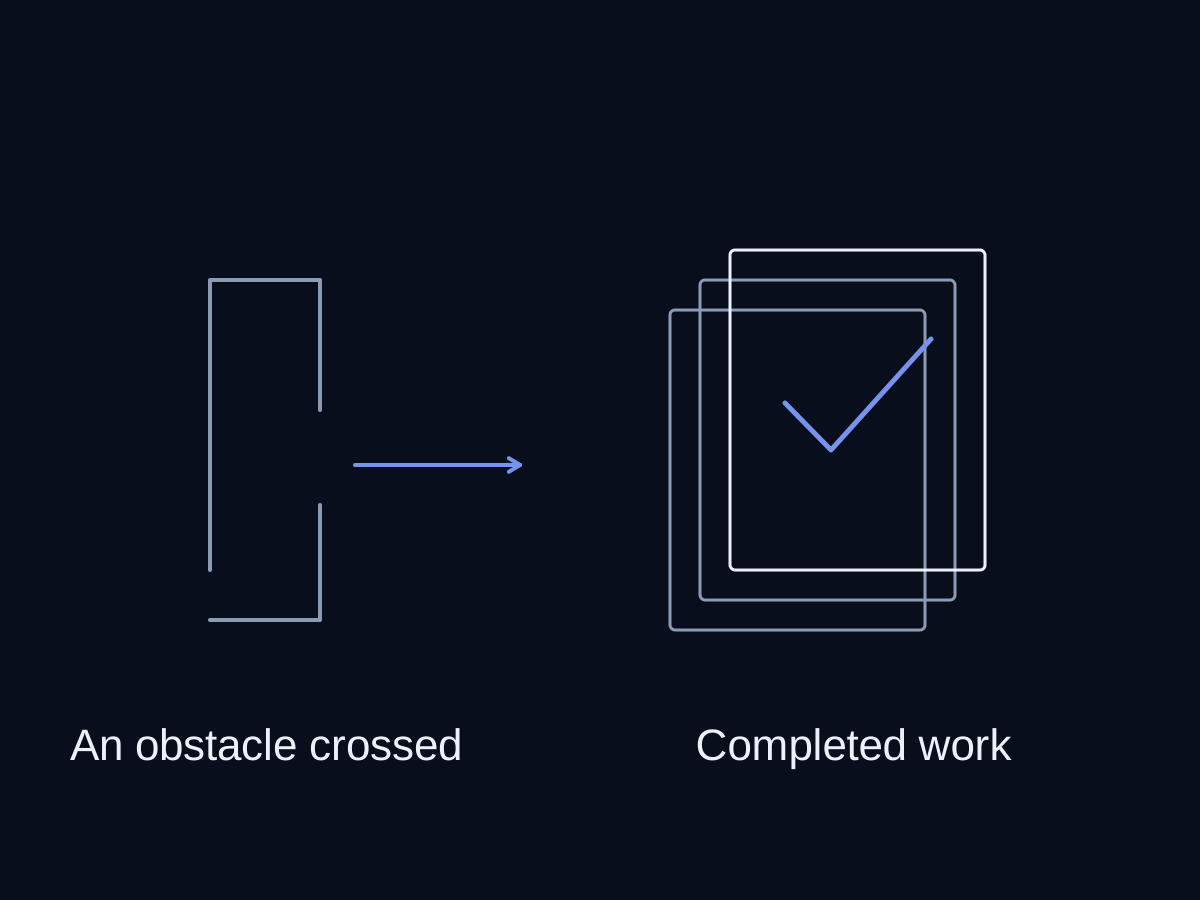
The existence of completed work shows that resistance can be overcome.
Reading note after Steven Pressfield, The War of Art
From my notebook
Notes I’ve taken over the years.
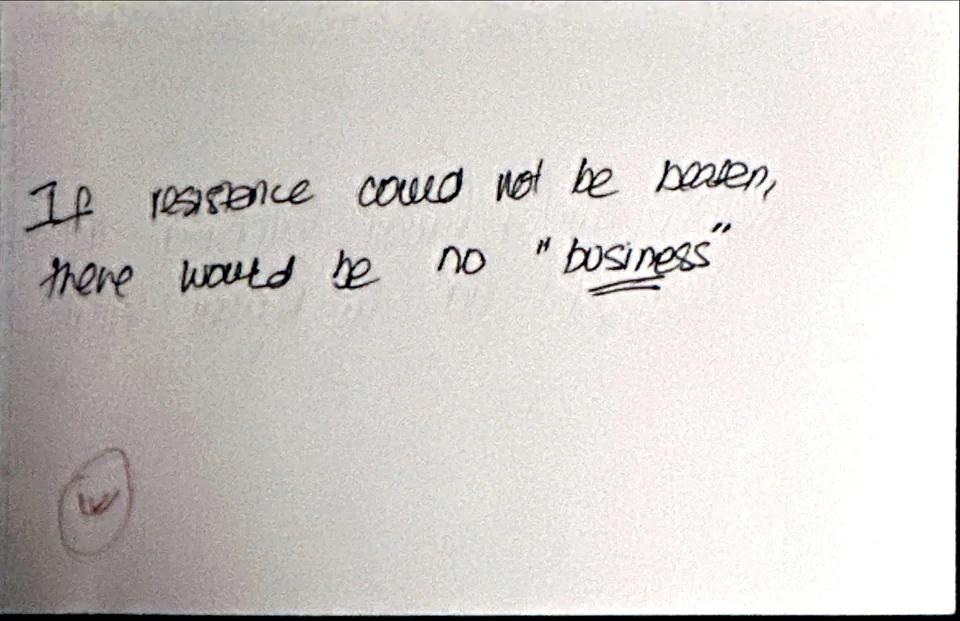
Work · Beating resistance Today’s note
The existence of completed work shows that resistance can be overcome.
Reading note after Steven Pressfield, The War of Art
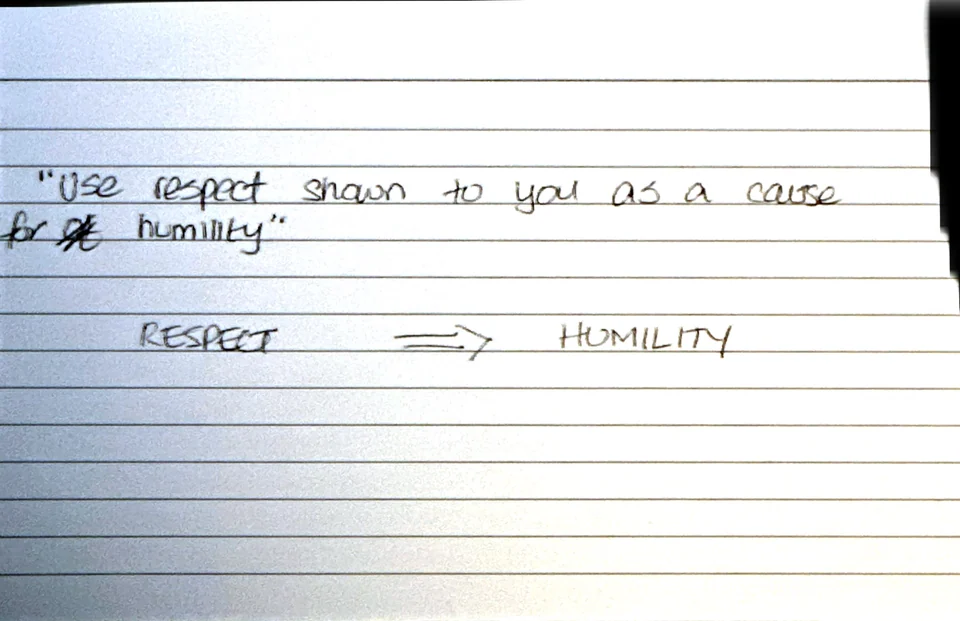
Relationships · Respect and humility Today’s note
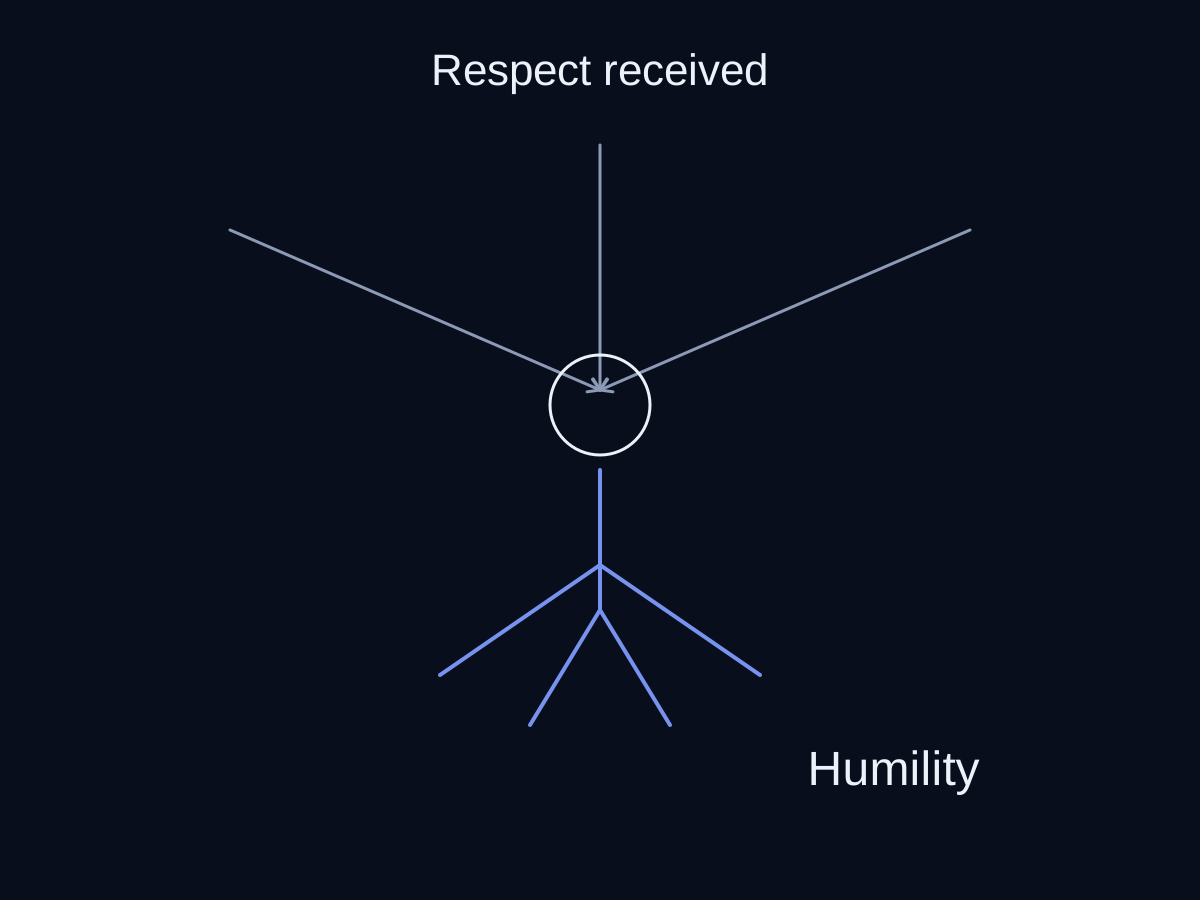
Let the respect shown to you become a reason for humility.
Collected note
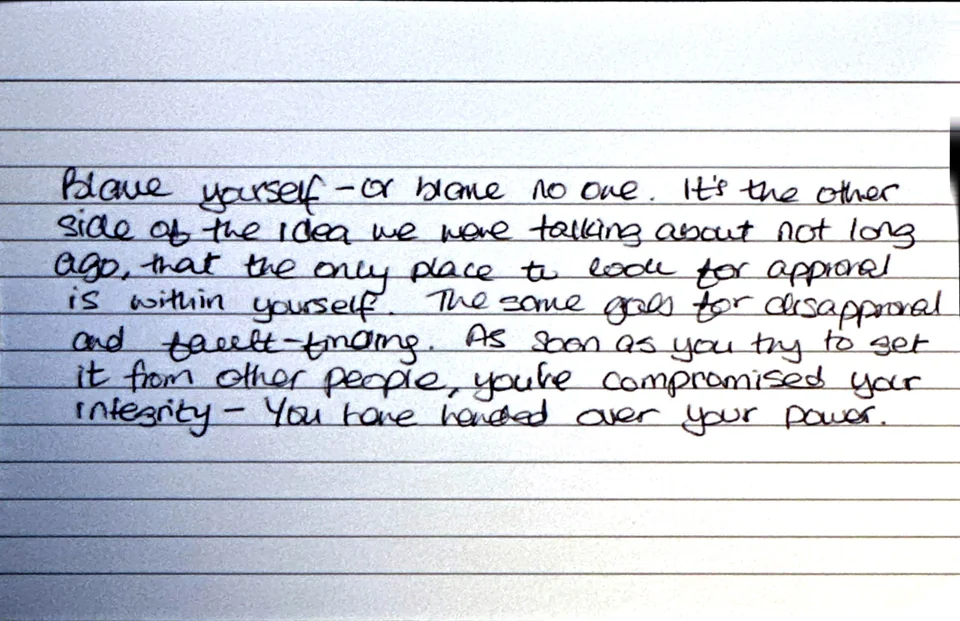
Relationships · Judging yourself Today’s note
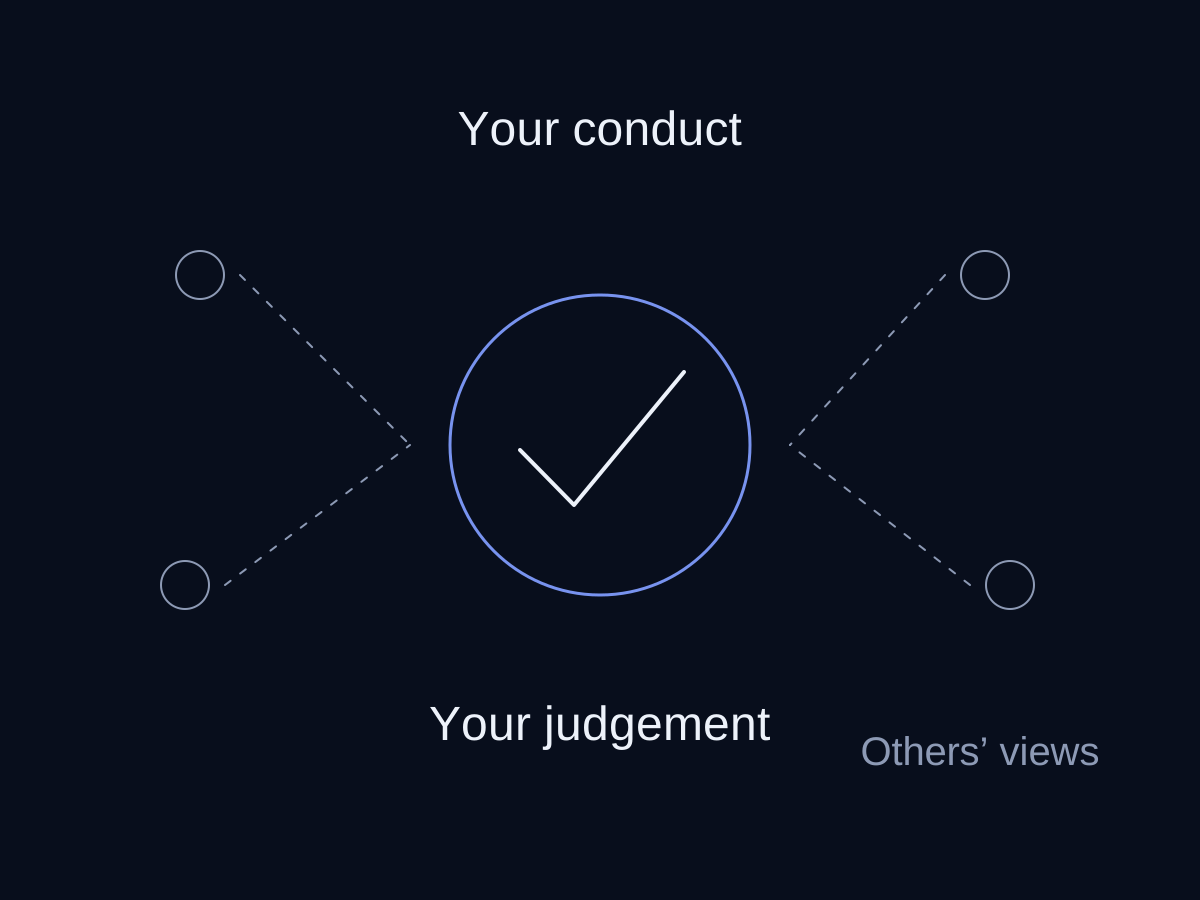
Examine your own conduct when judging approval, disapproval and responsibility. Giving other people complete authority over that judgement gives them power over you.
After Daily Stoic, Blame Yourself or No One
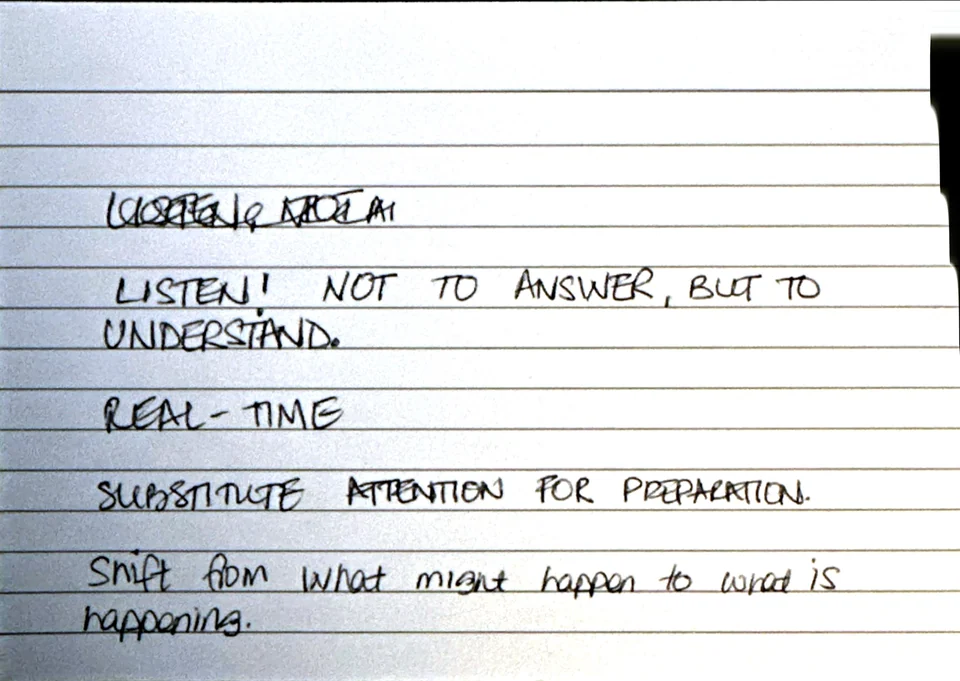
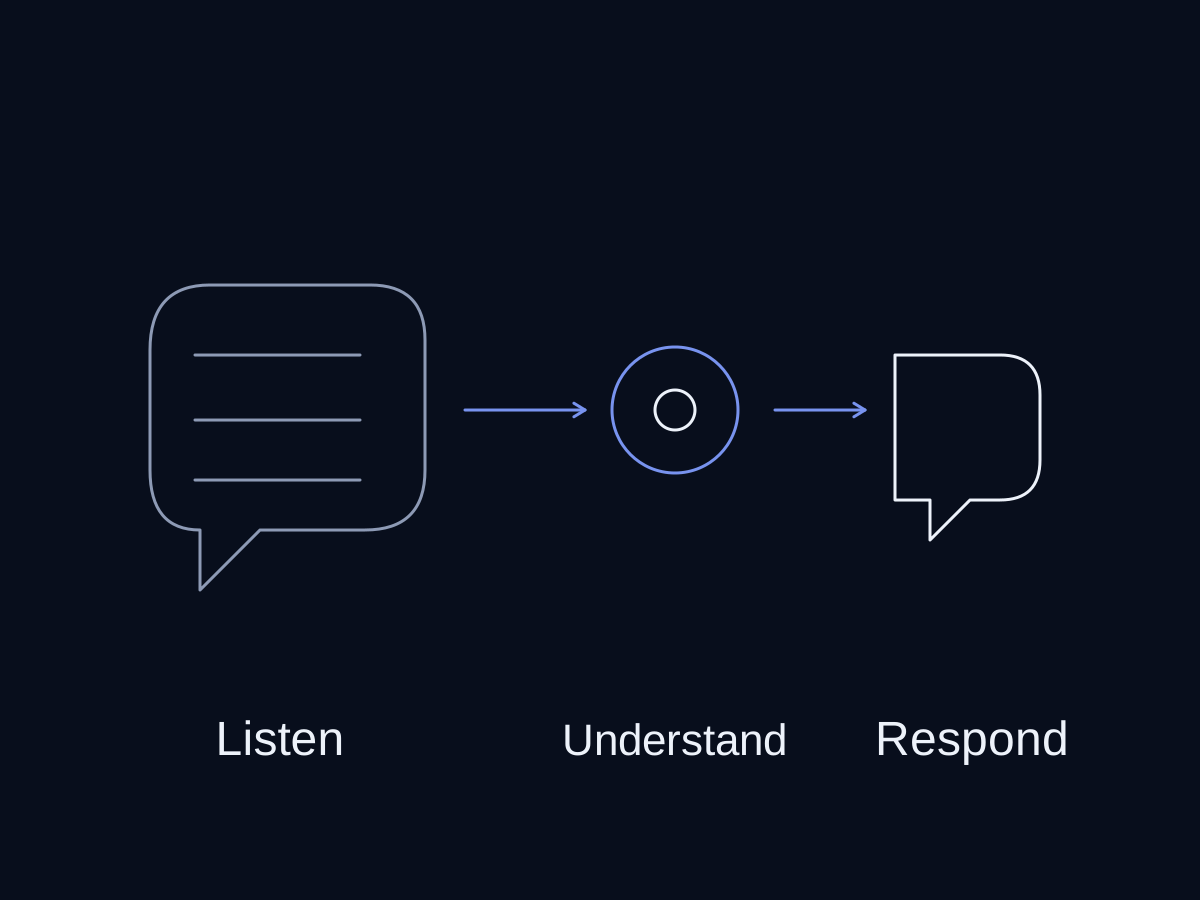
Relationships · Listen to understand Today’s note
Listen to understand. Give attention to what is happening in the conversation. Let the present moment guide your response.
Collected note
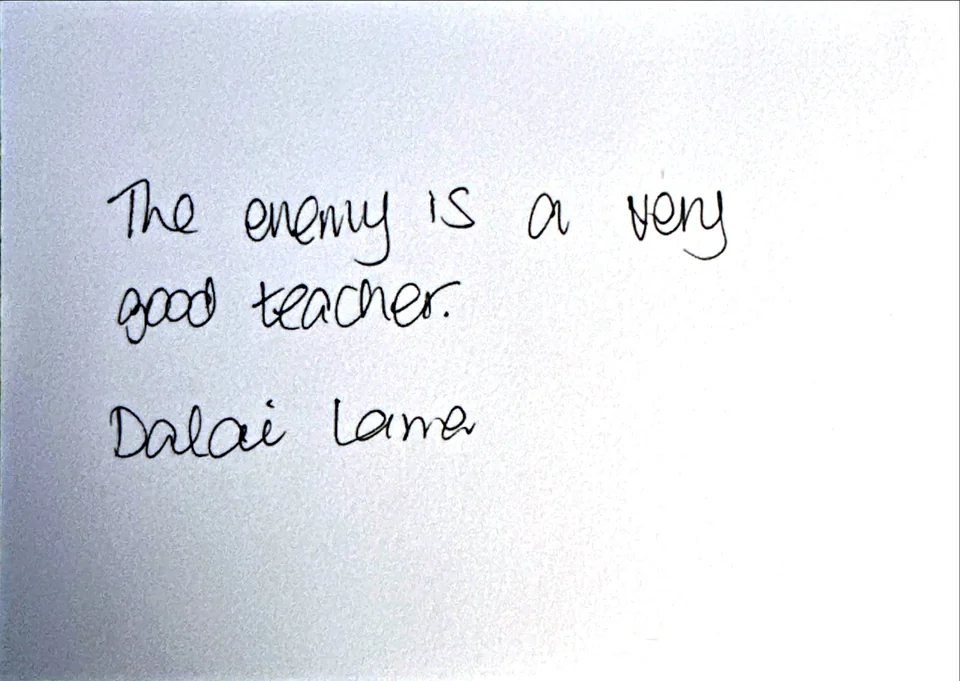
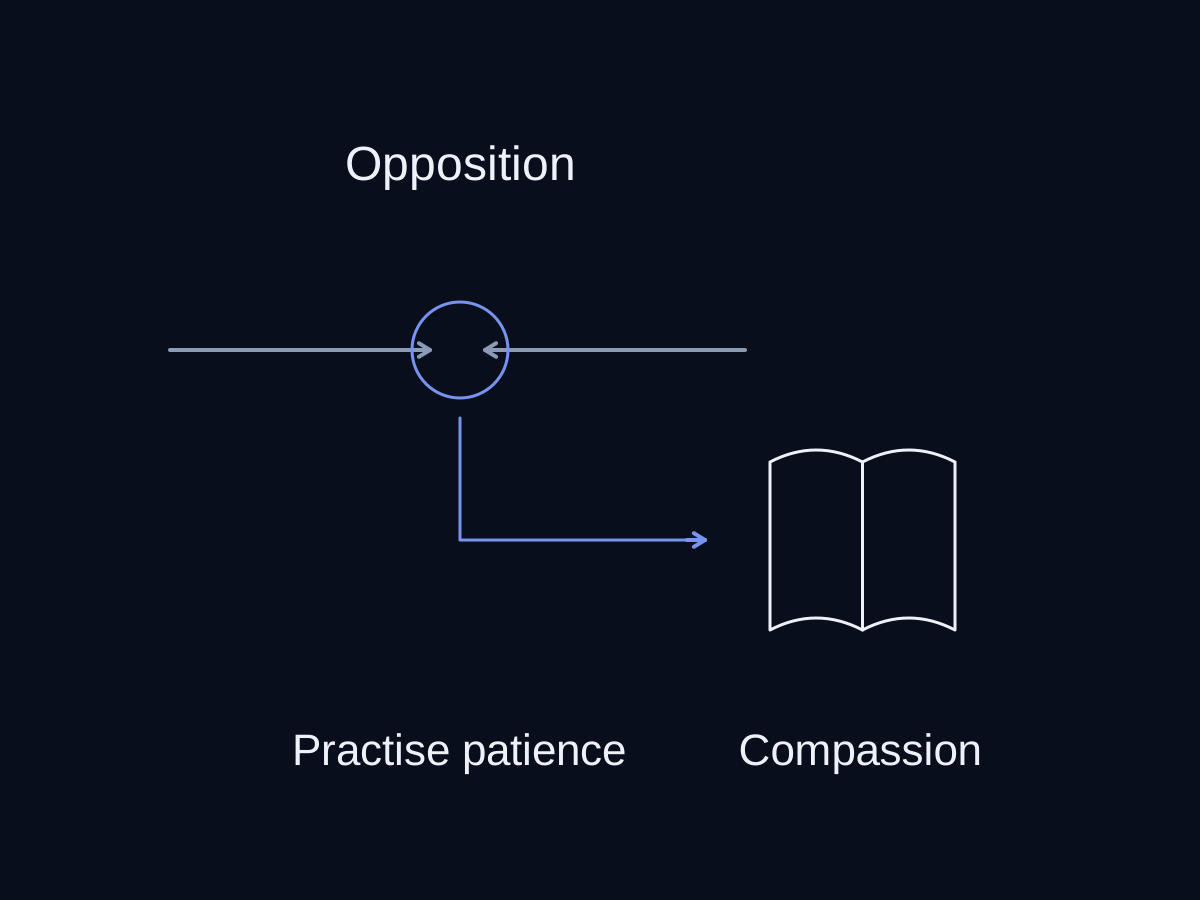
Relationships · The enemy as teacher Today’s note
An enemy can become a teacher, giving you an opportunity to practise patience and compassion.
The 14th Dalai Lama, on compassion
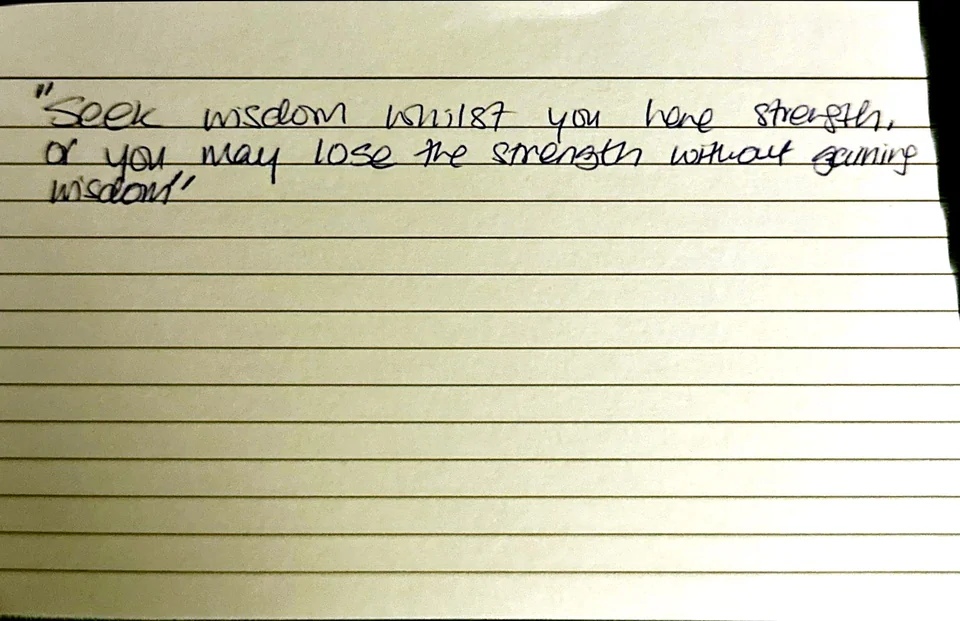
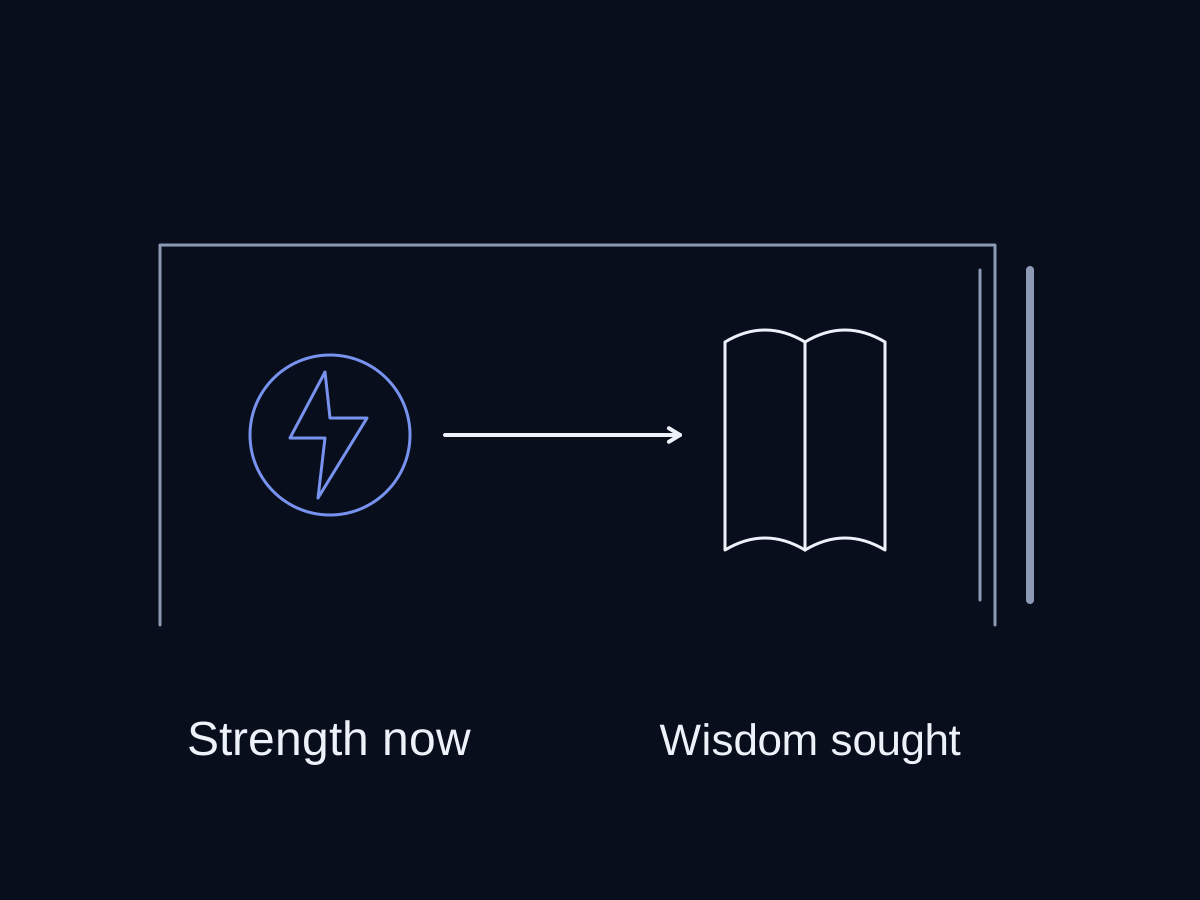
Relationships · Seek wisdom while you have strength Today’s note
“Seek wisdom whilst you have strength, or you may lose the strength without gaining wisdom.”
Collected note
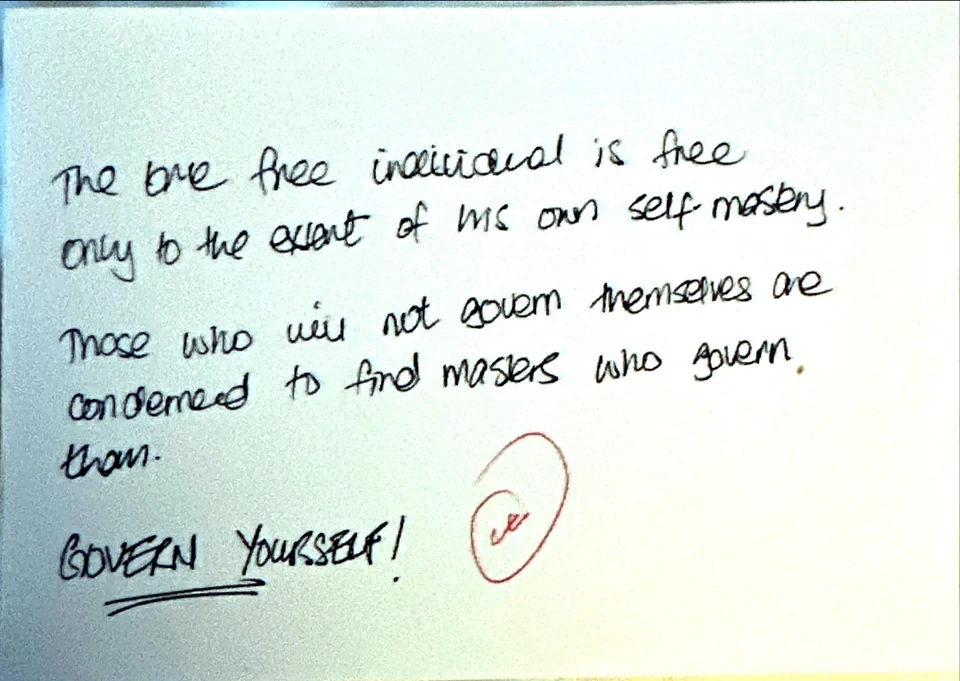
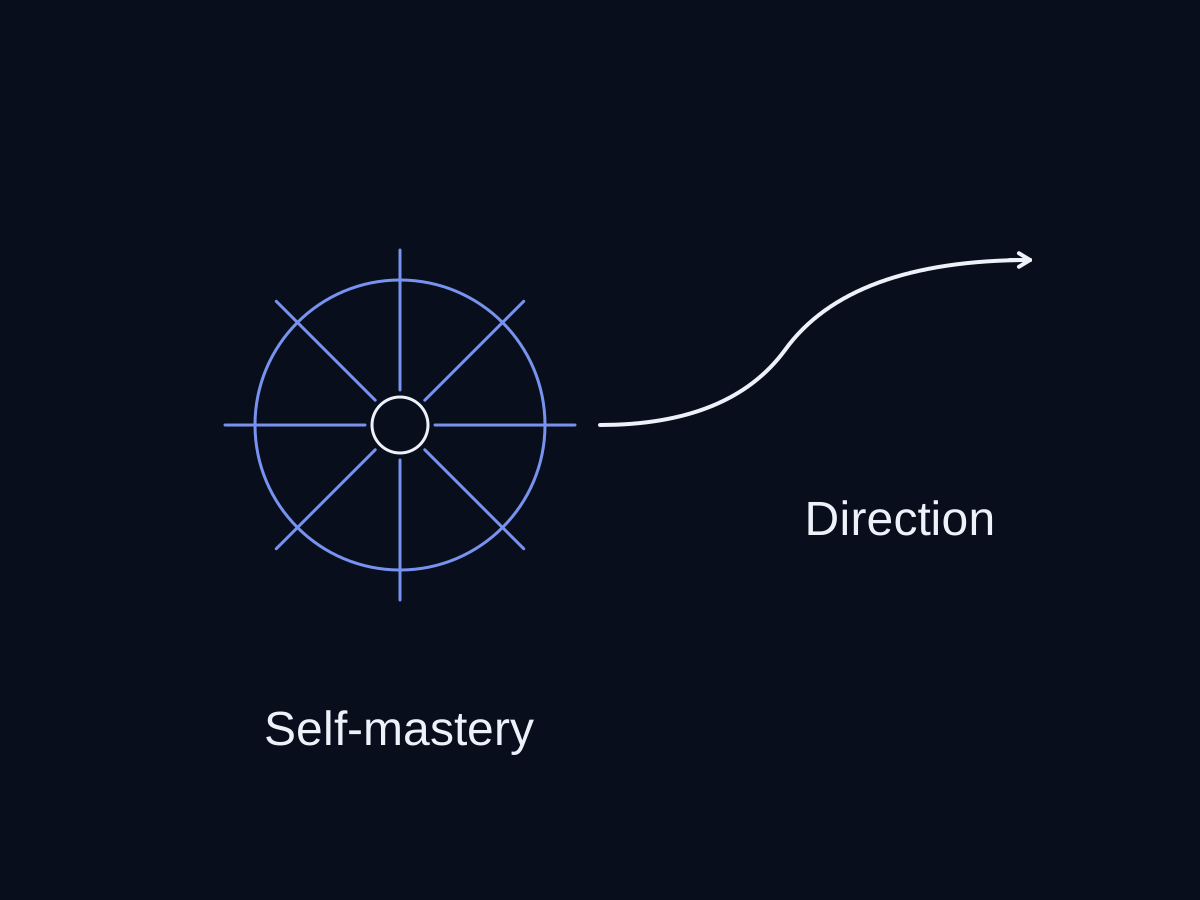
Perspective · Govern yourself Today’s note
Self-mastery gives you more freedom to direct your own life. Govern yourself.
Collected reading note; precise source unconfirmed
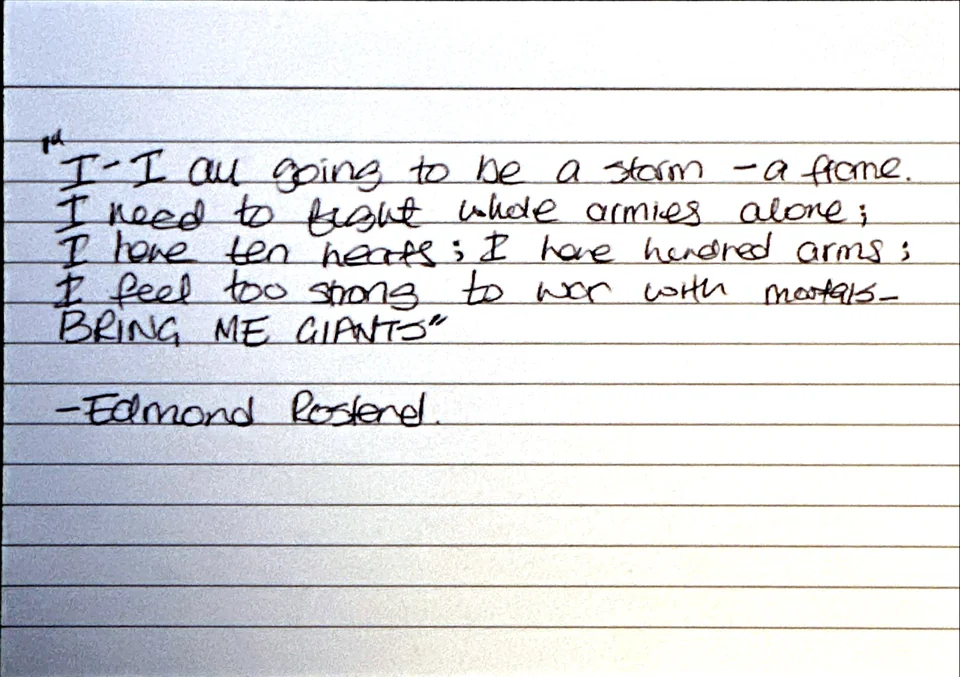
Perspective · Bring me giants Today’s note
Cyrano imagines meeting enormous challenges with enormous energy. The card keeps his cry for giants as an image of ambition.
After Edmond Rostand, Cyrano de Bergerac; Brian Hooker translation
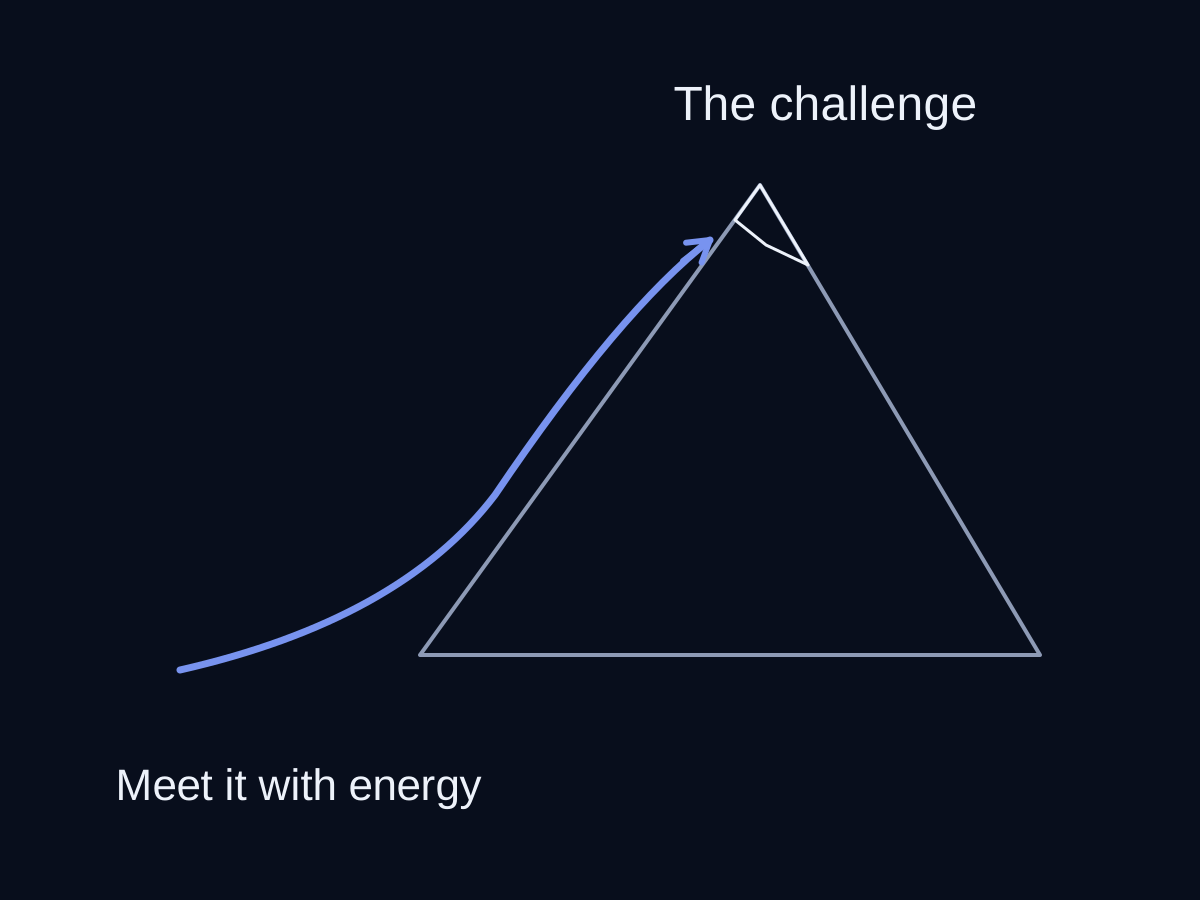
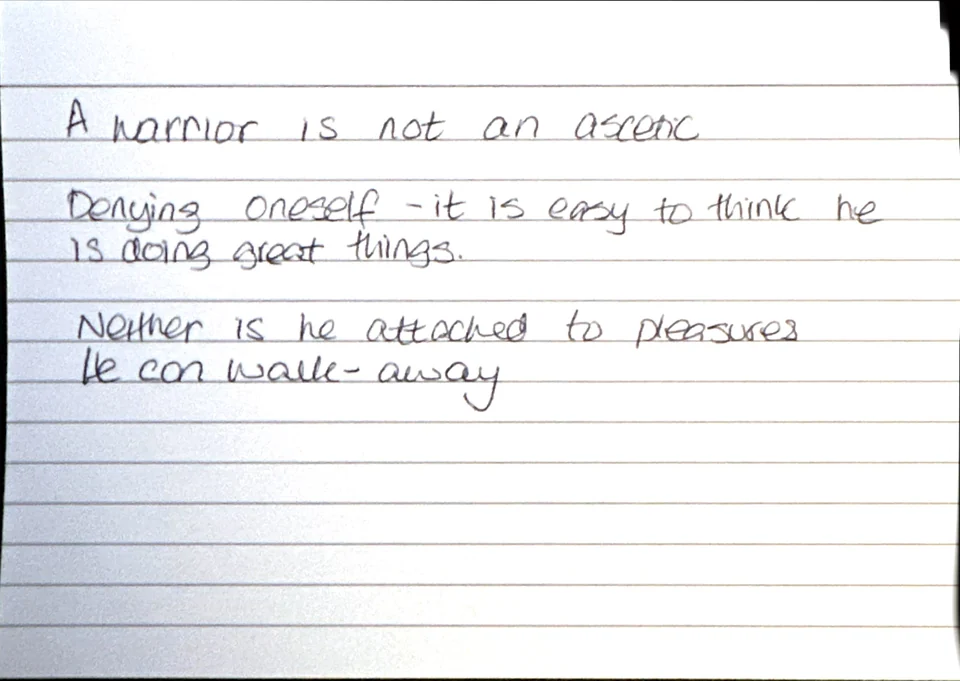
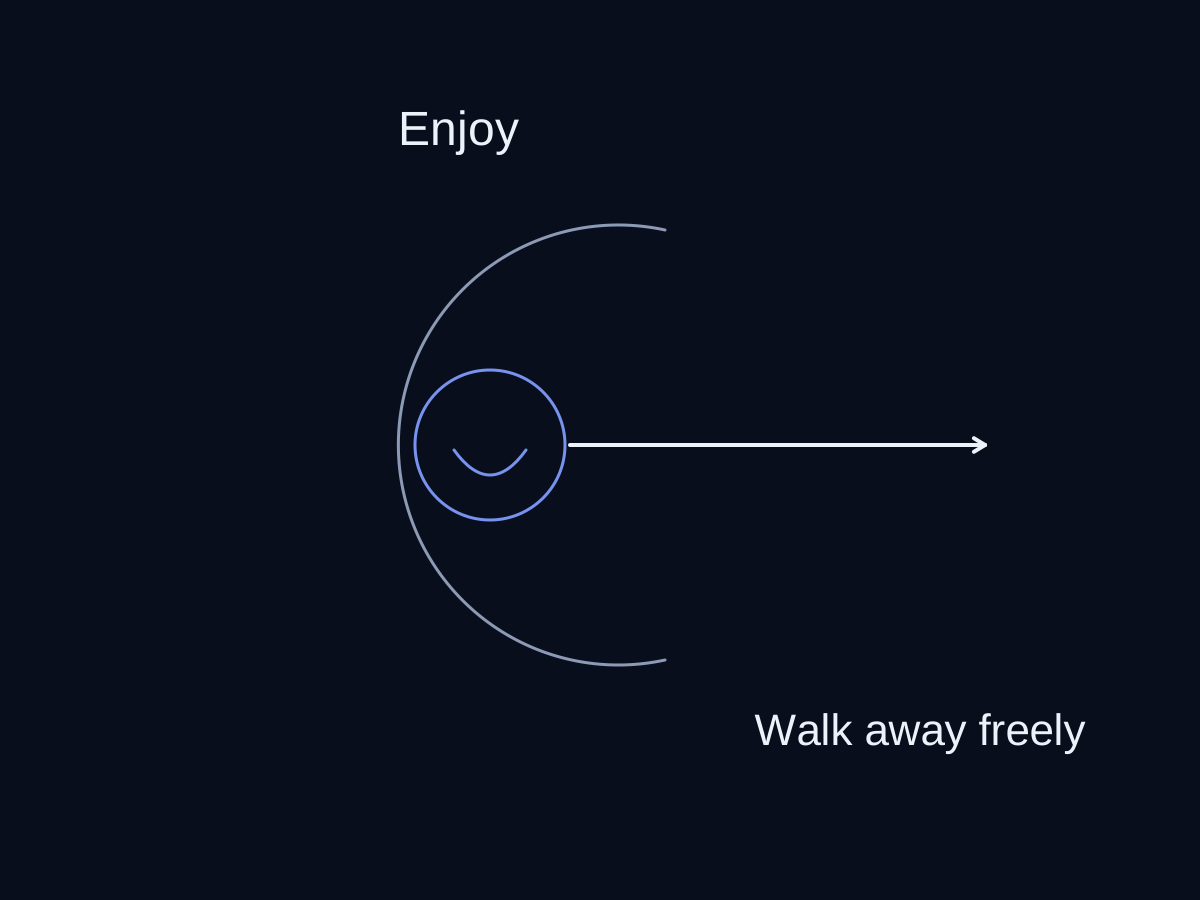
Perspective · Enjoyment and freedom Today’s note
Enjoyment and freedom can coexist. A warrior can enjoy pleasures and still be able to walk away from them. Self-denial alone can become another source of pride.
Collected note
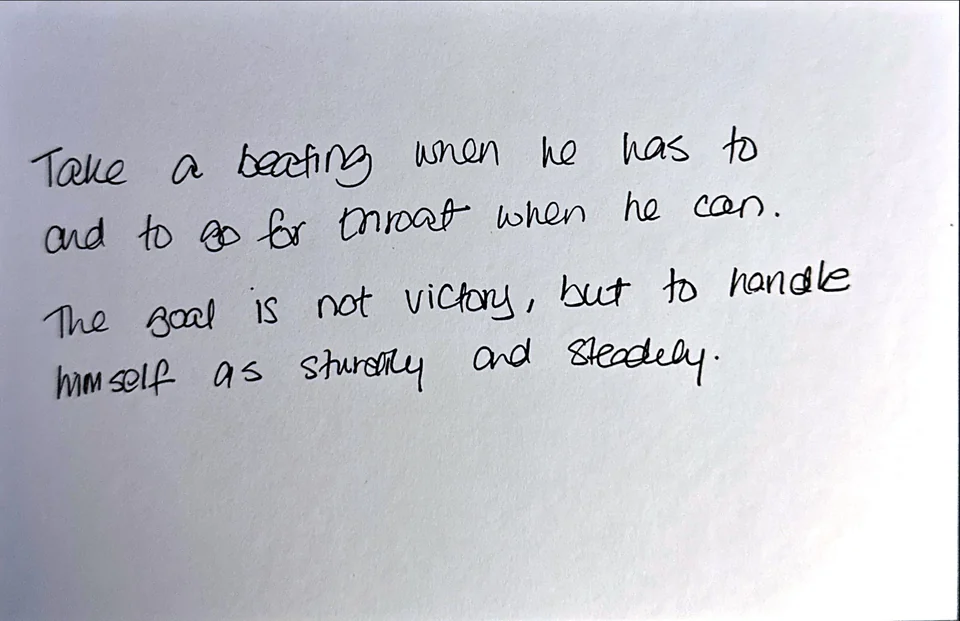
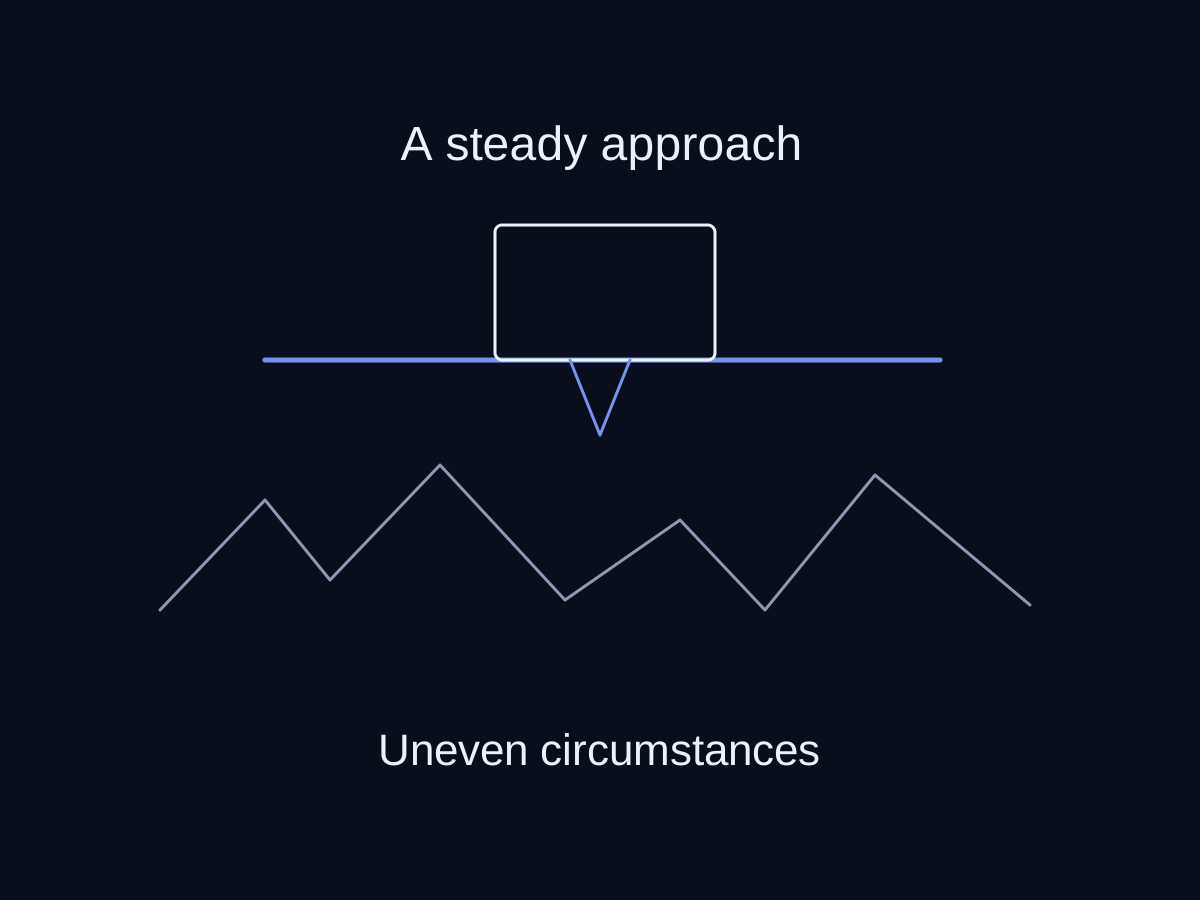
Work · Handle yourself steadily Today’s note
Handle yourself steadily through the work and its setbacks.
Reading note after Steven Pressfield, The War of Art
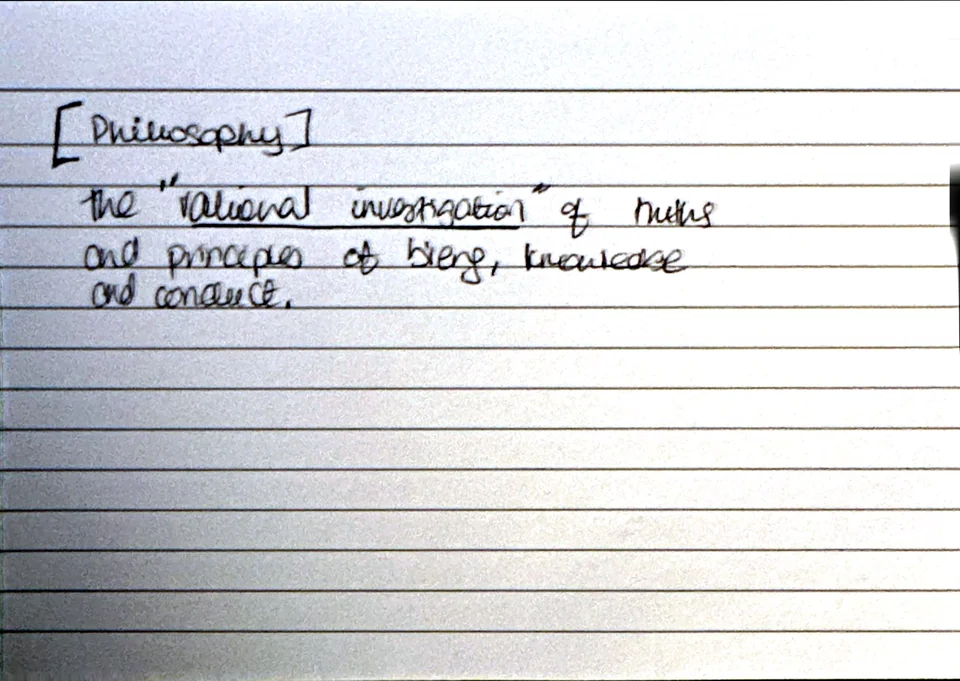
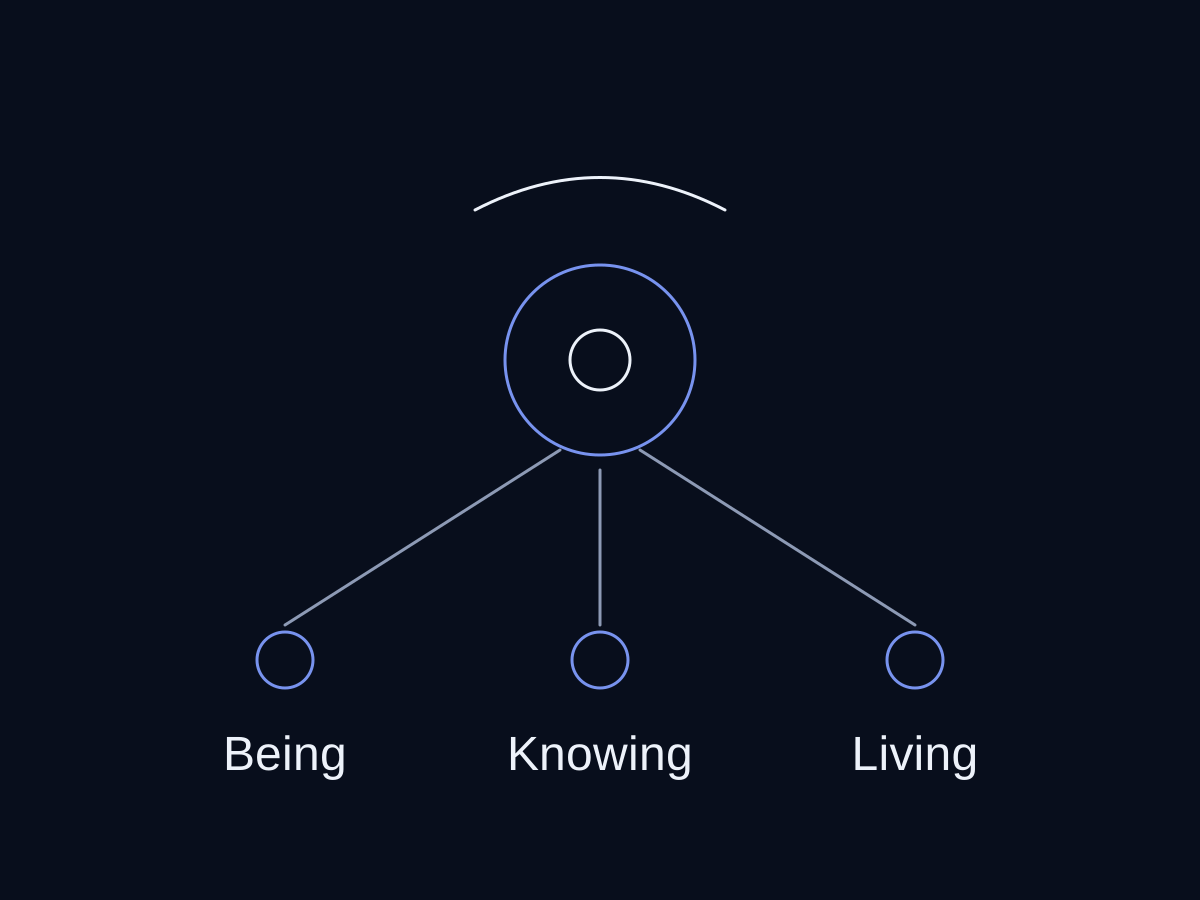
Self-understanding · Philosophy Today’s note
The rational investigation of truths and principles of being, knowledge and conduct.
Collected note
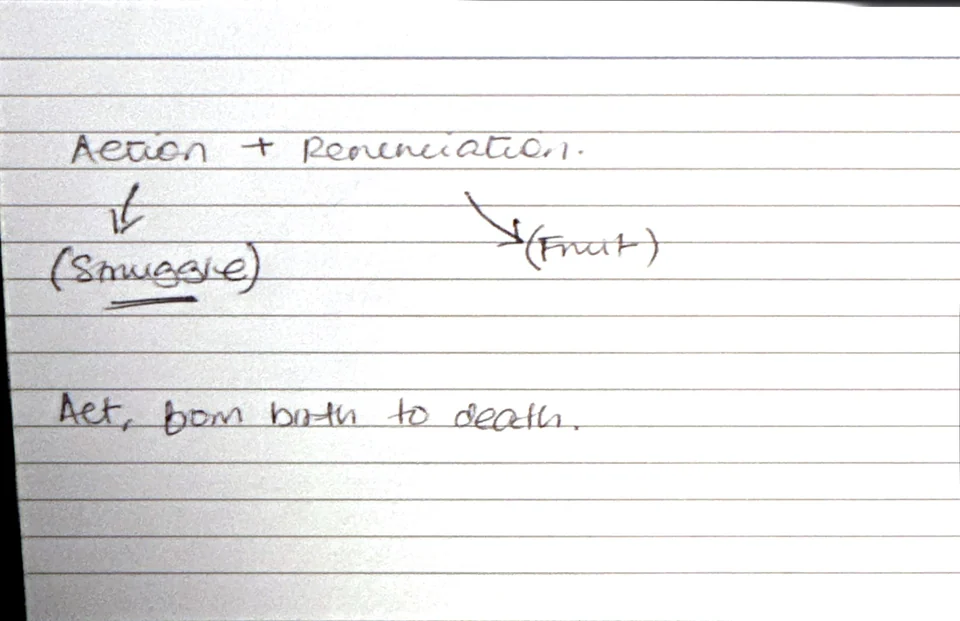
Perspective · Action and renunciation Today’s note
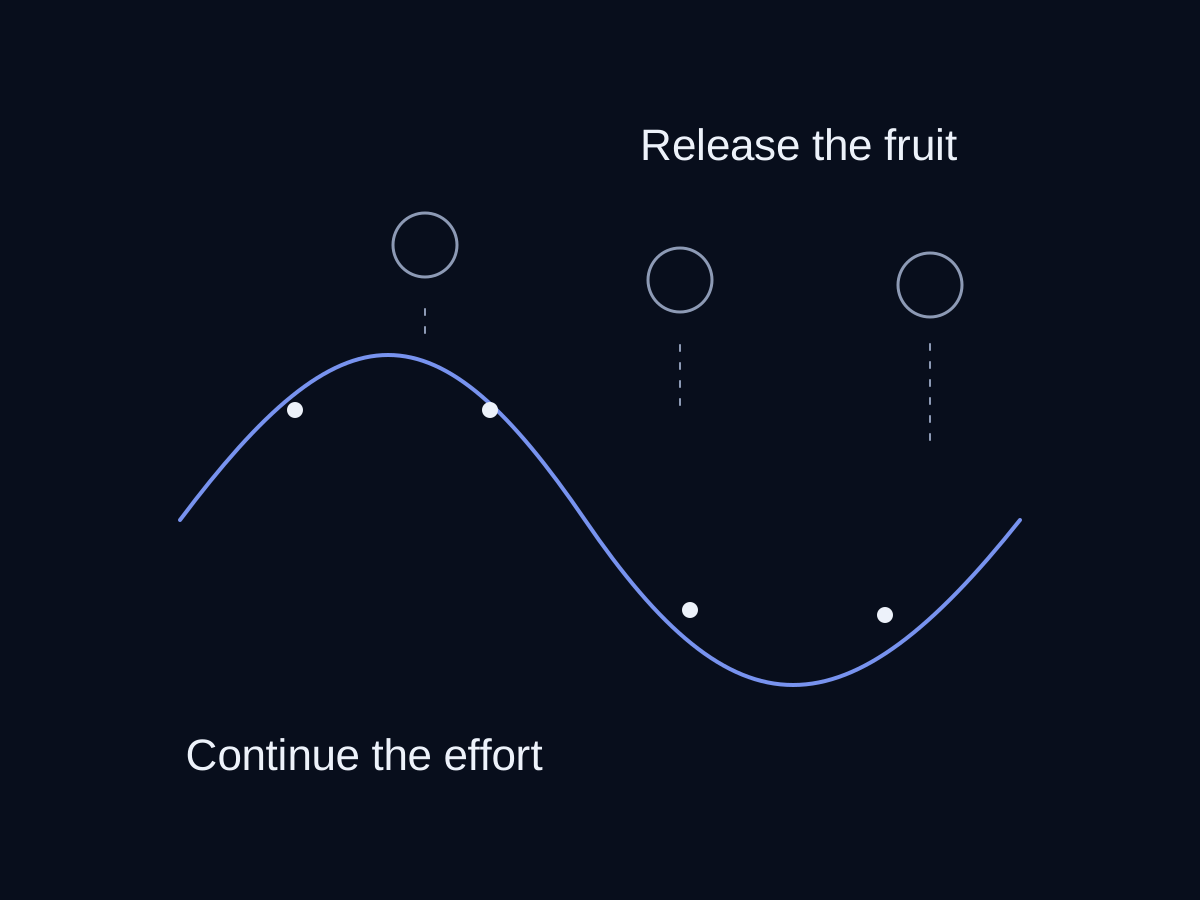
Act throughout life. Undertake the effort while loosening attachment to its fruits.
Collected note
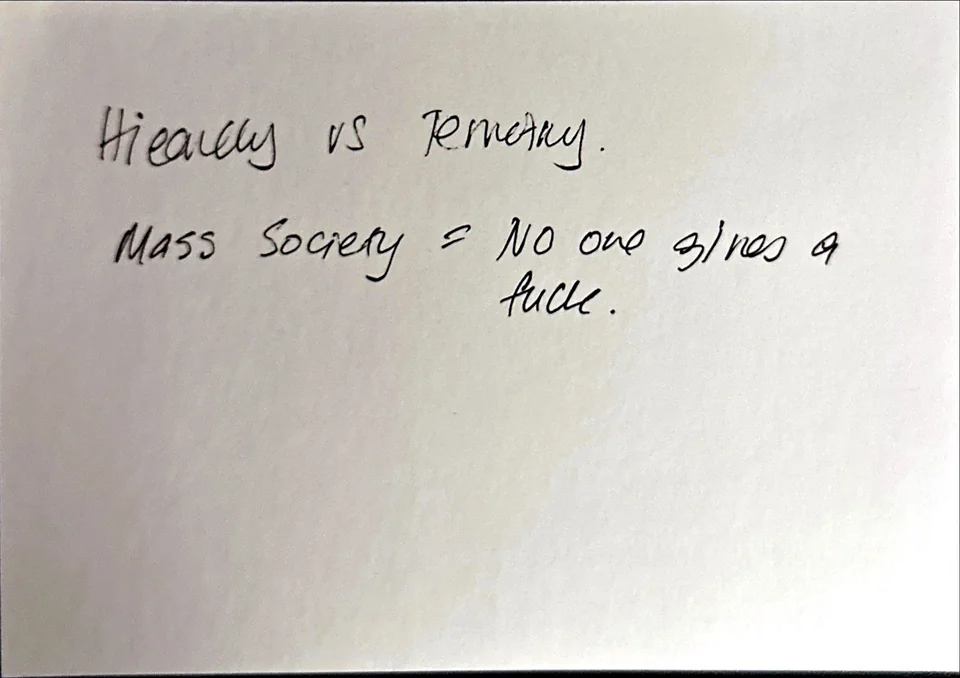
Perspective · Hierarchy and territory Today’s note
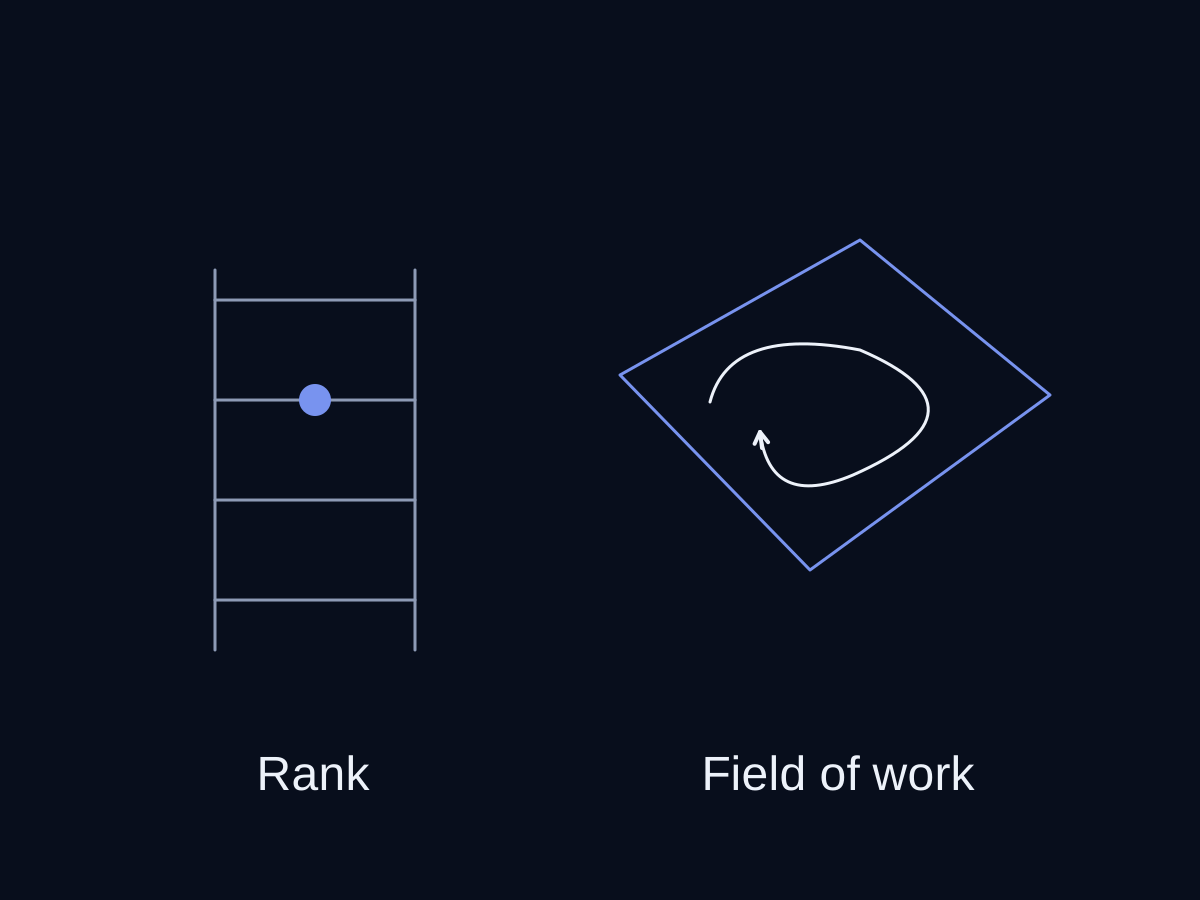
A hierarchy asks where you rank among other people. A territory centres on the work you return to and the field you develop.
Reading note after Steven Pressfield, The War of Art
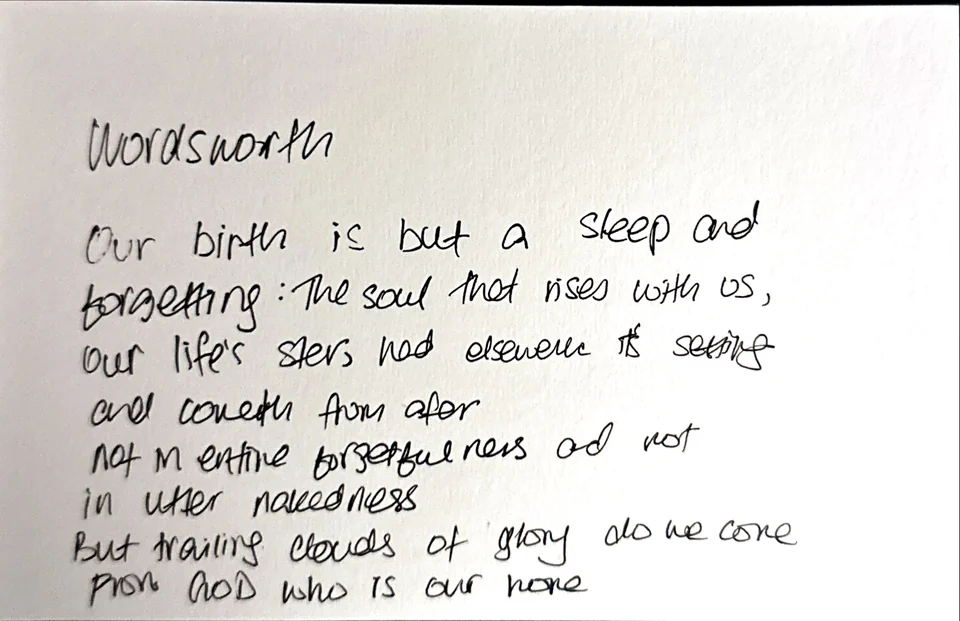
Perspective · Trailing clouds of glory Today’s note
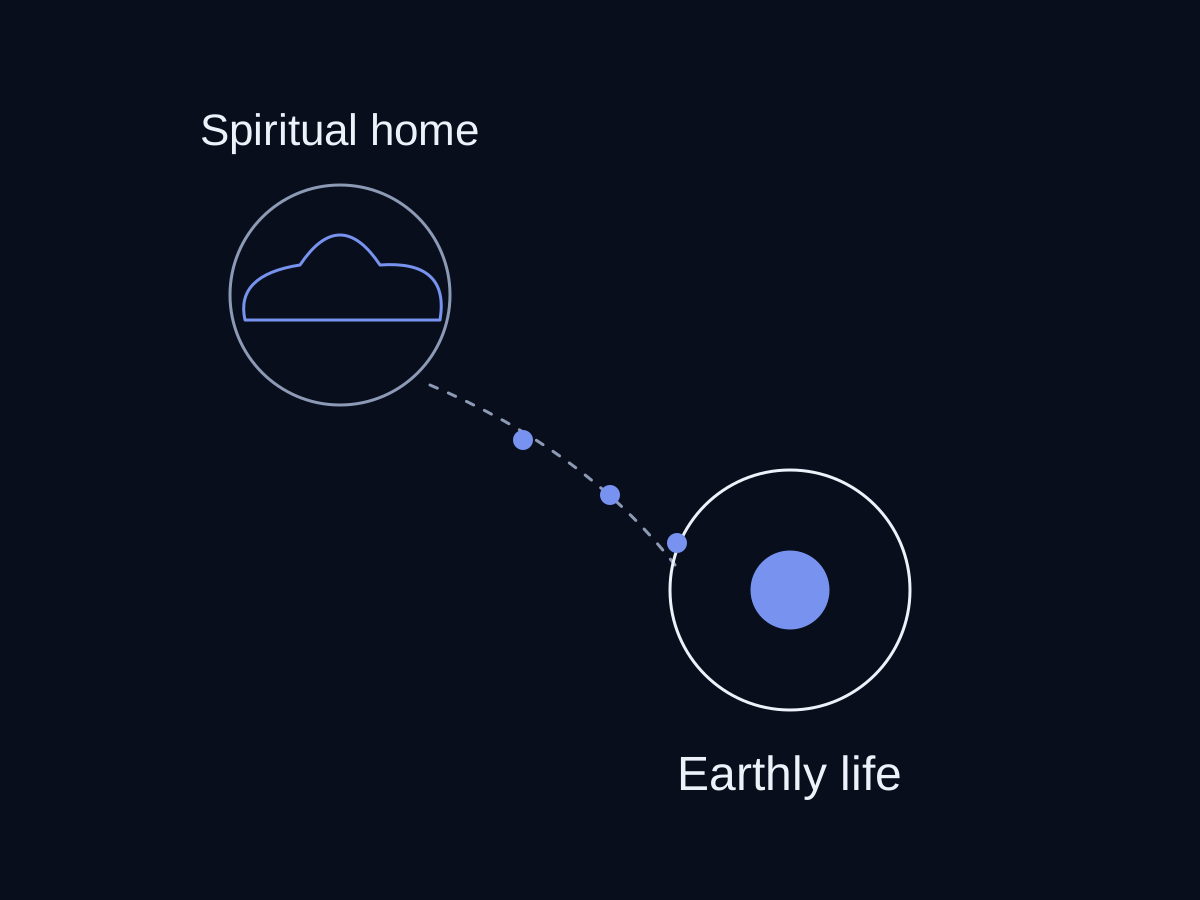
Wordsworth imagines birth as arriving from a spiritual home. The soul carries something of that origin into earthly life.
William Wordsworth, Ode: Intimations of Immortality, stanza V
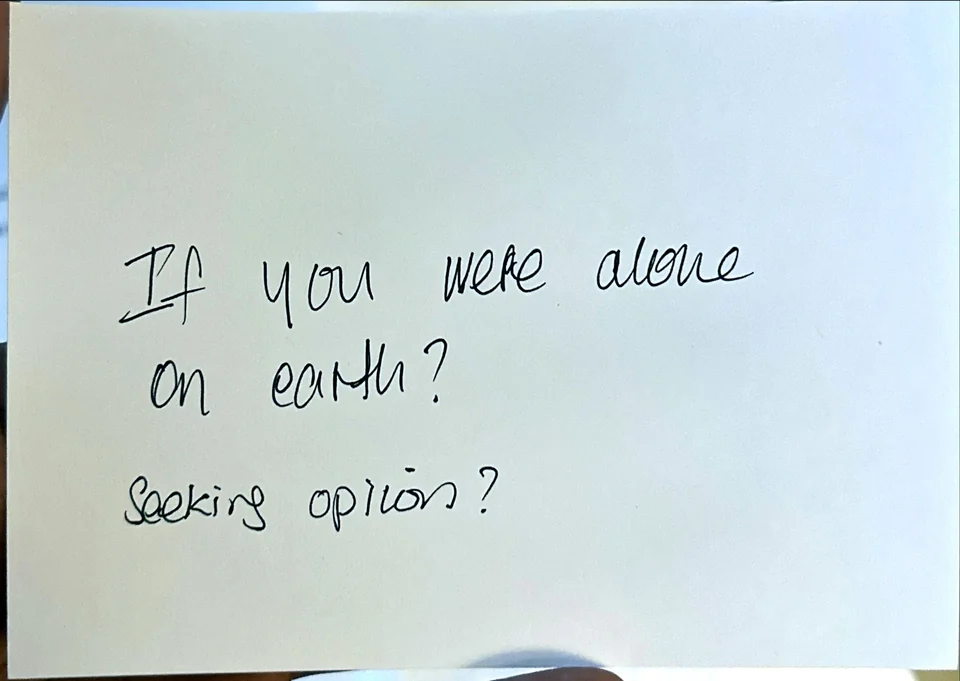
Self-understanding · An audience of one Today’s note
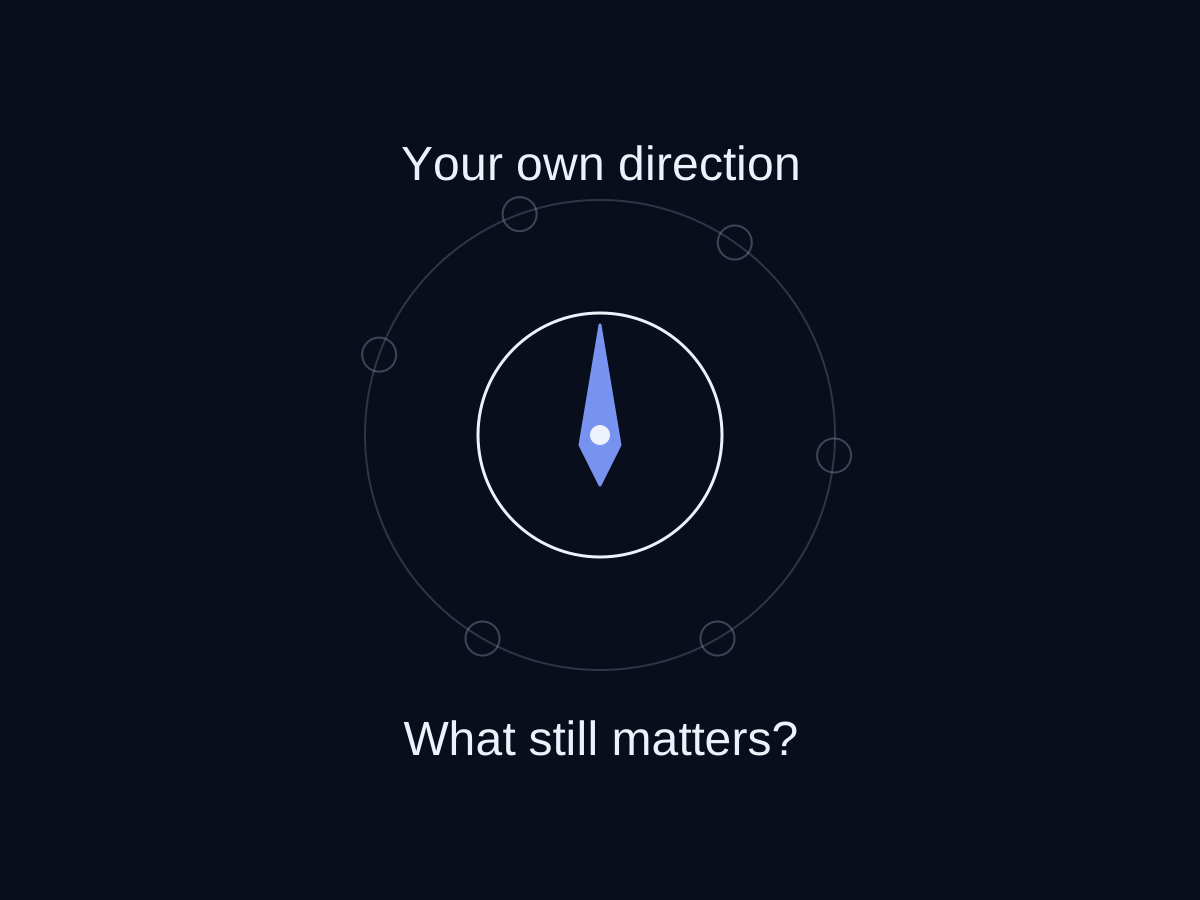
Imagine being alone on earth. Consider which choices would still matter to you when nobody was there to approve of them.
Collected note
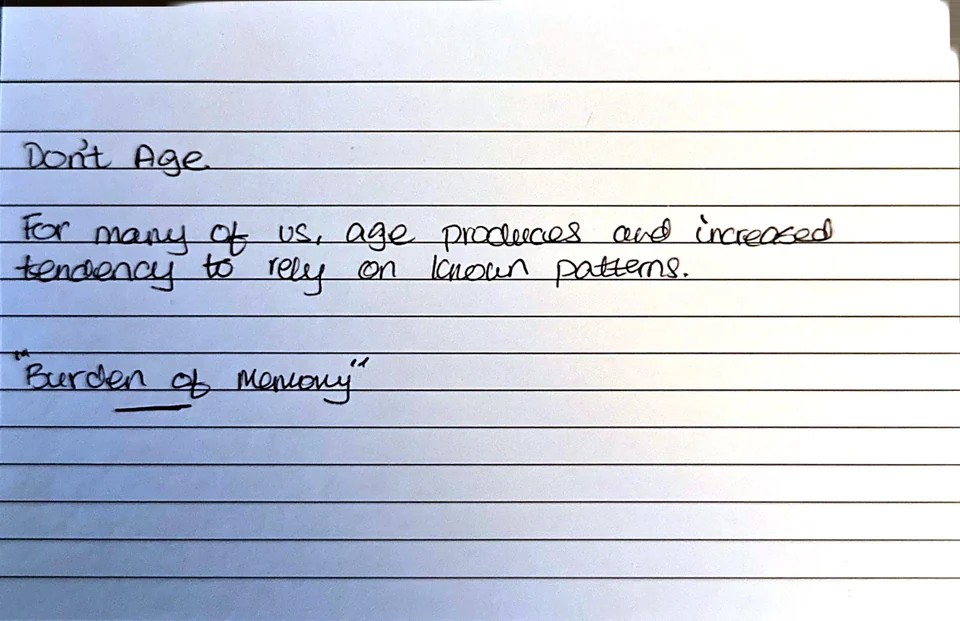
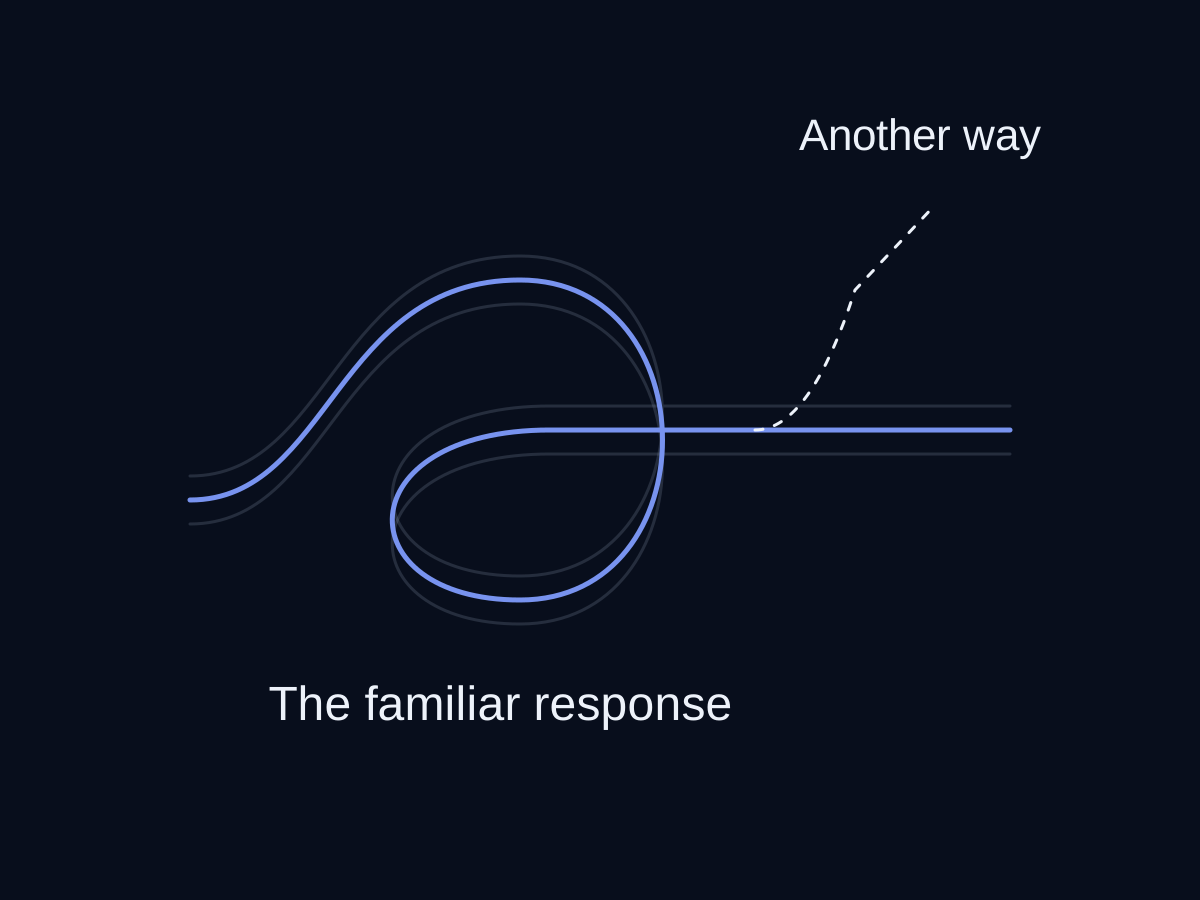
Self-understanding · Familiar patterns Today’s note
Familiar patterns can become easier to rely on as we grow older. Notice when memory is deciding the response for you.
Collected note
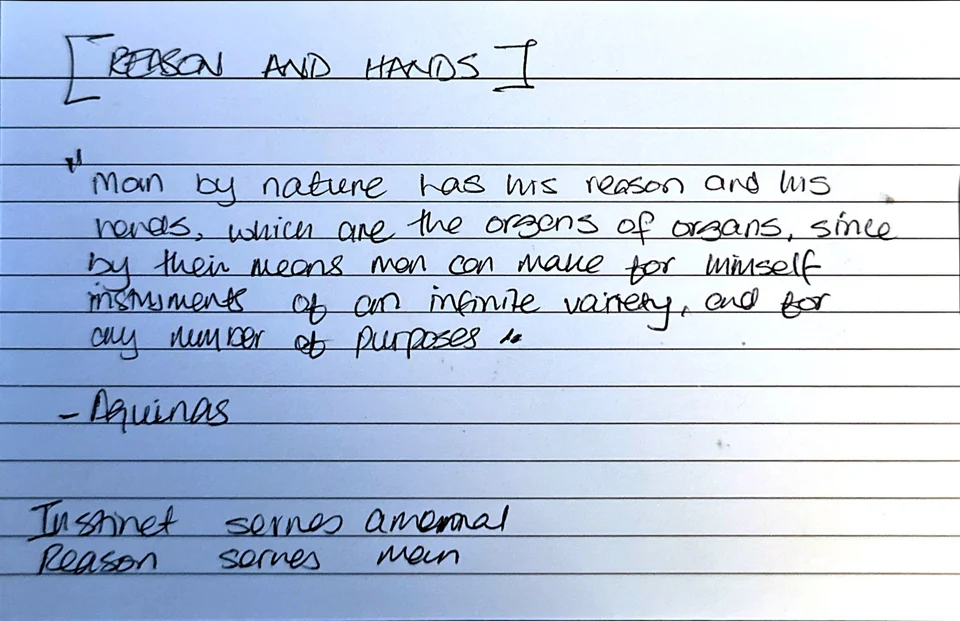
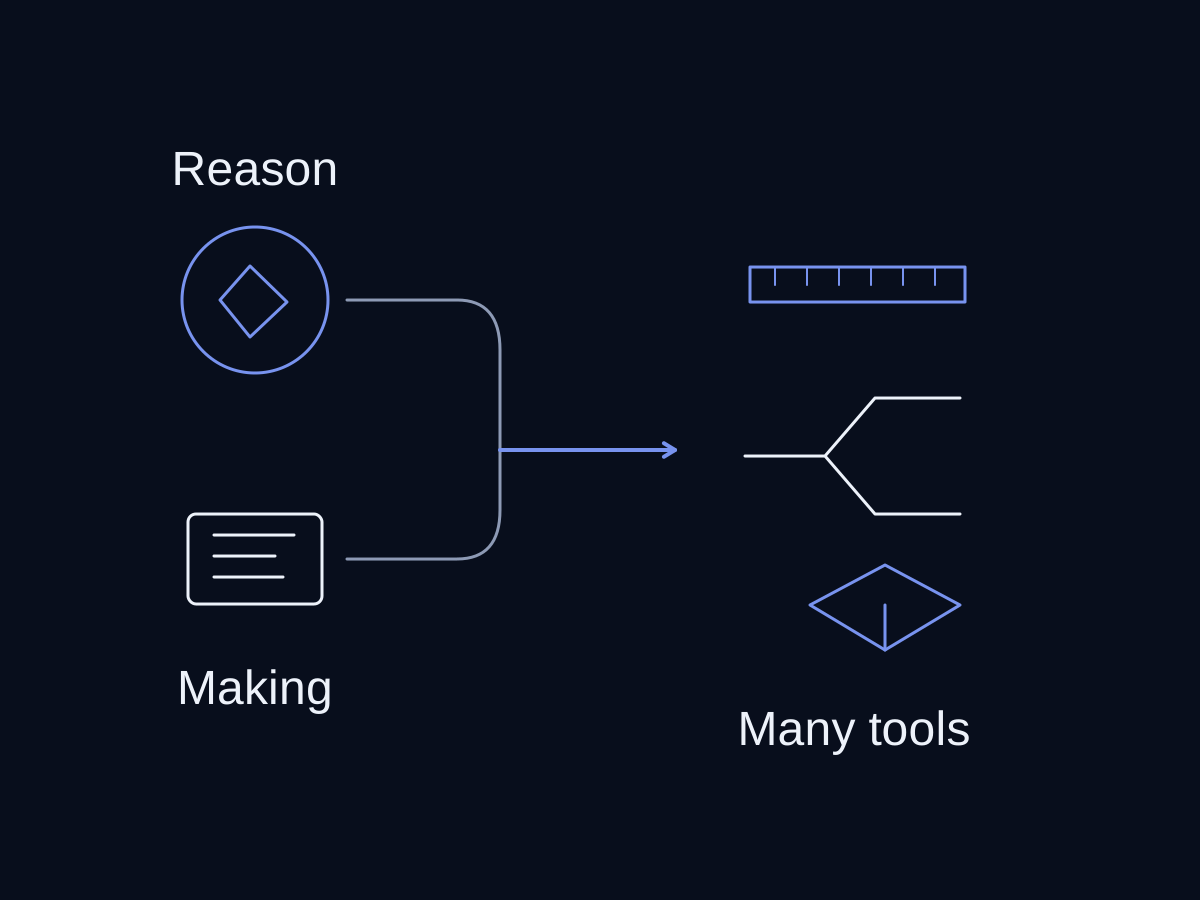
Self-understanding · Reason and hands Today’s note
Aquinas describes reason and hands as tools through which people can make many other tools, suited to many purposes.
After Thomas Aquinas, Summa Theologiae I.76.5
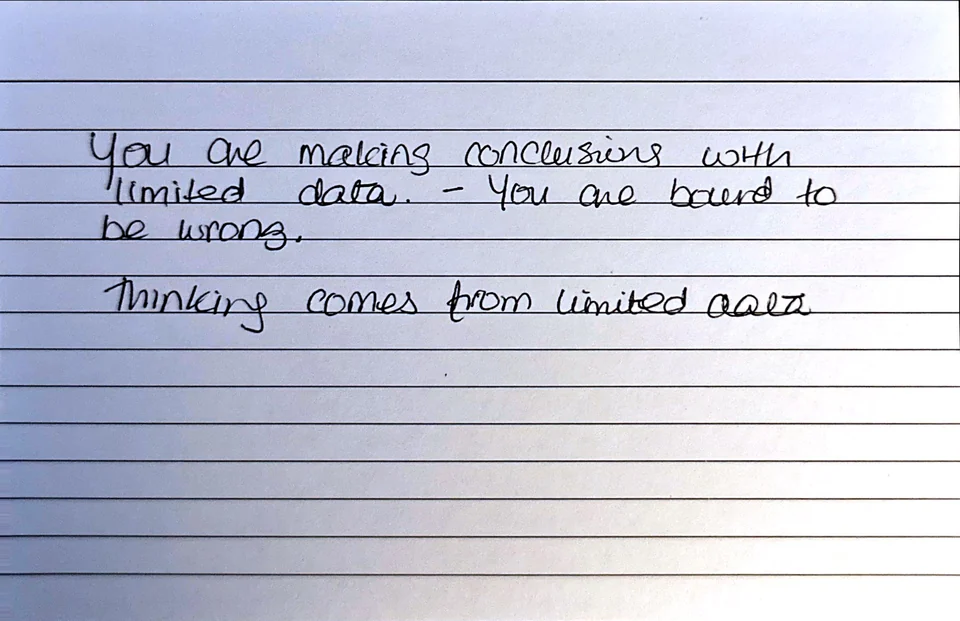
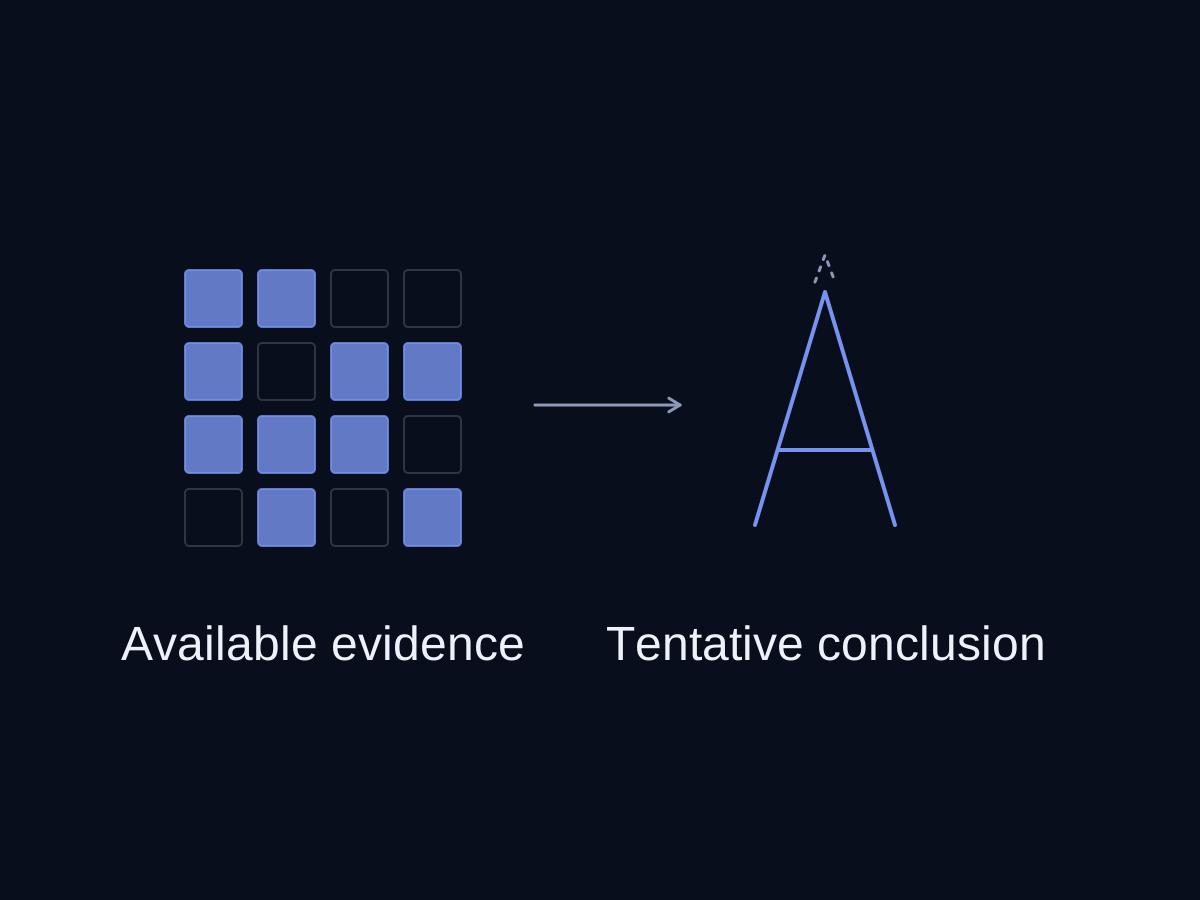
Self-understanding · Limited data Today’s note
Your conclusions depend on the information available to you. Limited information leaves room for error.
Collected note
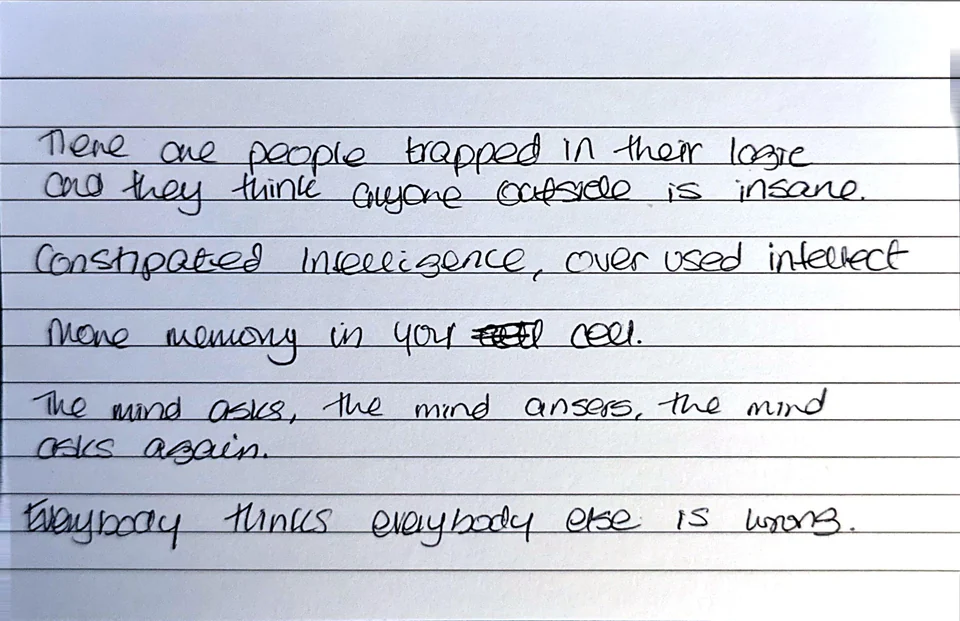
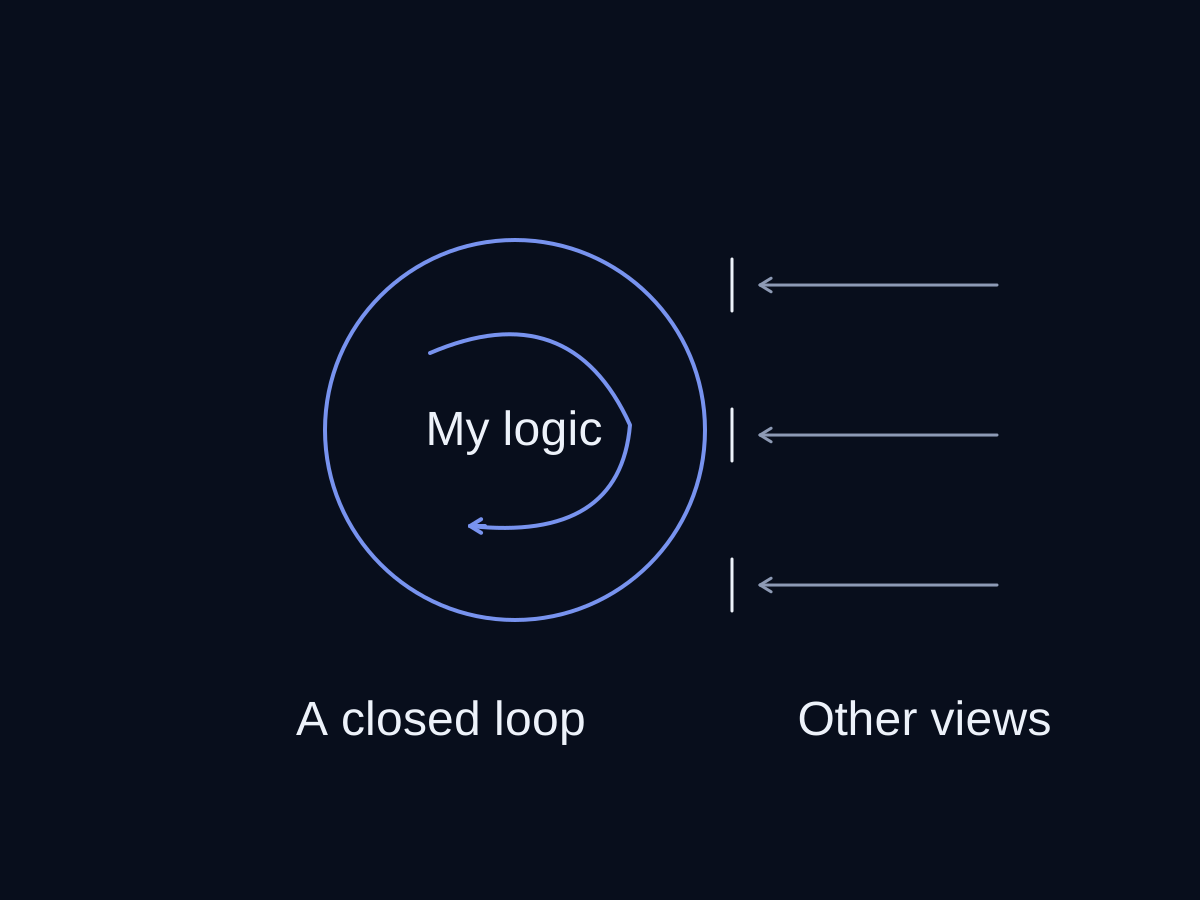
Self-understanding · Attached to a view Today’s note
A person can become so attached to their own logic that every other view looks mistaken. The mind asks, answers and asks again.
Collected note
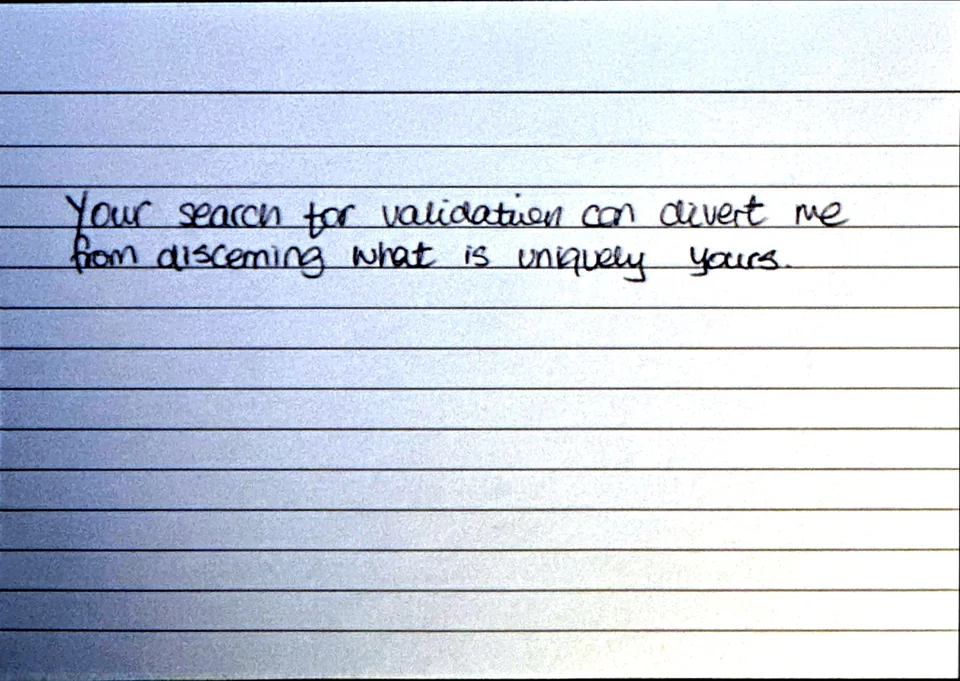
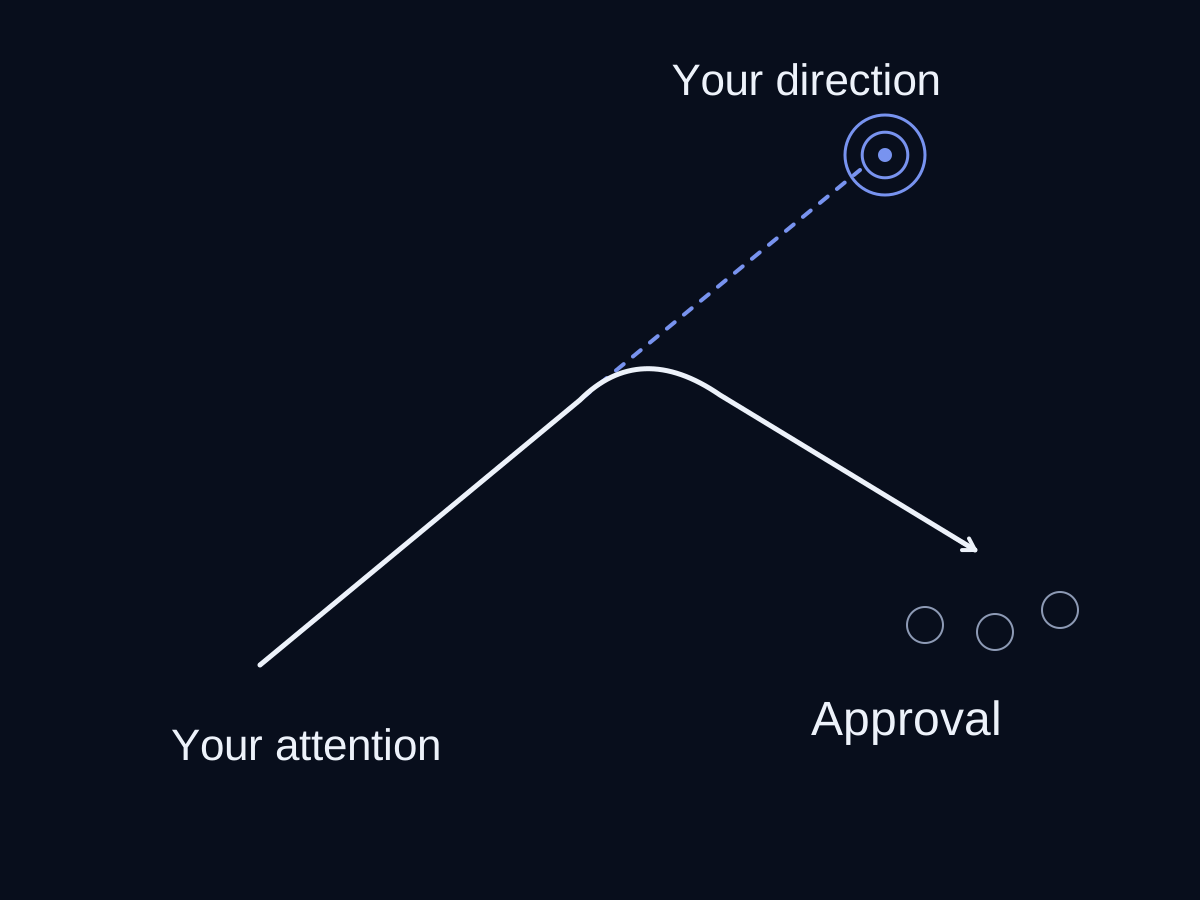
Self-understanding · Seeking validation Today’s note
Your search for validation can divert you from discerning what is uniquely yours.
Collected note
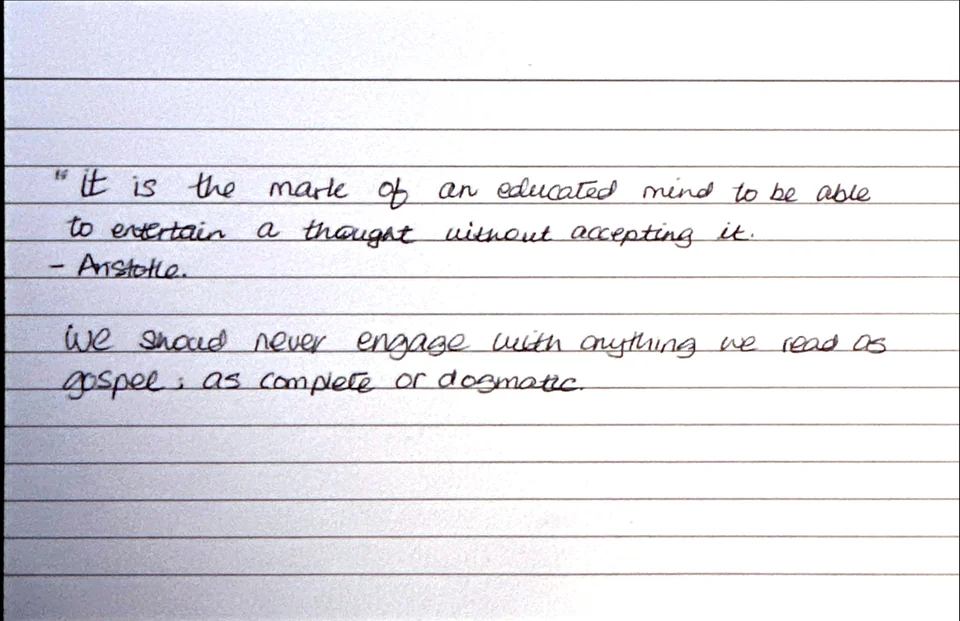
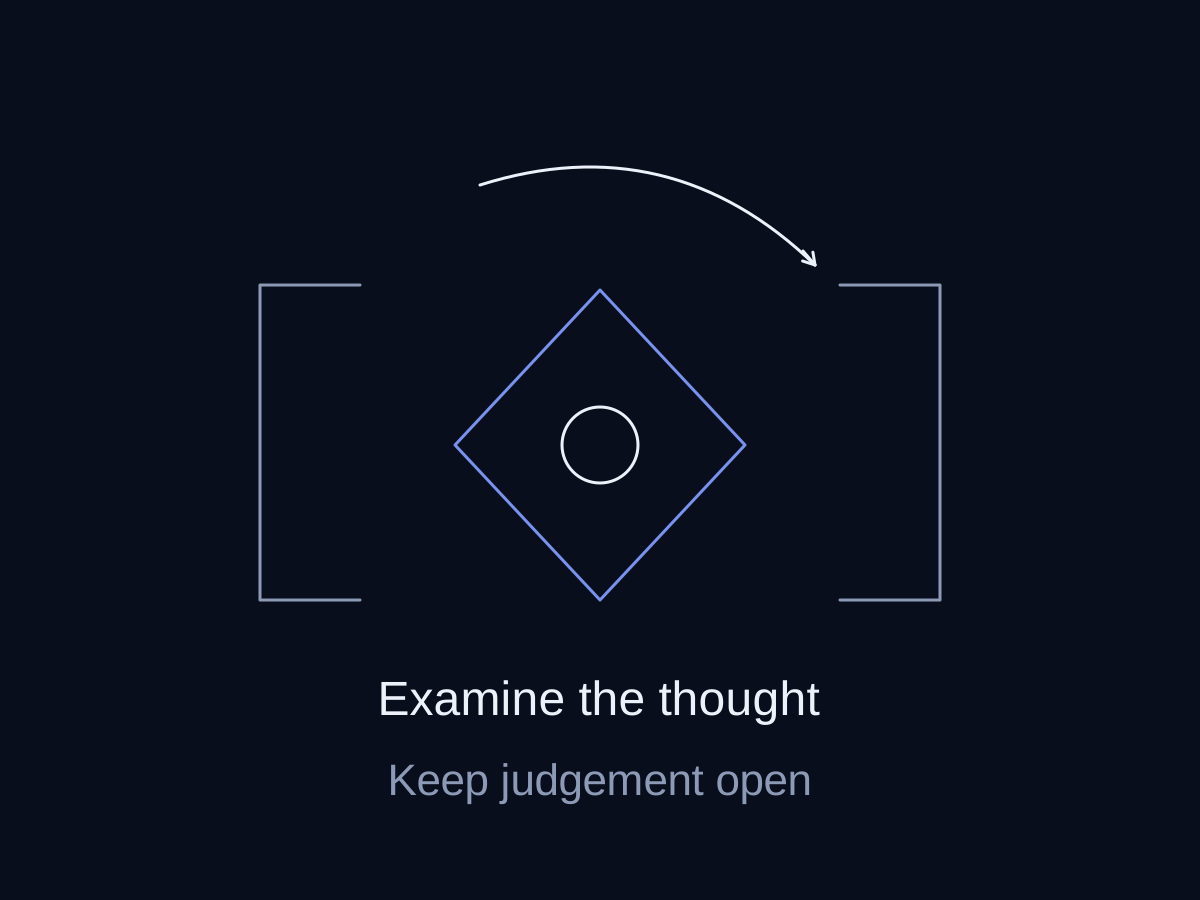
Self-understanding · Entertain a thought Today’s note
Examine a thought while keeping your judgement open. Treat what you read as something to consider and test.
Collected note; original Aristotle attribution unverified
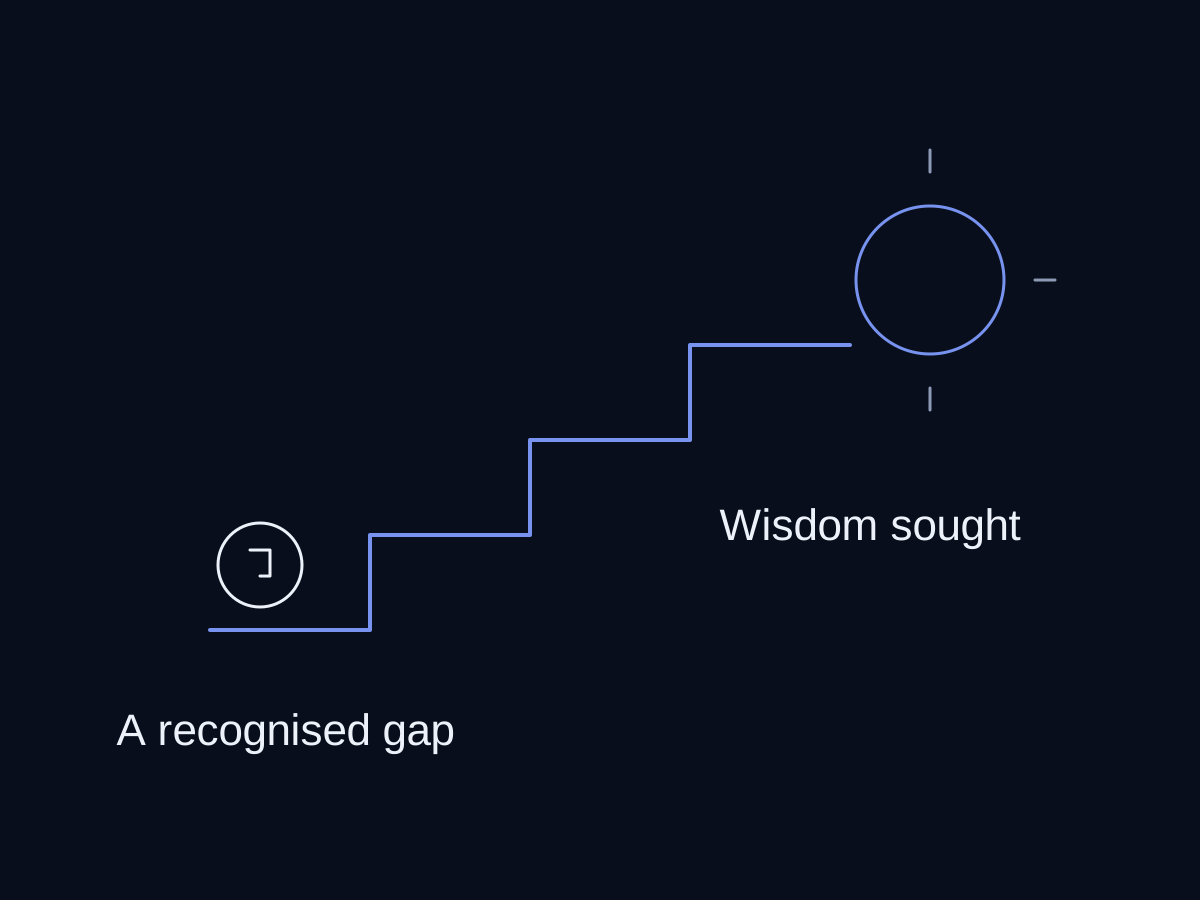
Self-understanding · The philosopher and the sage Today’s note
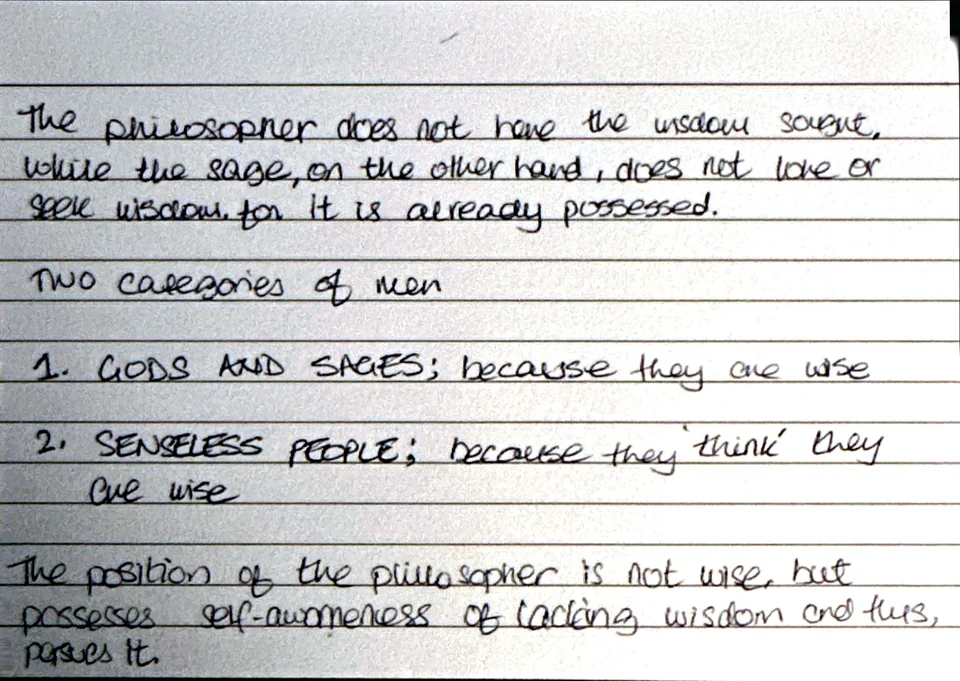
In Plato's Symposium, Diotima presents the philosopher as someone who recognises a lack of wisdom and therefore seeks it.
After Plato, Symposium 204a-b; Diotima through Socrates
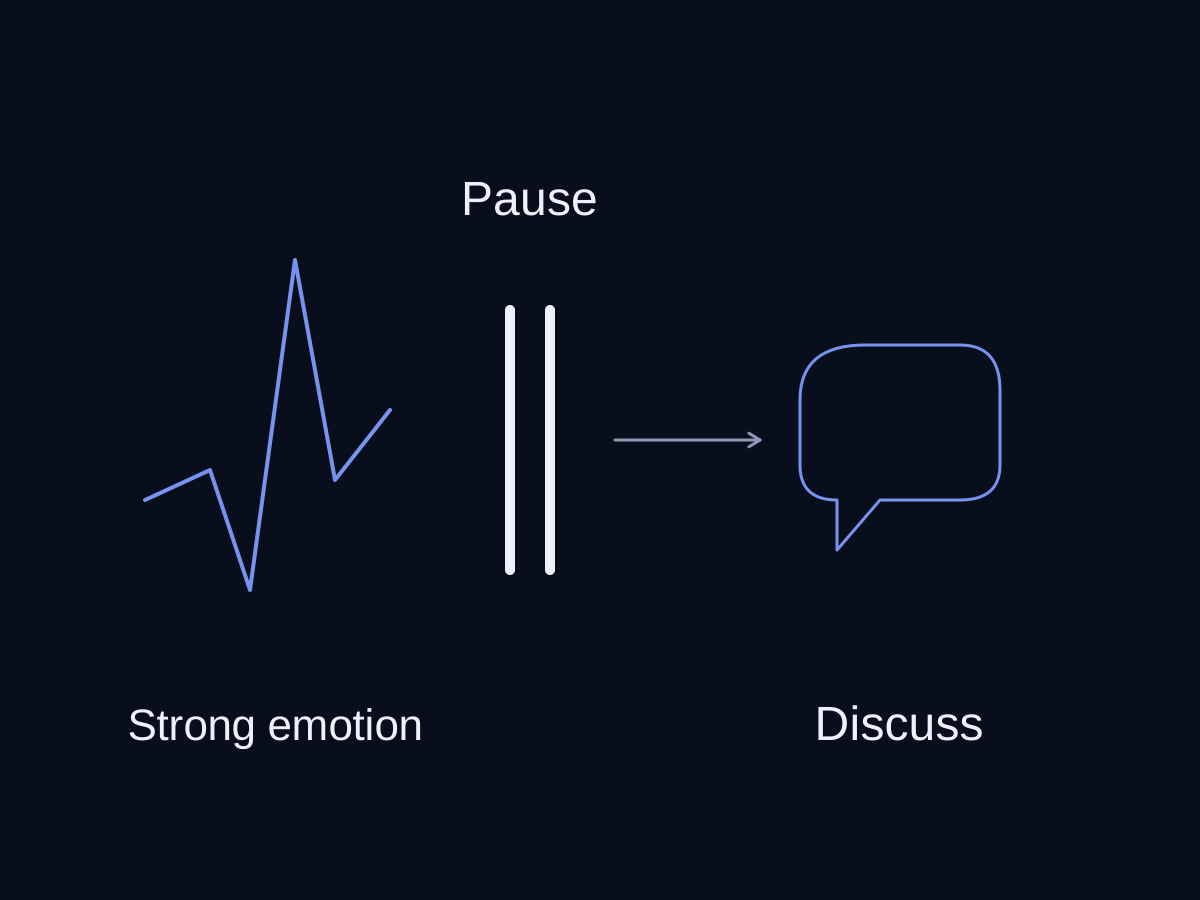
Self-understanding · Emotion and intellect Today’s note
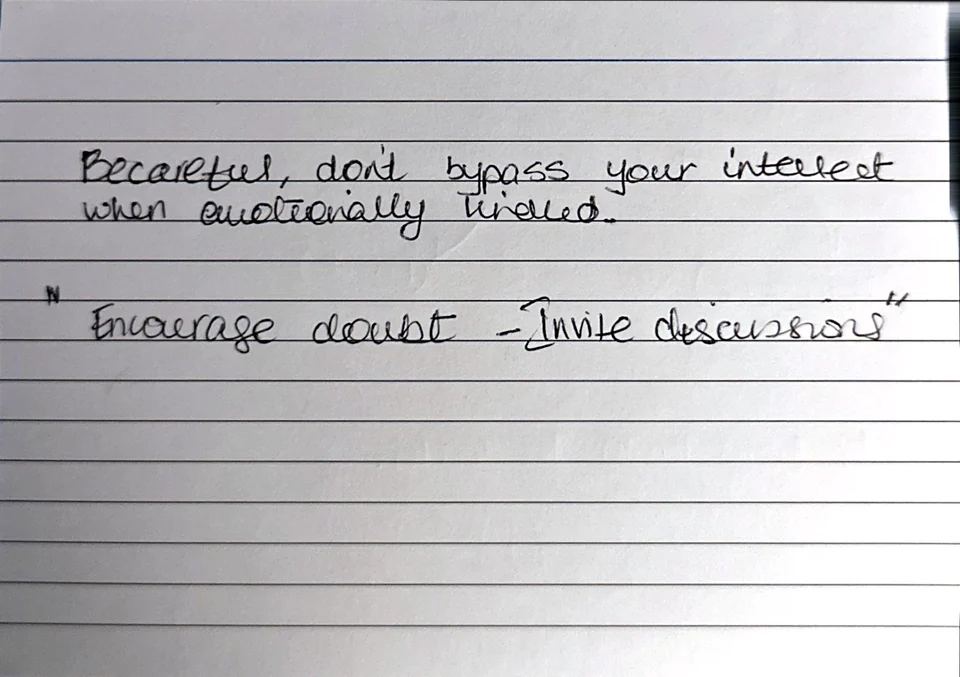
When emotion is strong, give your judgement time to work. Encourage doubt. Invite discussion.
Collected note
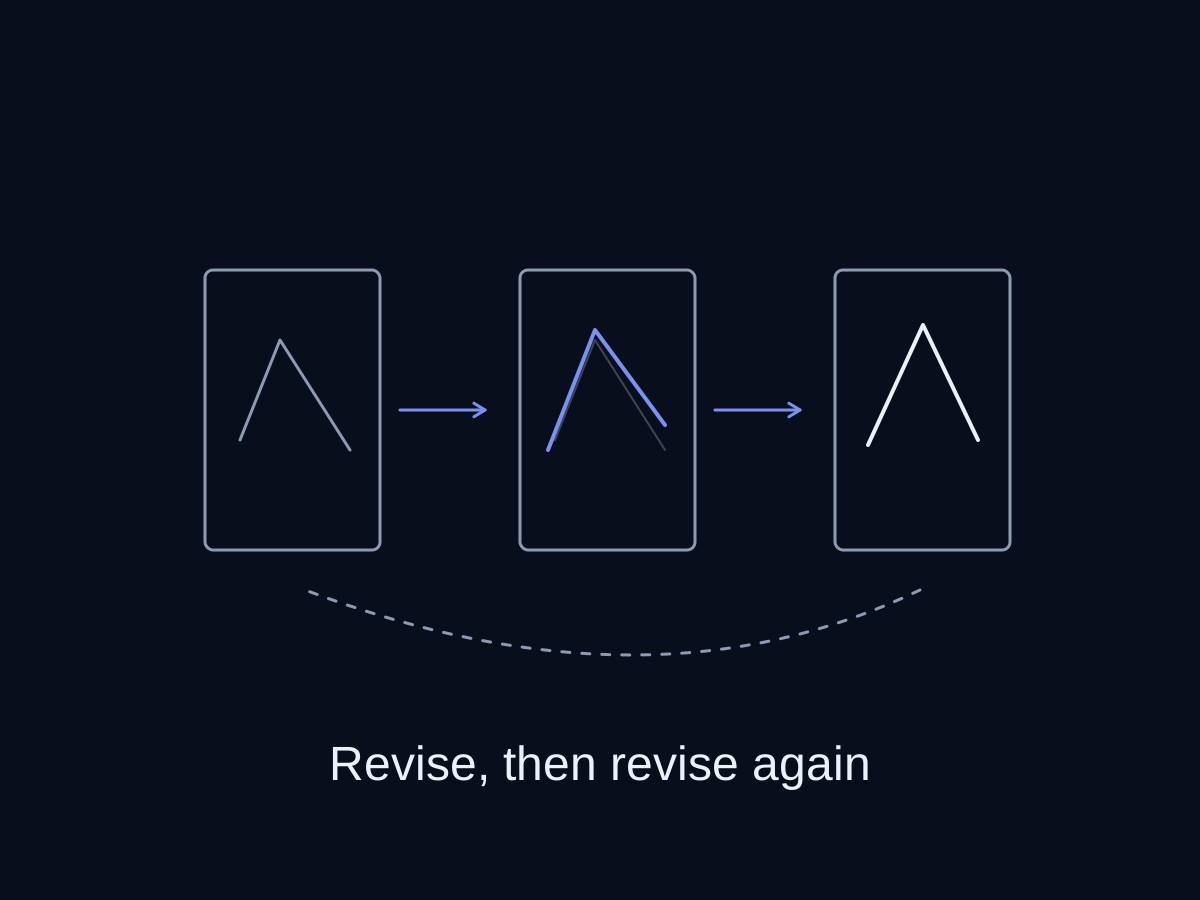
Self-understanding · Self-revision Today’s note
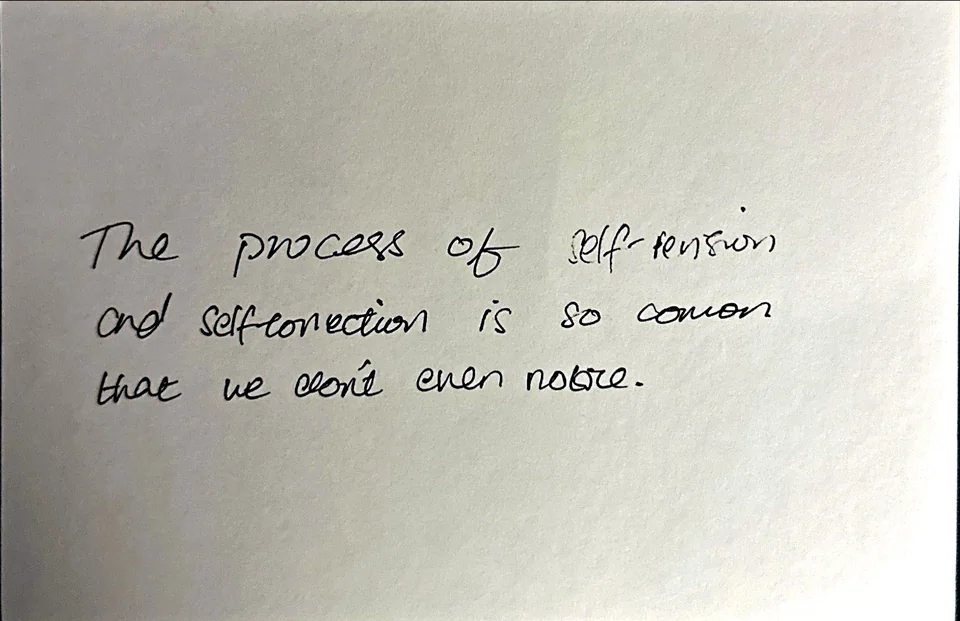
The process of self-revision and self-correction is so common that we don’t even notice.
Reading note after Steven Pressfield, The War of Art
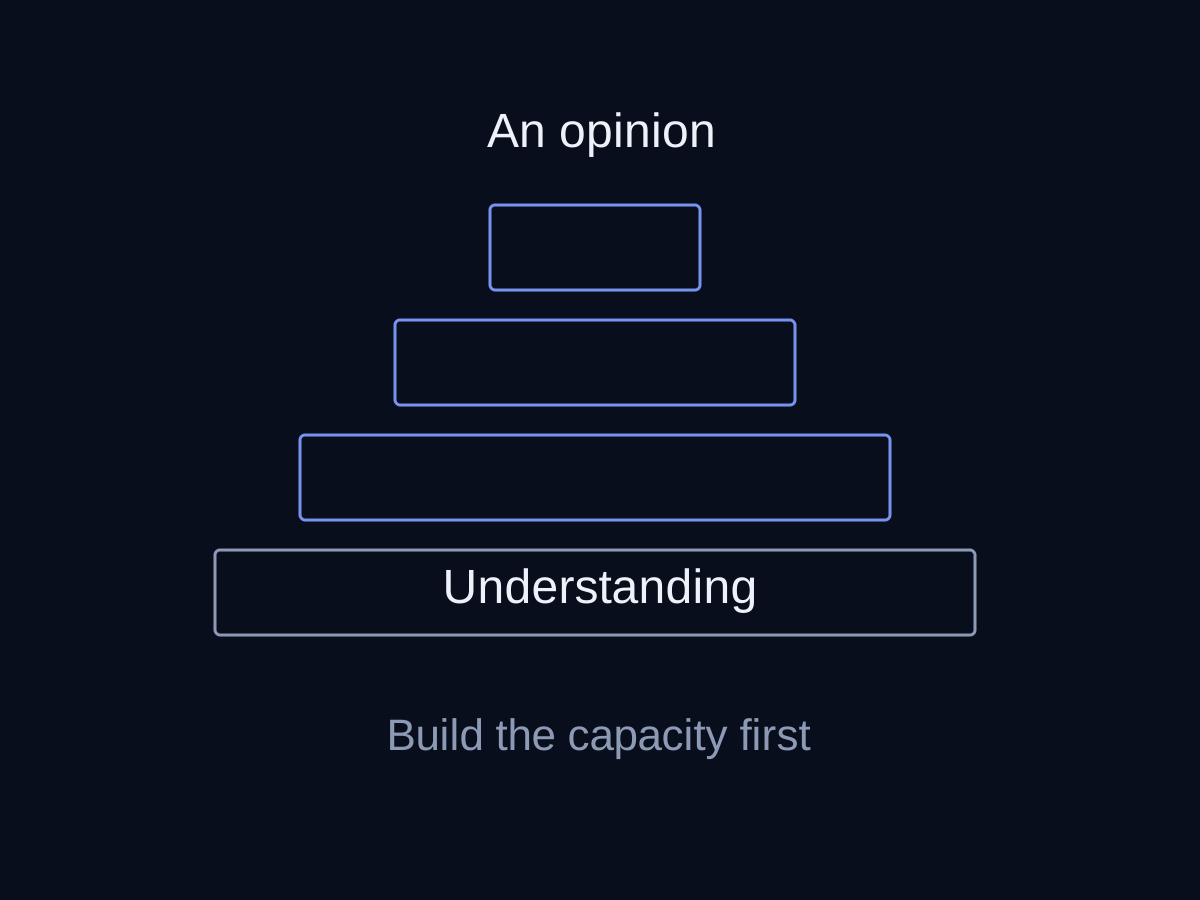
Self-understanding · Capacity before opinion Today’s note
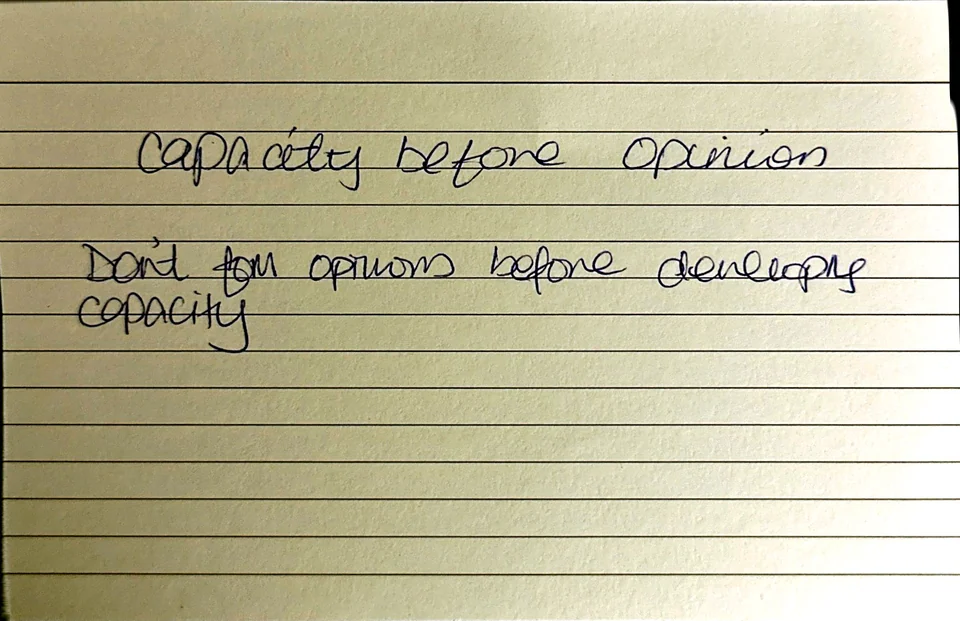
Develop the capacity to understand a subject before settling on an opinion.
Collected note
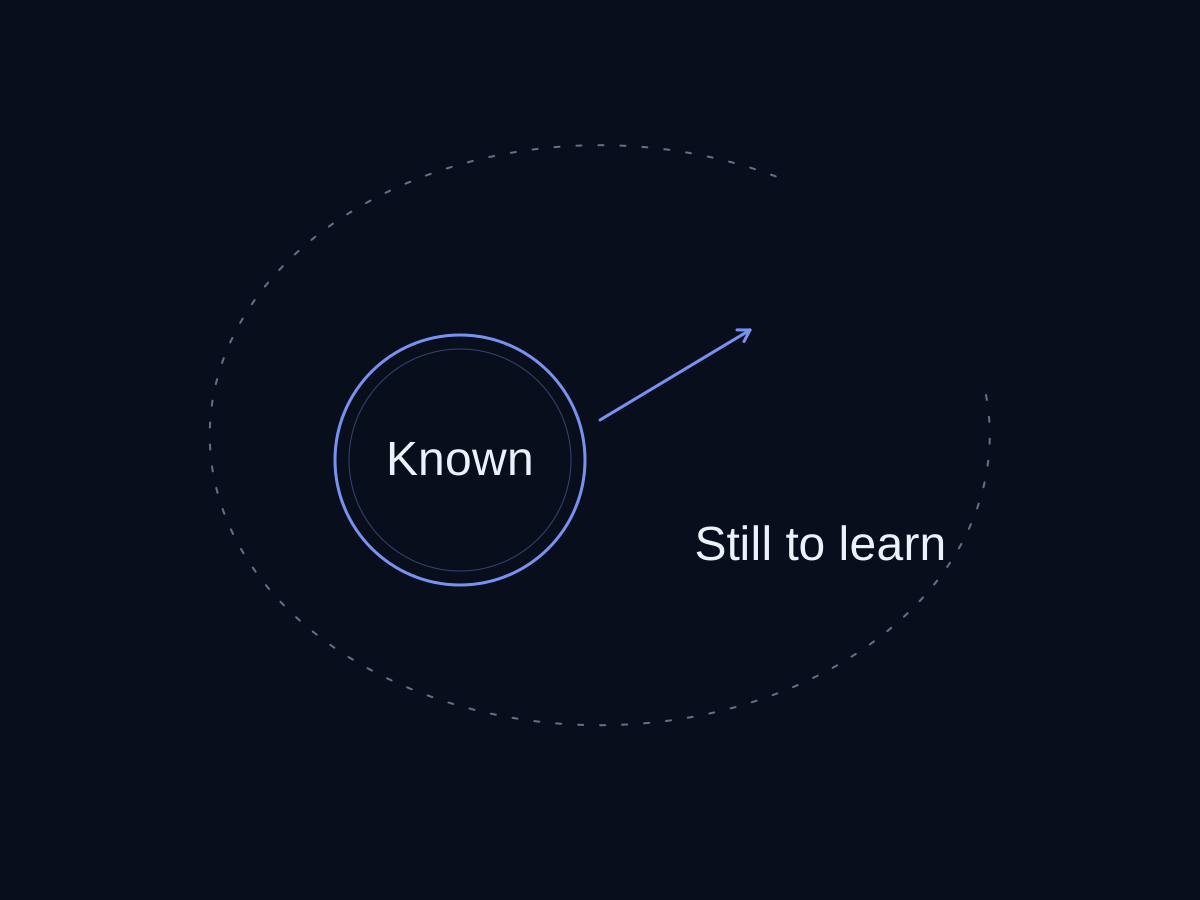
Self-understanding · Knowing your limits Today’s note
Recognise the limits of what you know. Keep room for learning.
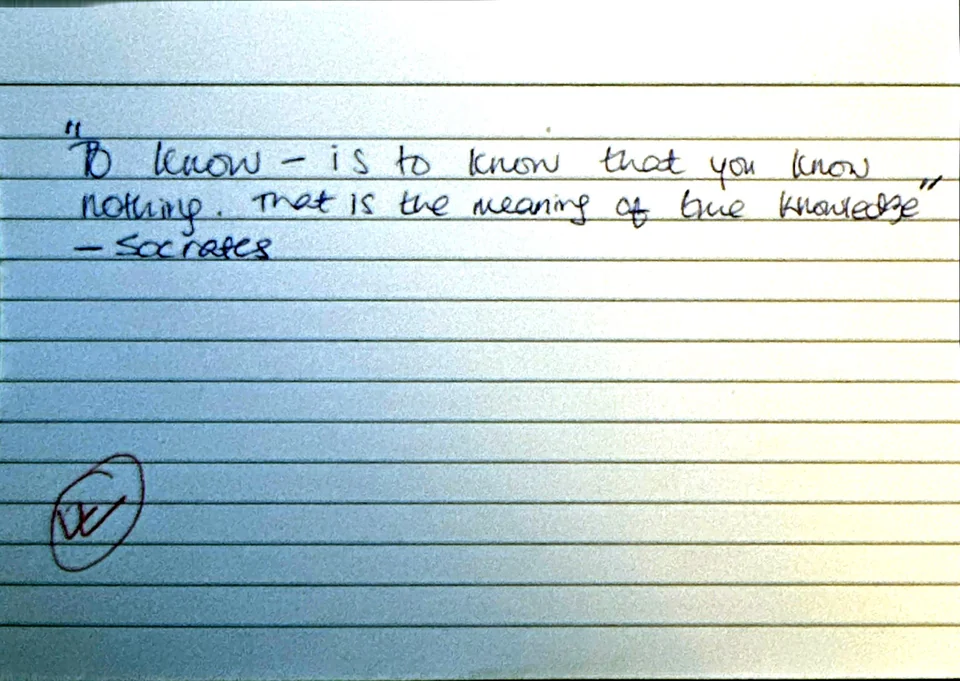
Collected note; original Socrates attribution unverified
Direction · Aim, act and learn Today’s note
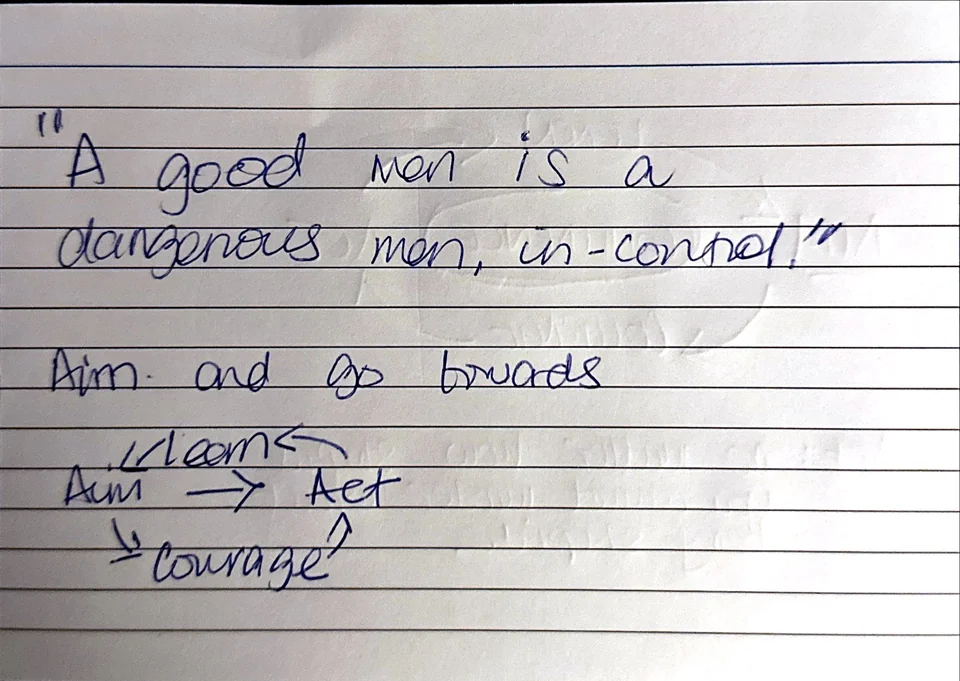
Choose an aim. Find the courage to act. Learn from what happens, then adjust the aim.
Collected note
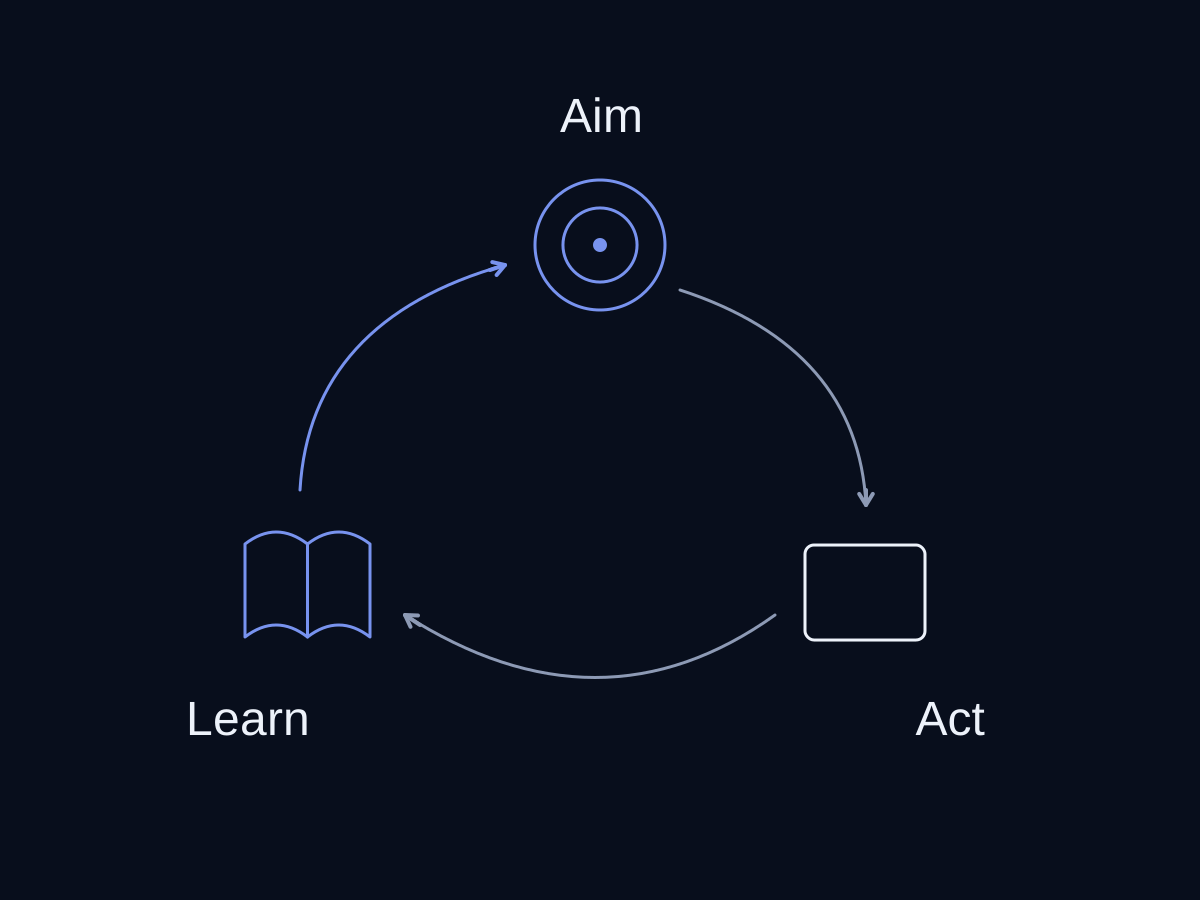
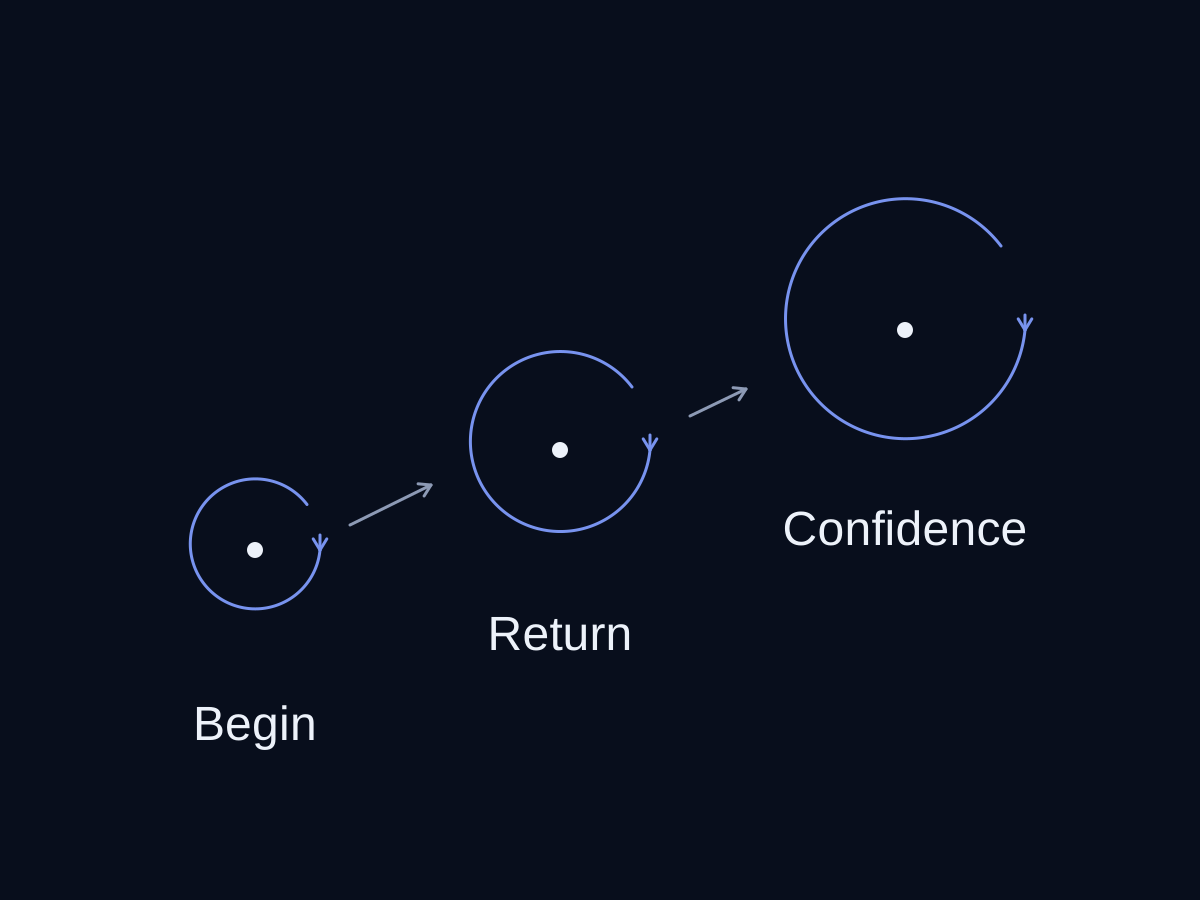
Direction · Confidence through action Today’s note
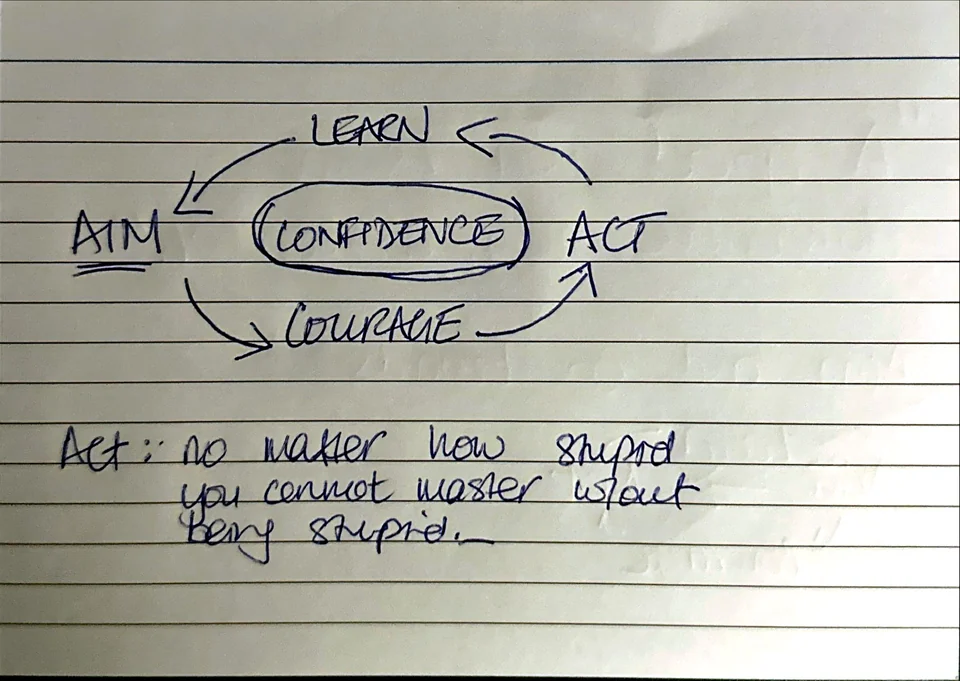
Confidence can develop through this loop: aim, find courage, act, learn and aim again. Allow room for the awkwardness of beginning.
Collected note
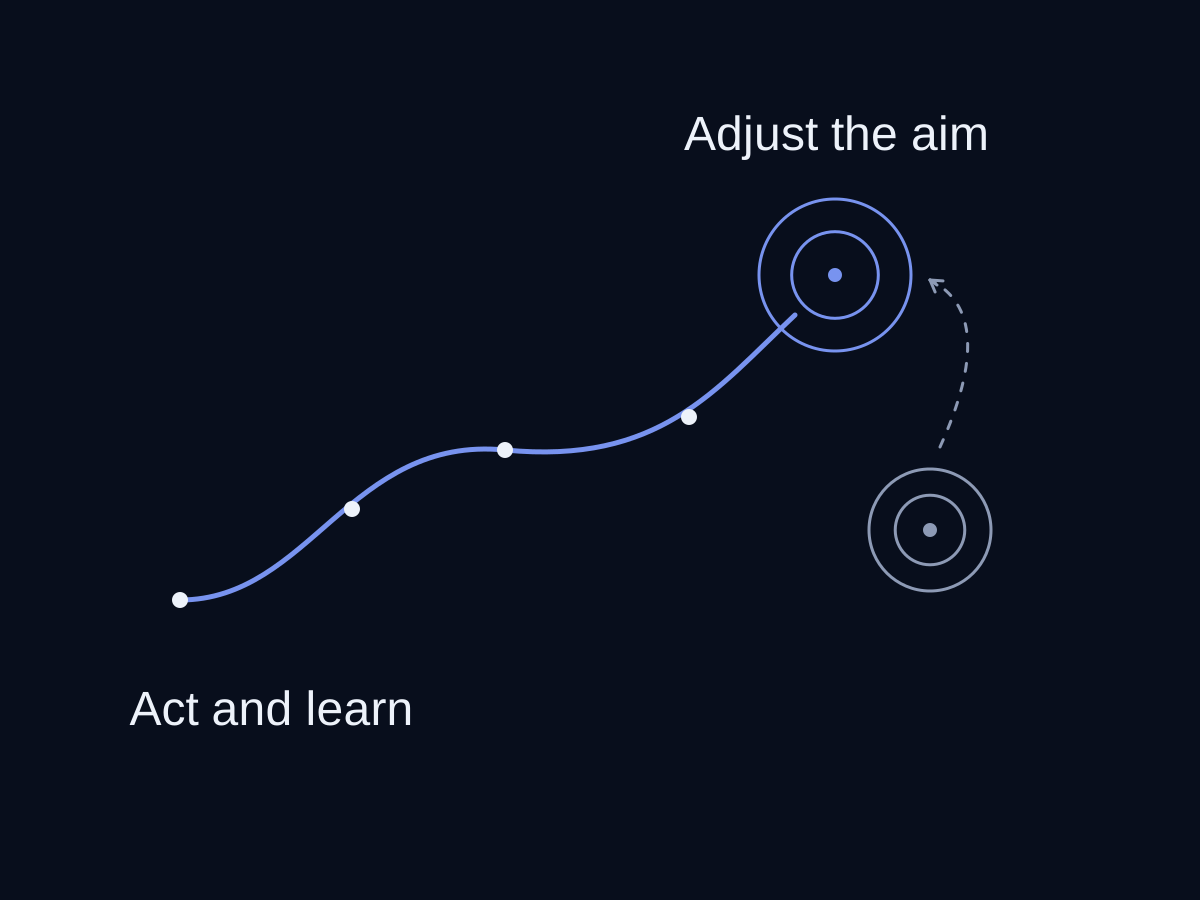
Direction · Move towards the target Today’s note
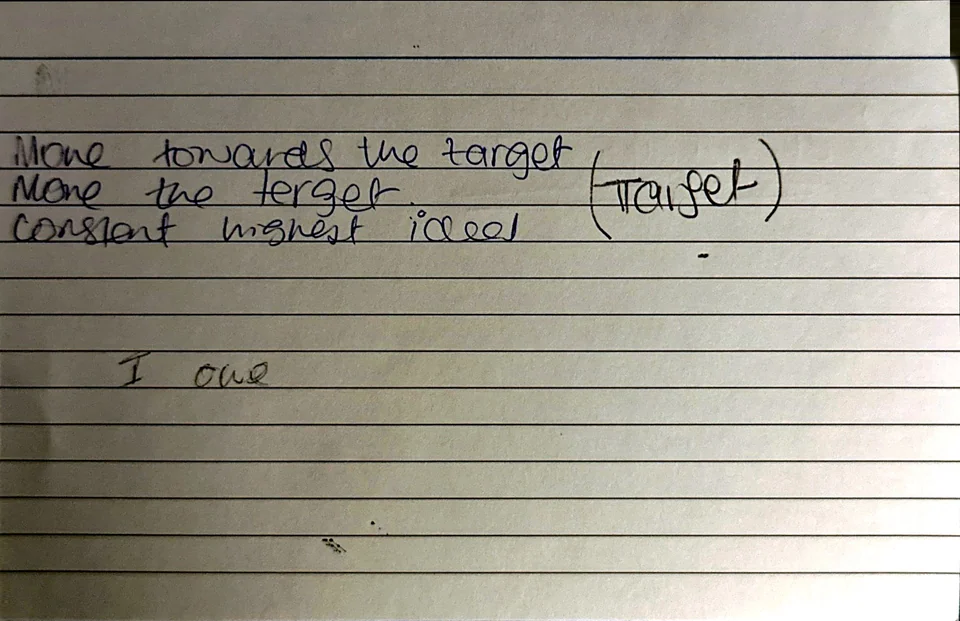
Move towards the target. Be willing to move the target as you learn. Keep an ideal in view.
Collected note
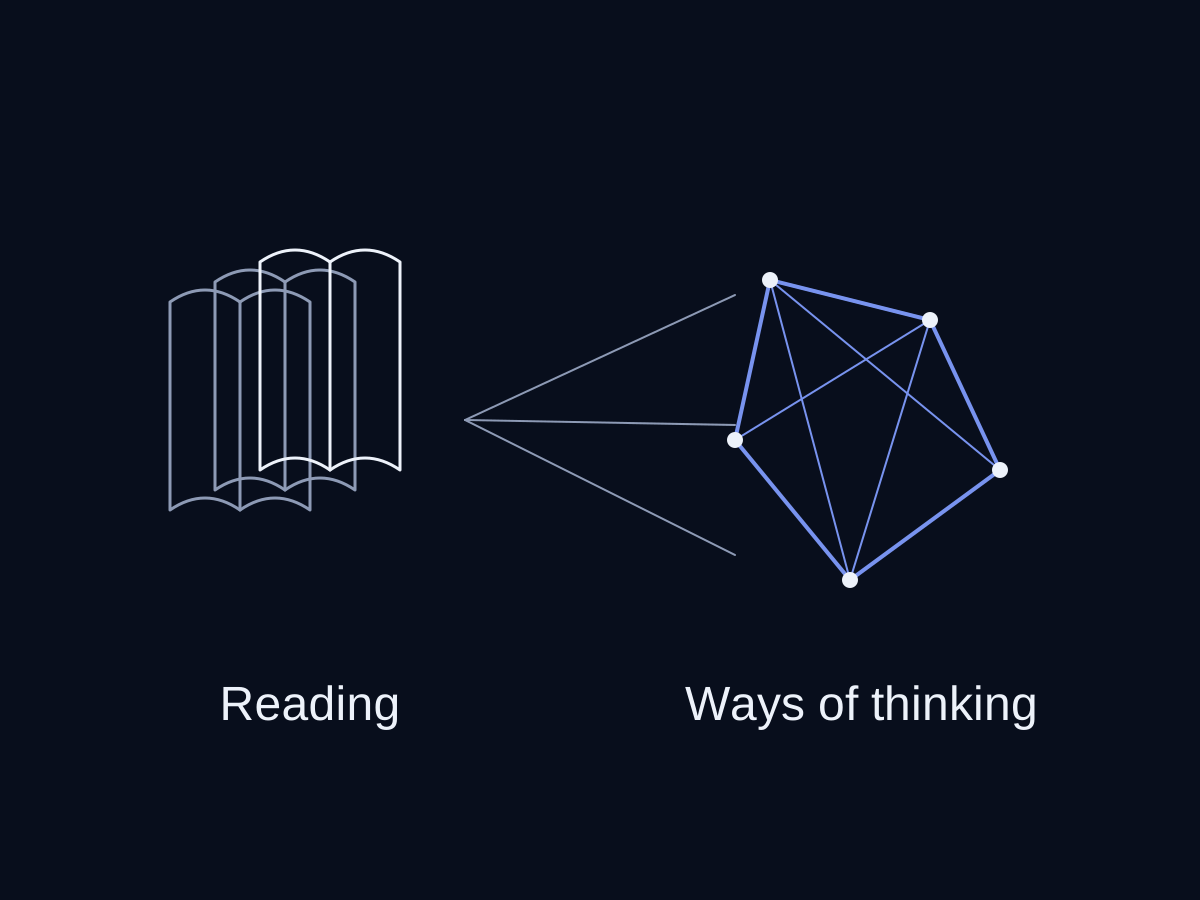
Self-understanding · Books and the reader Today’s note
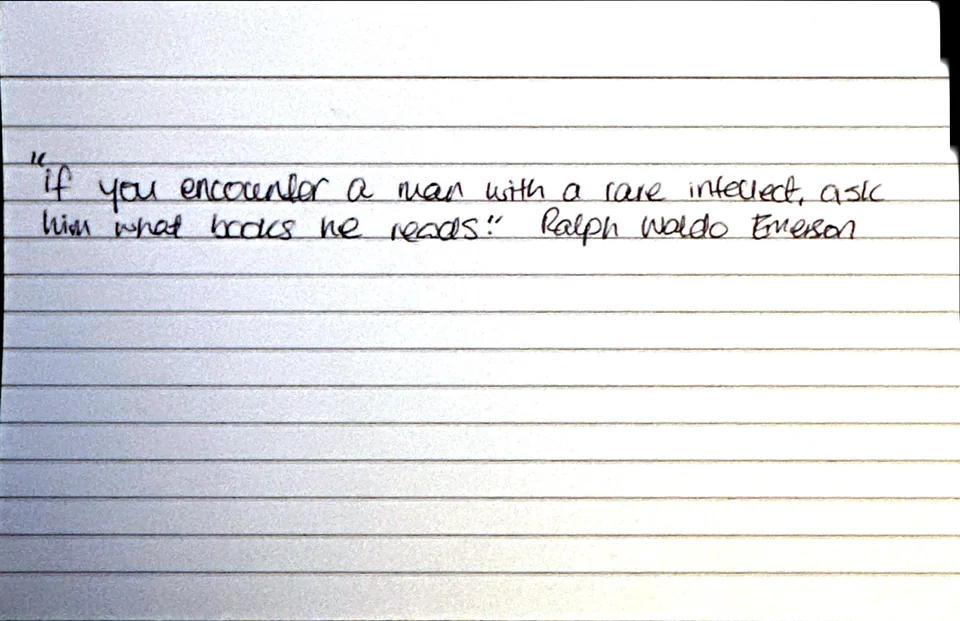
When someone has an unusual intellect, find out what they read.
After Ralph Waldo Emerson, Quotation and Originality
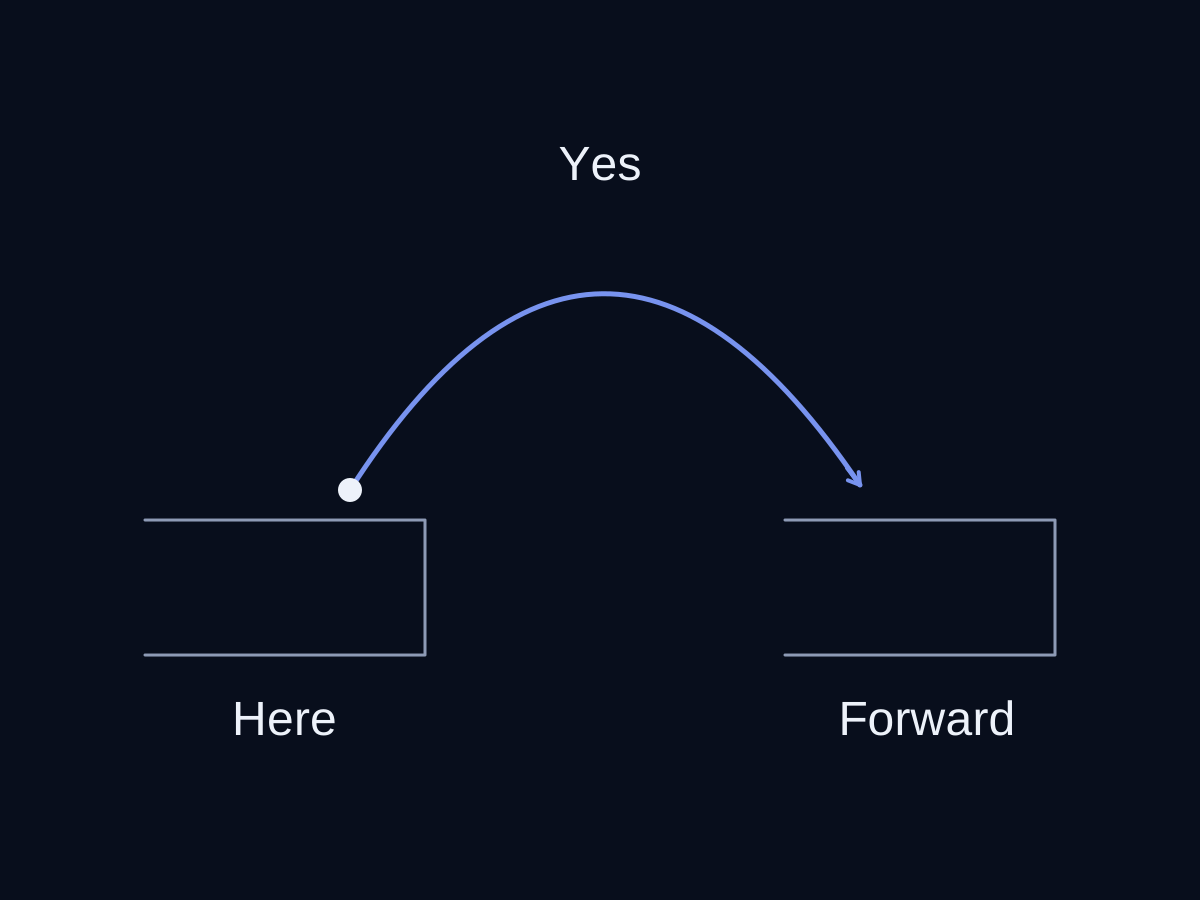
Direction · A leap of faith Today’s note
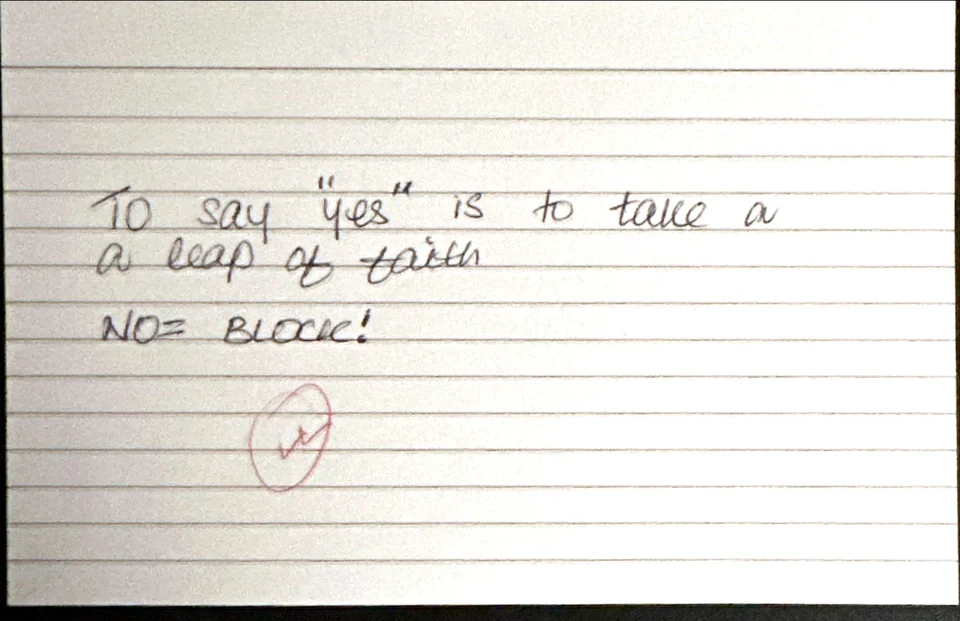
Saying yes can involve a leap of faith. The card connects that choice with moving forward.
Collected note
Resistance · The unlived life Today’s note
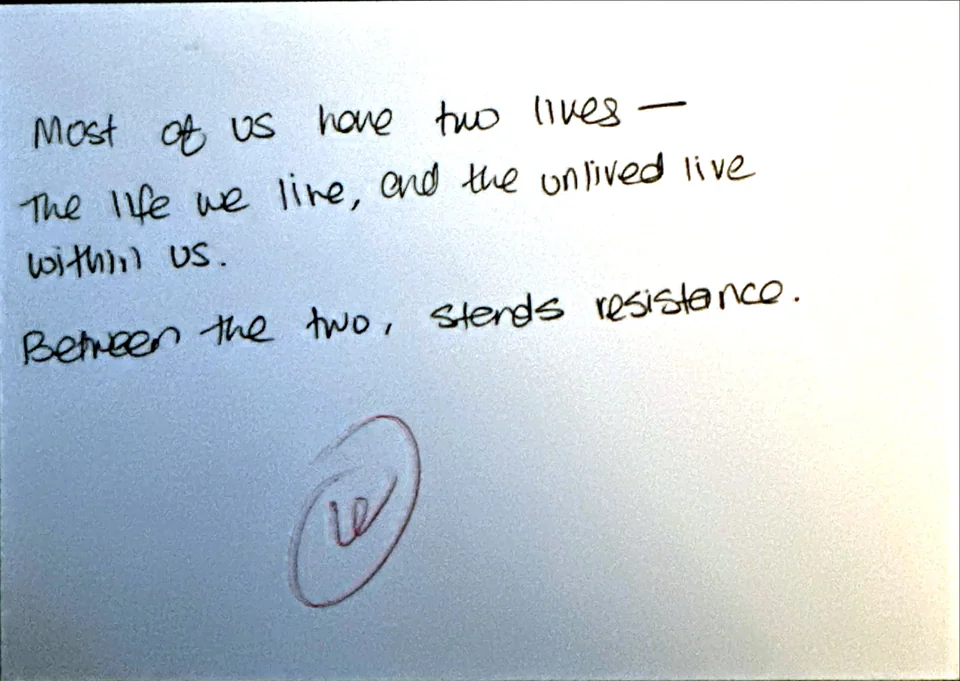
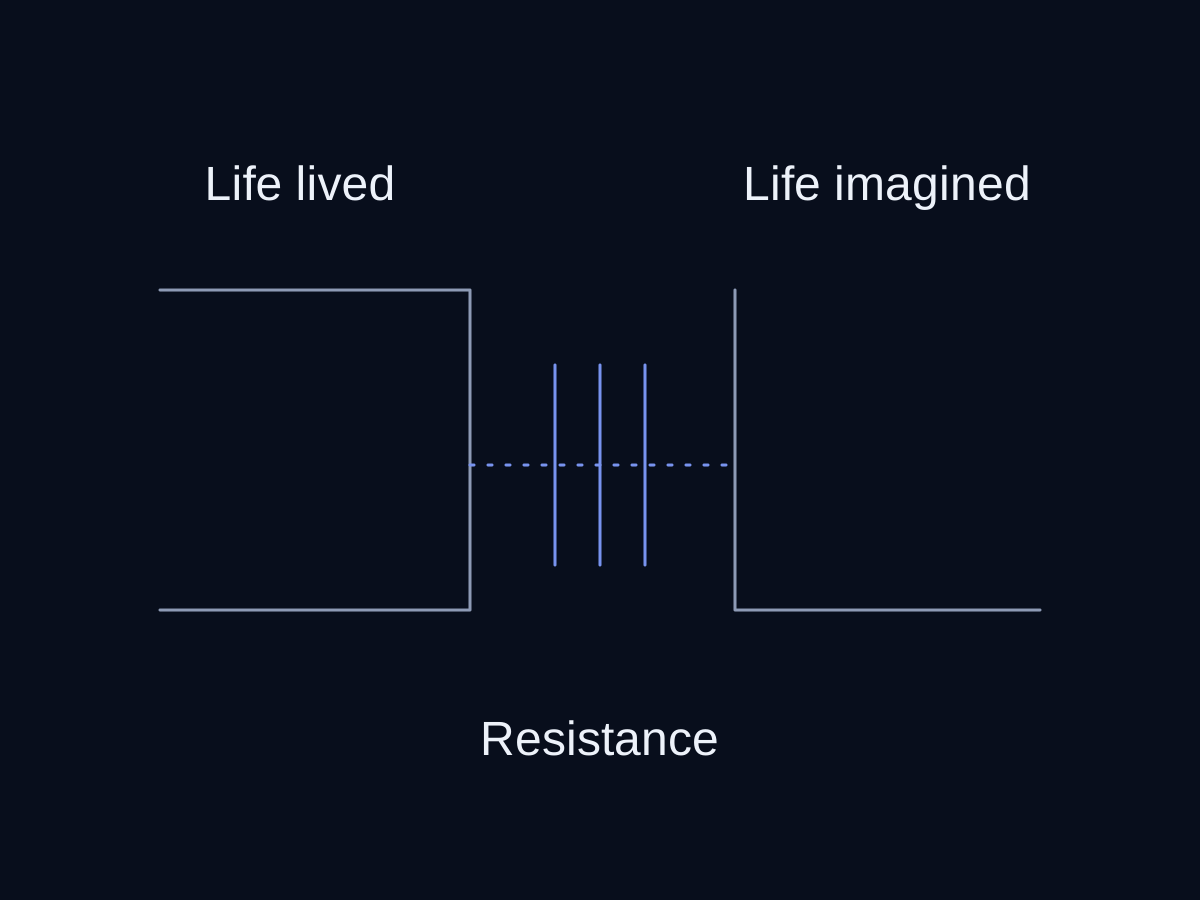
Pressfield describes a gap between the life we live and the life we imagine living. Resistance stands in that gap.
Reading note after Steven Pressfield, The War of Art
Resistance · Where resistance appears Today’s note
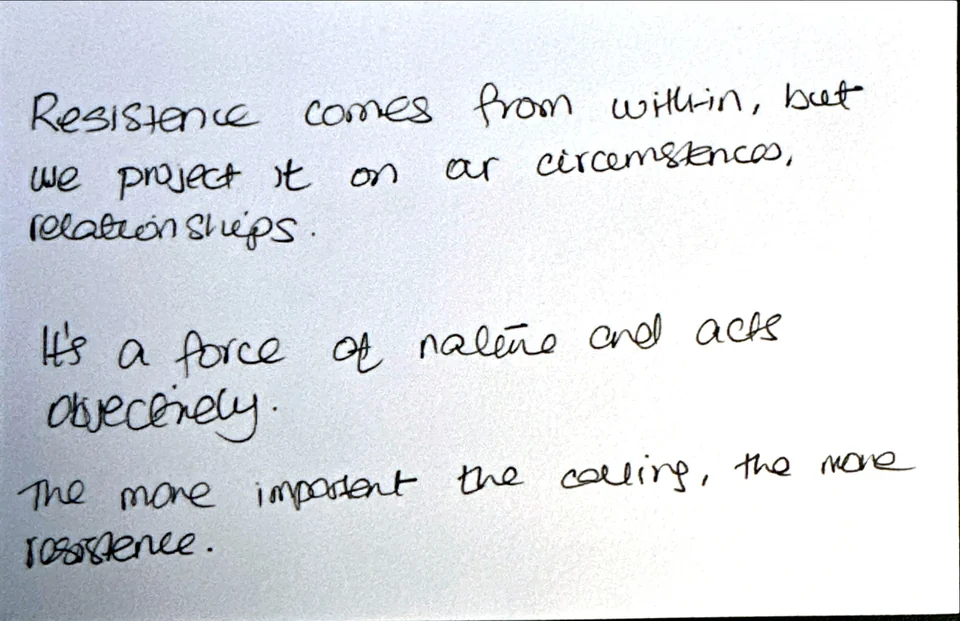
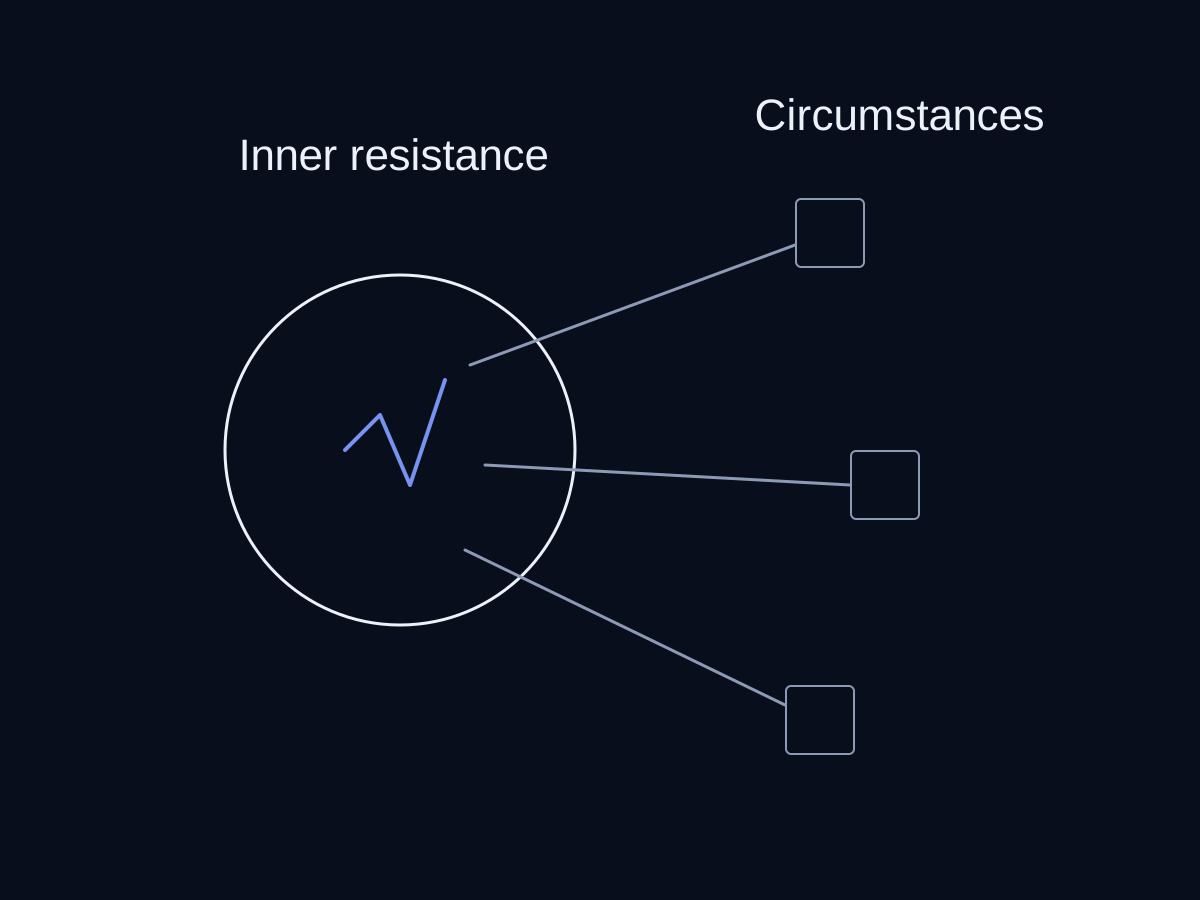
Pressfield describes resistance as arising within us. We can project it onto circumstances and relationships. In his account, work that matters deeply can stir a strong urge to avoid it.
Reading note after Steven Pressfield, The War of Art
Resistance · The invisible force Today’s note
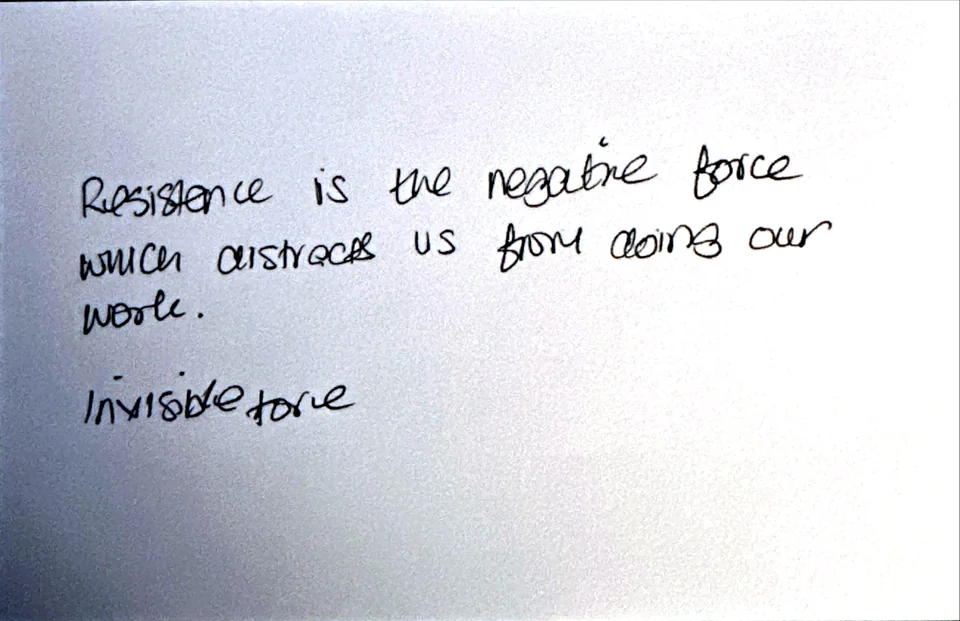
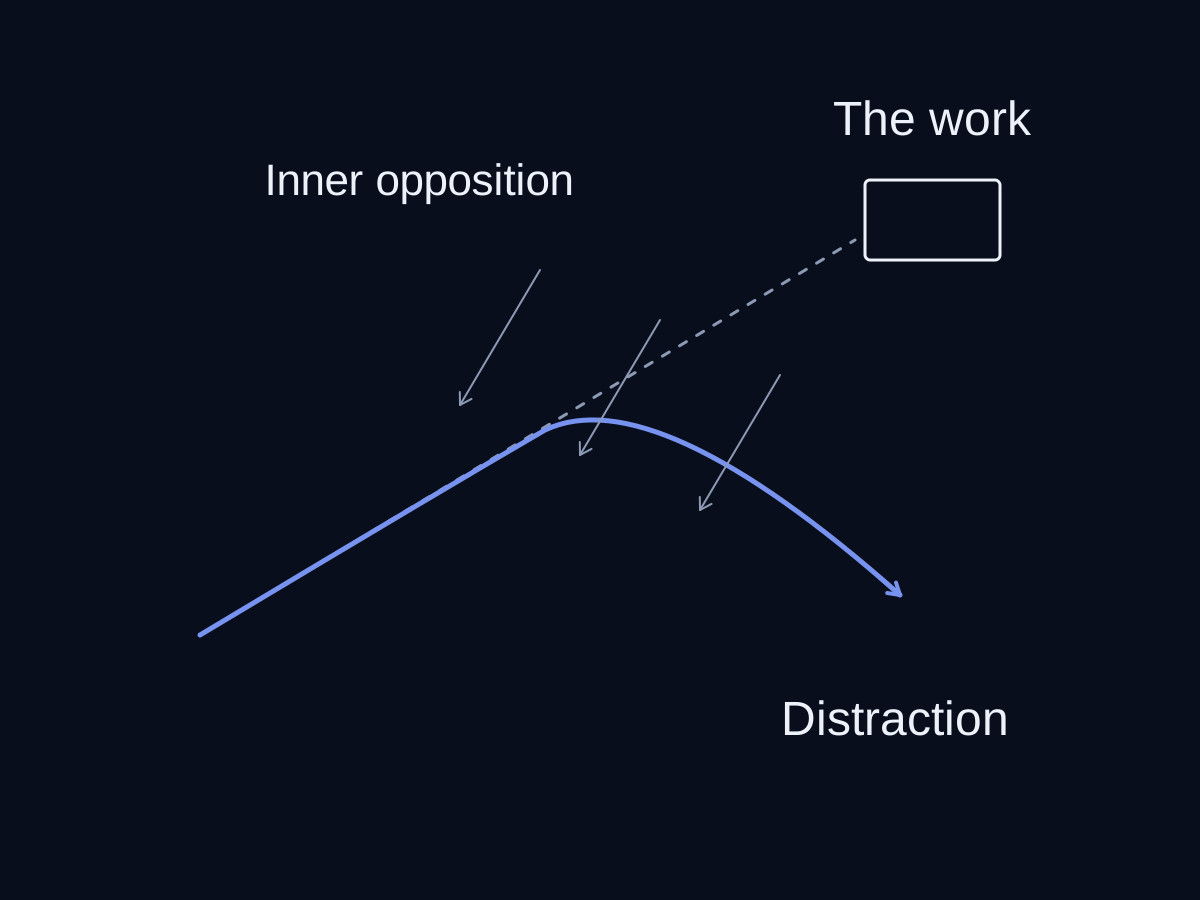
Resistance is Pressfield's name for the inner opposition that distracts us from doing work we care about.
Reading note after Steven Pressfield, The War of Art
Resistance · Immediate gratification Today’s note
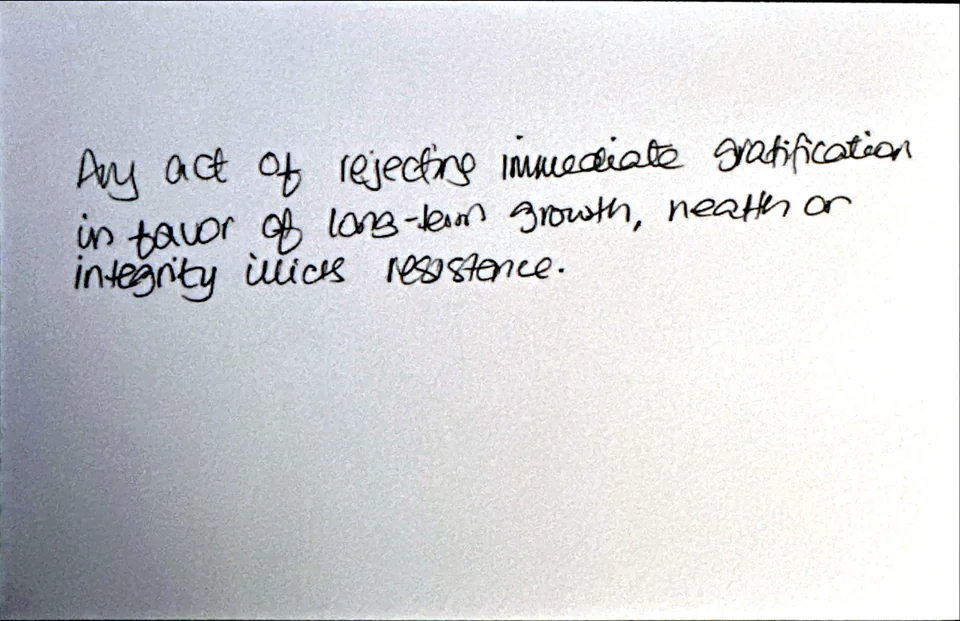
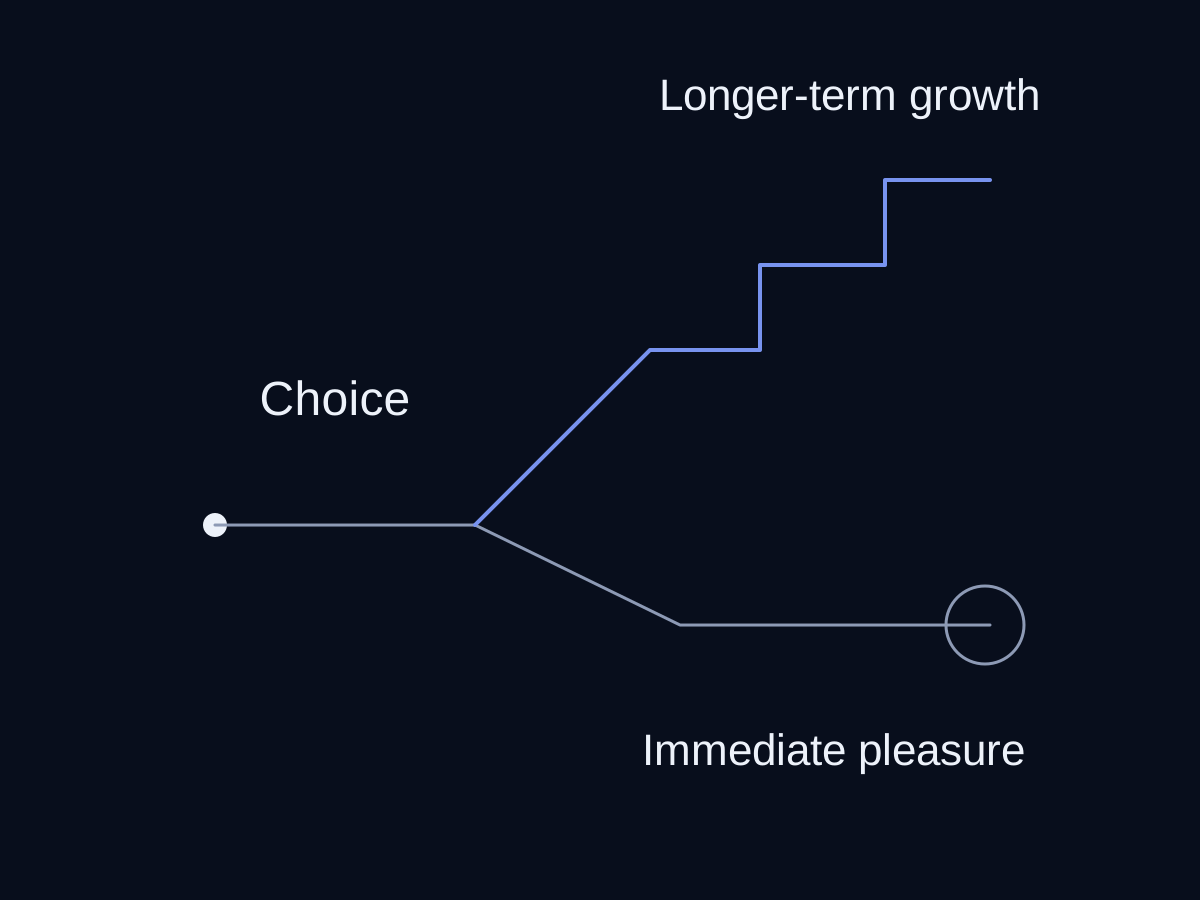
Long-term growth, health and integrity can require giving up an immediate pleasure. Pressfield places resistance in that moment of choice.
Reading note after Steven Pressfield, The War of Art
Resistance · Procrastinating about procrastination Today’s note
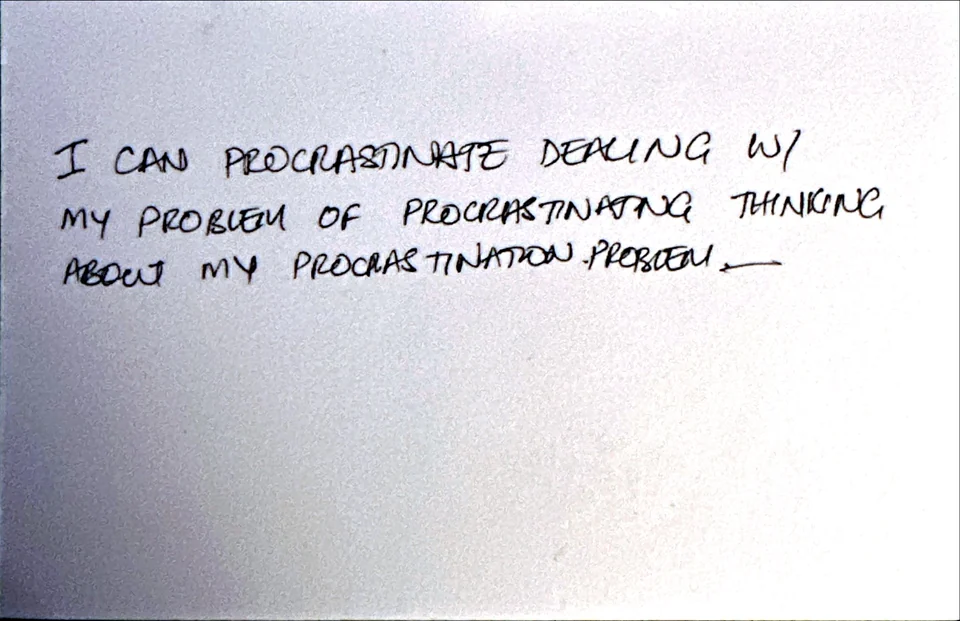
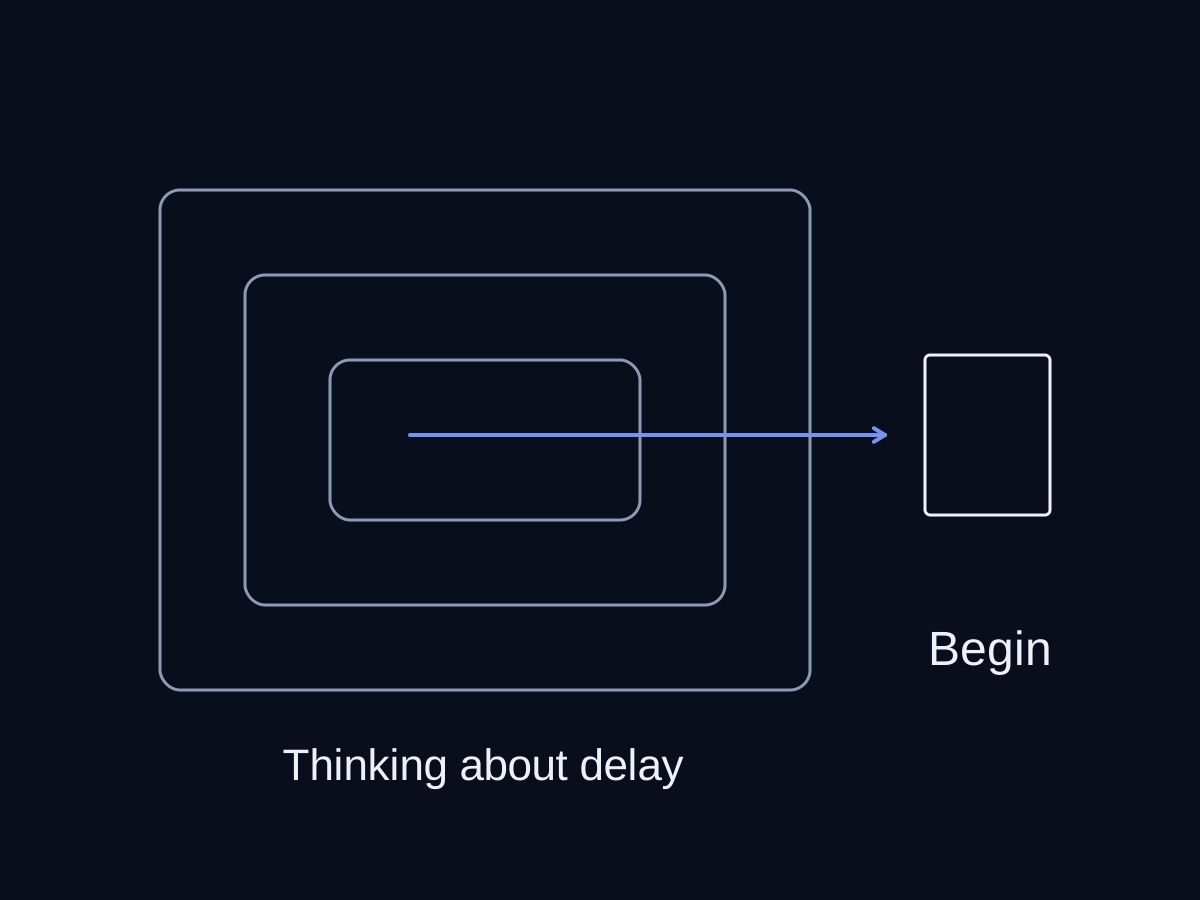
Even thinking about procrastination can become another way of putting off the work.
After Robert McKee, foreword to The War of Art
Resistance · Fear of success Today’s note
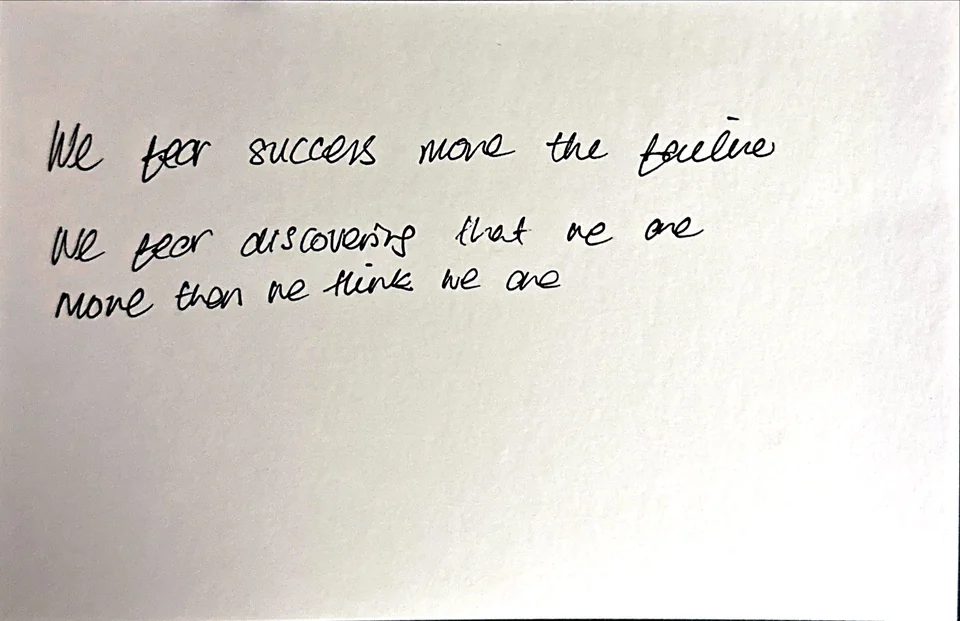
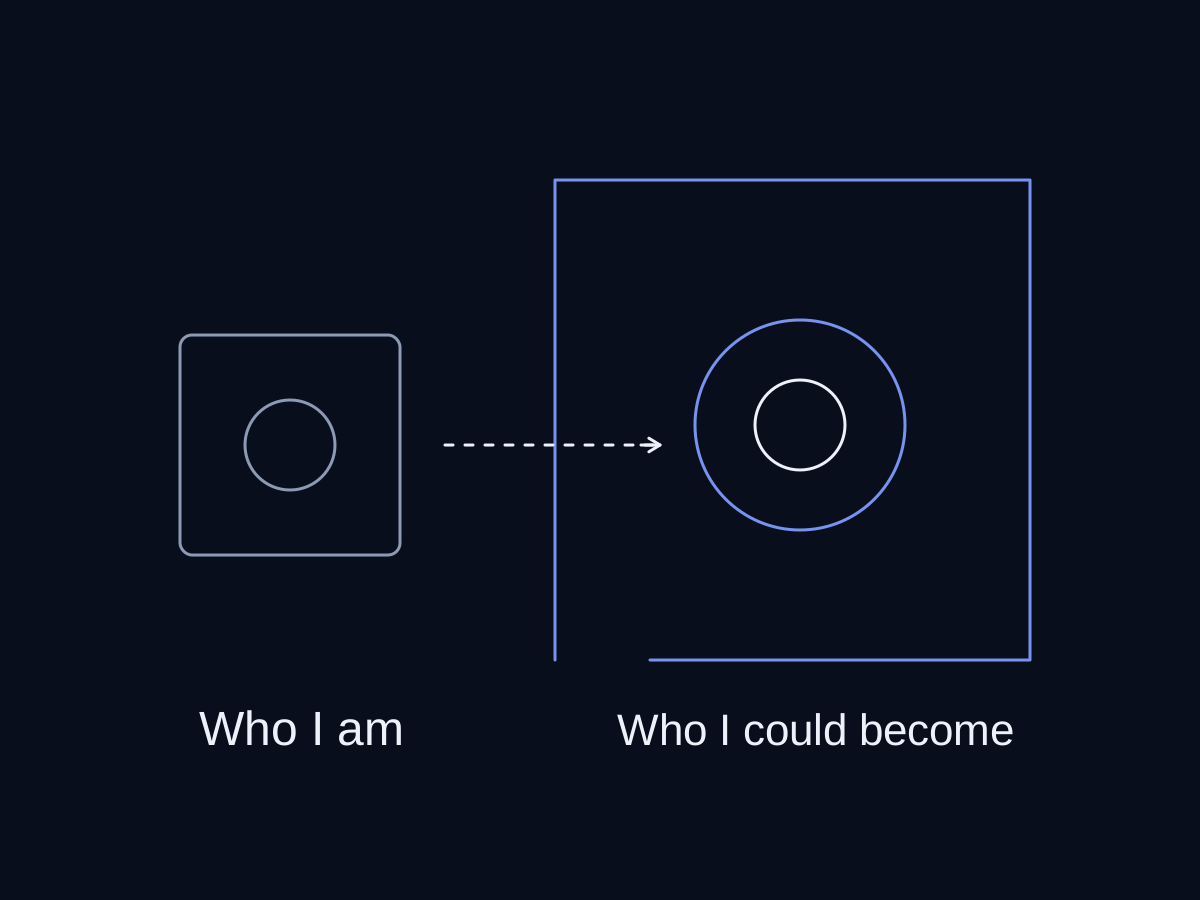
Pressfield suggests that success can feel frightening because it asks us to revise our idea of who we are.
Reading note after Steven Pressfield, The War of Art
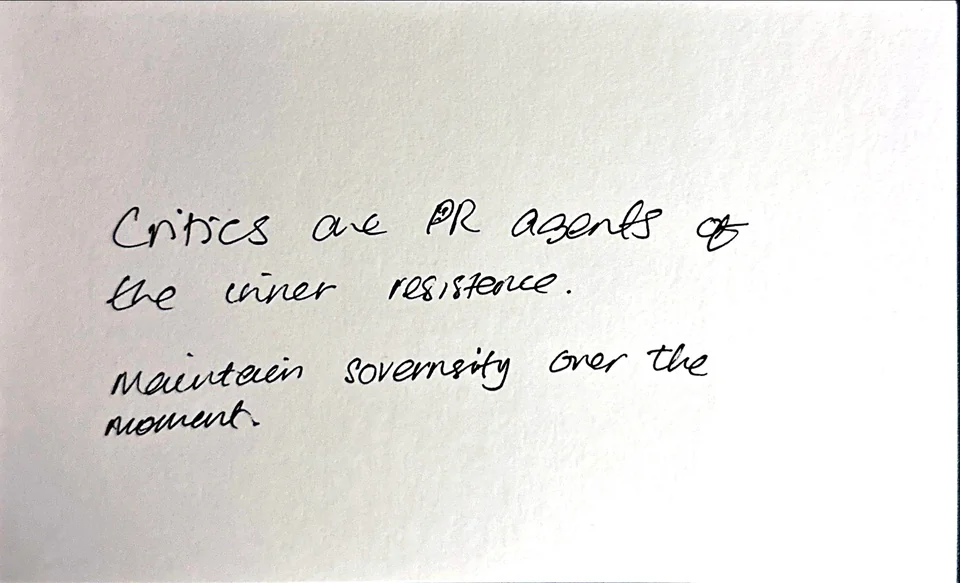
Resistance · Sovereignty over the moment Today’s note
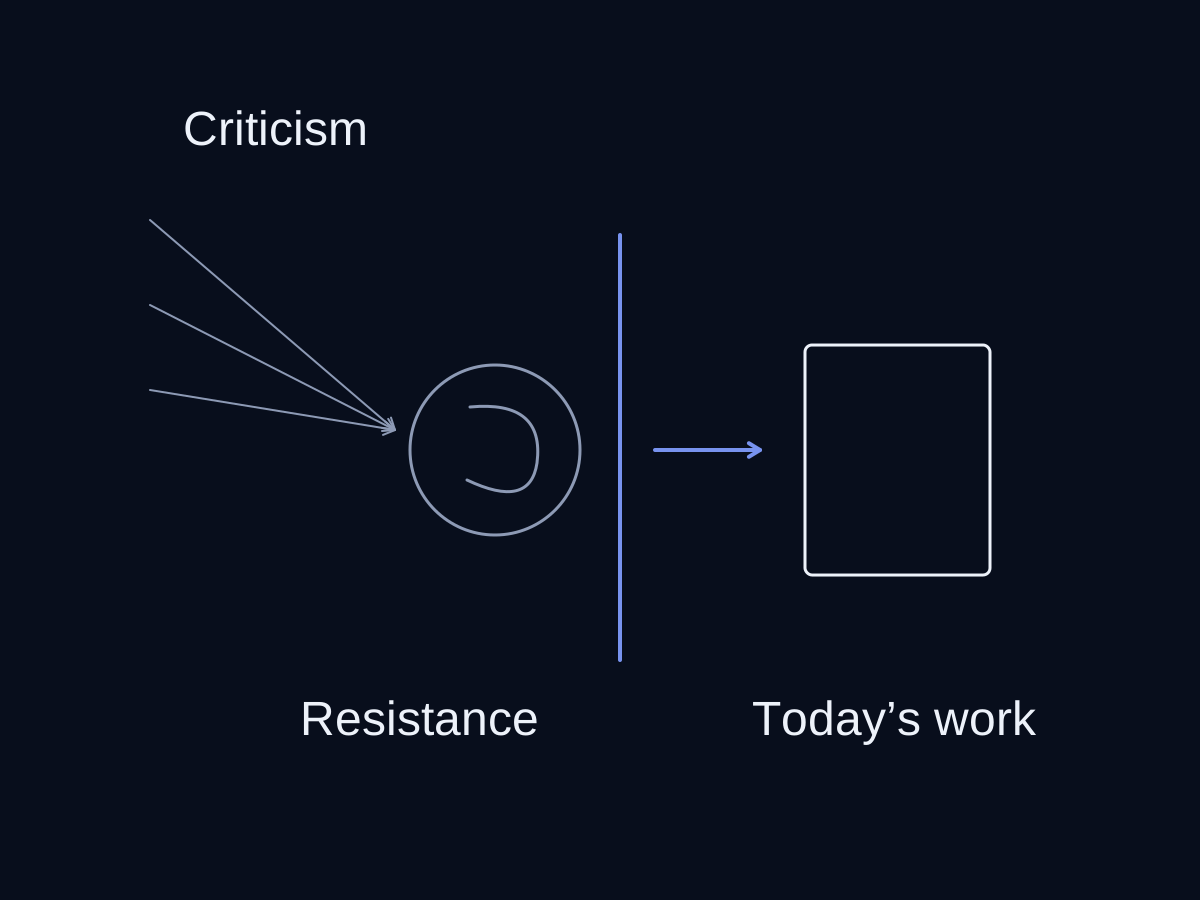
Criticism can give inner resistance more material. Keep your attention on the work in front of you.
Reading note after Steven Pressfield, The War of Art
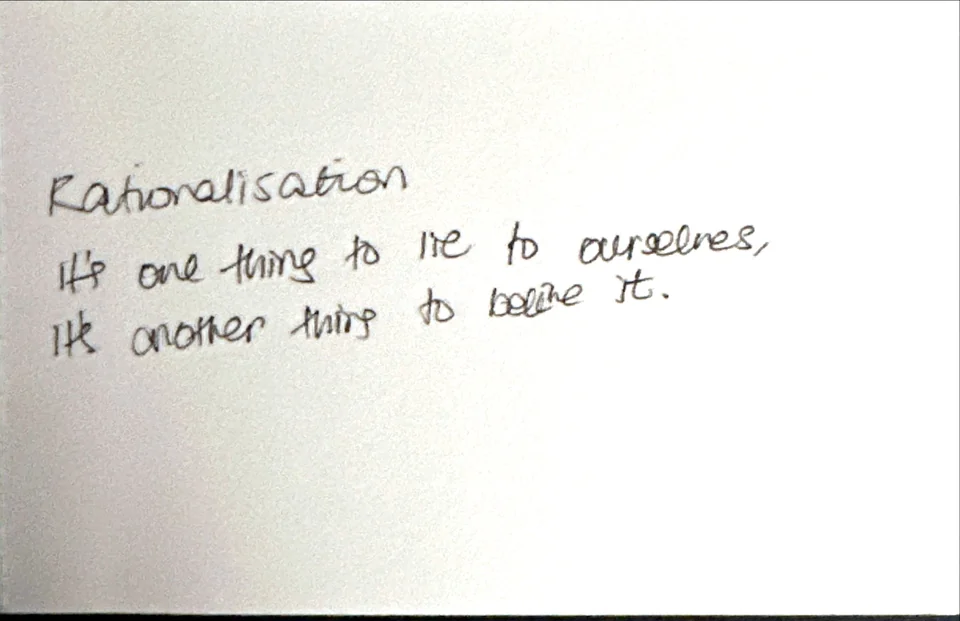
Resistance · Rationalisation Today’s note
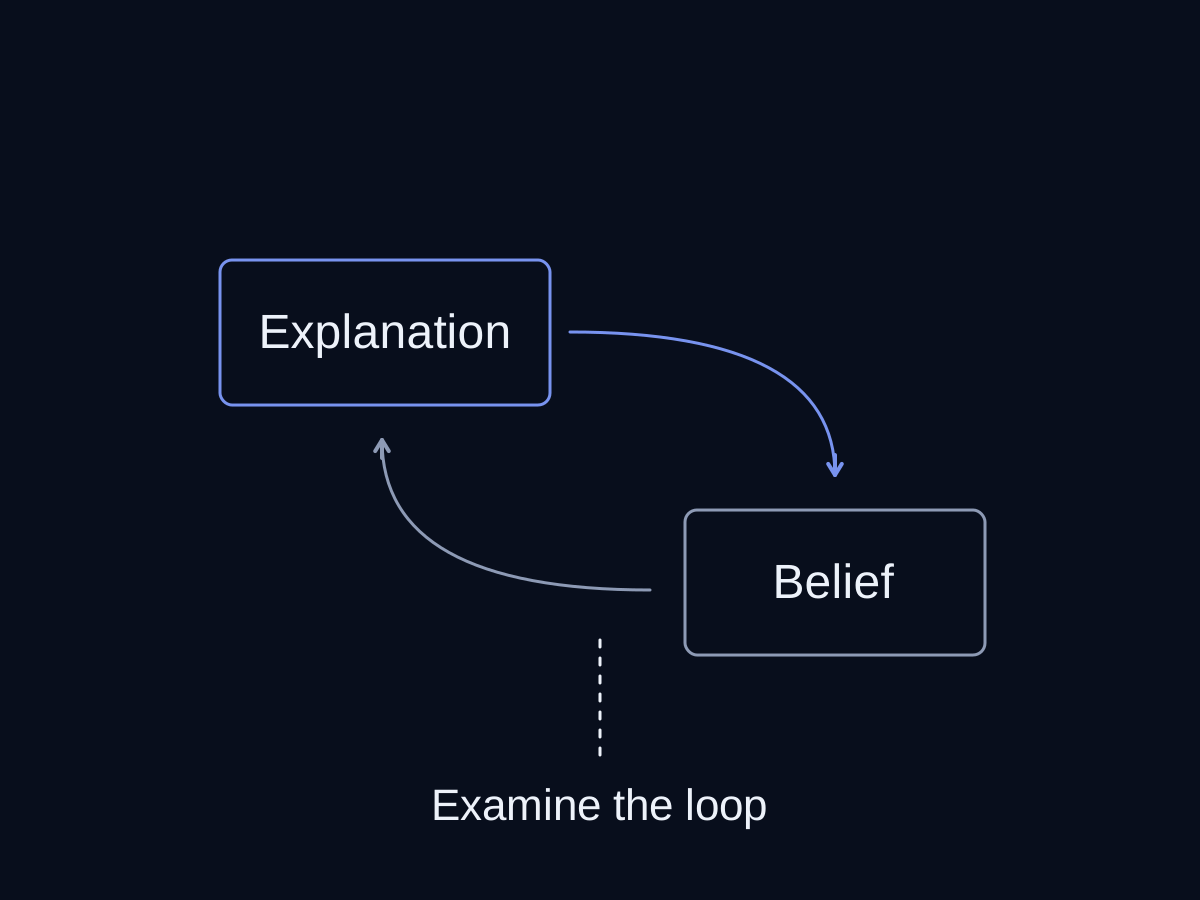
Notice when you have begun to believe your own rationalisations.
Reading note after Steven Pressfield, The War of Art
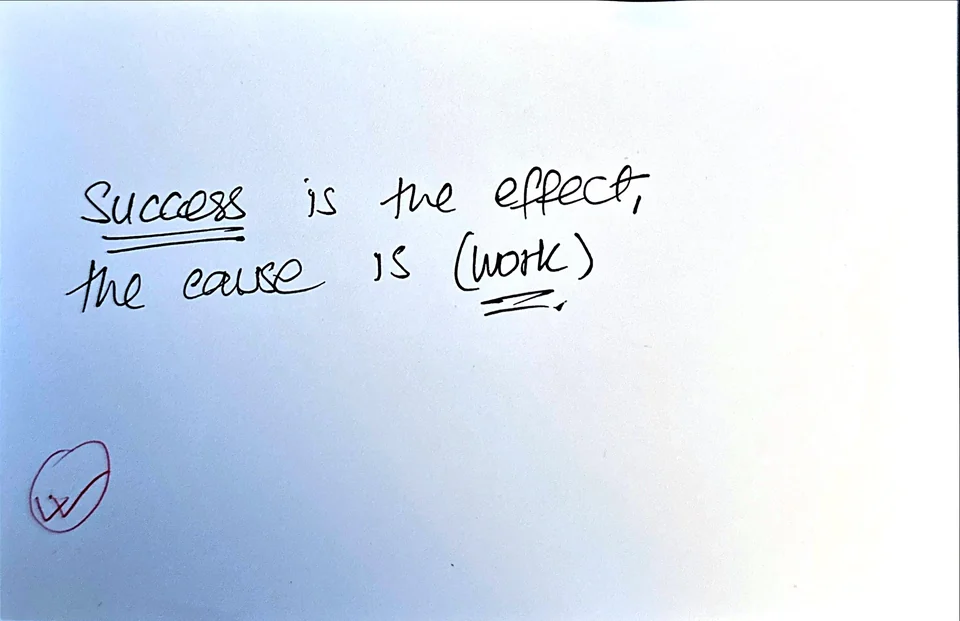
Work · Work and results Today’s note
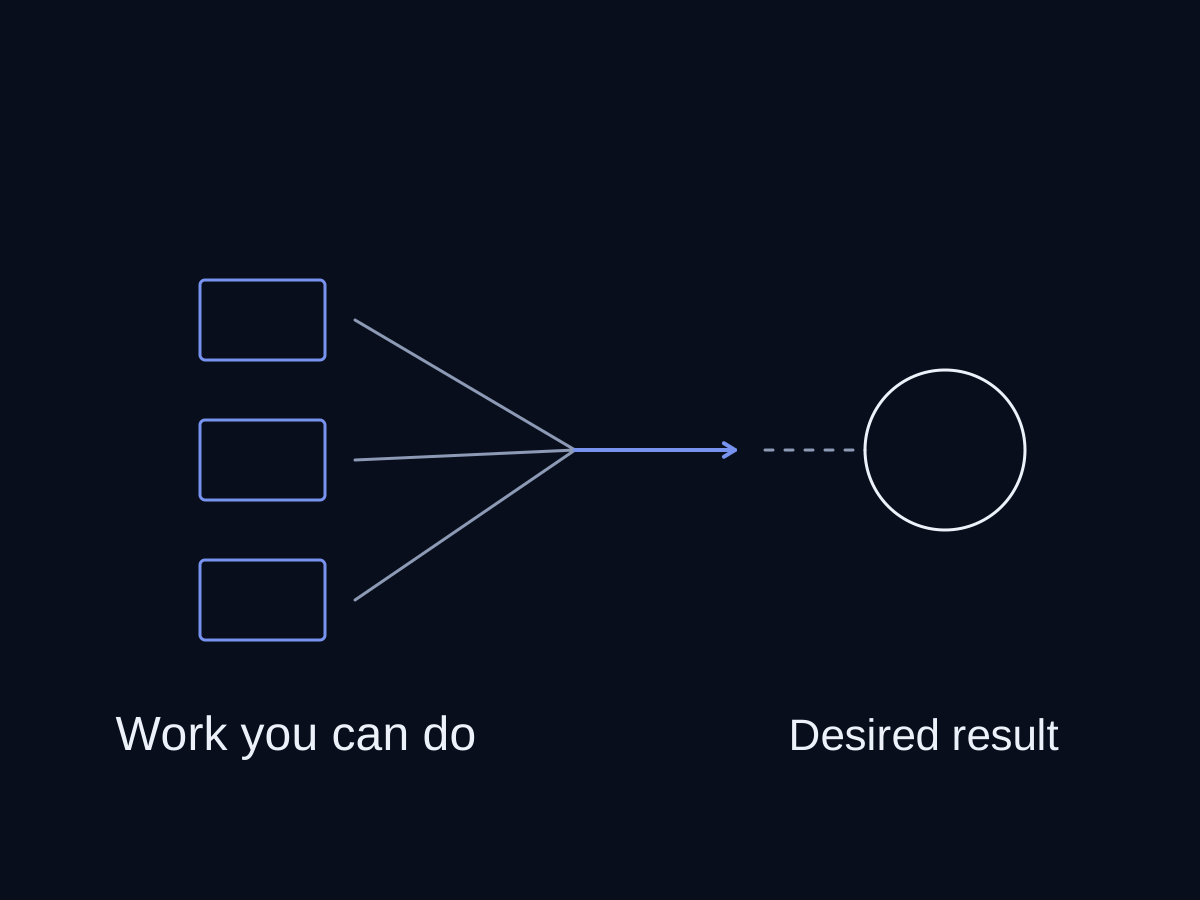
Put your attention into the work that can contribute to the result you want.
Collected note
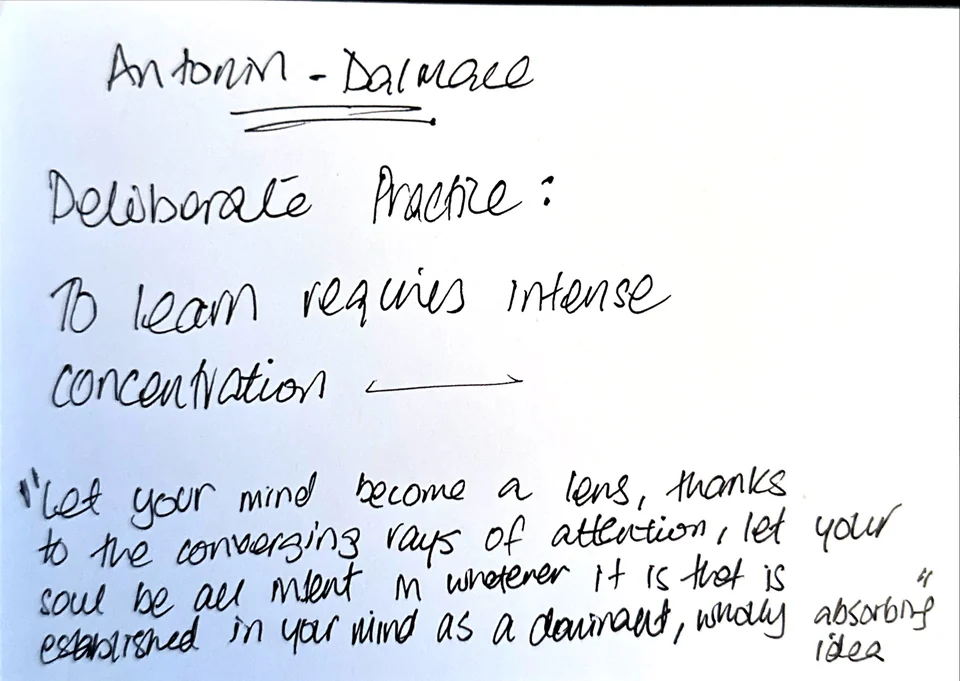
Work · A lens of attention Today’s note
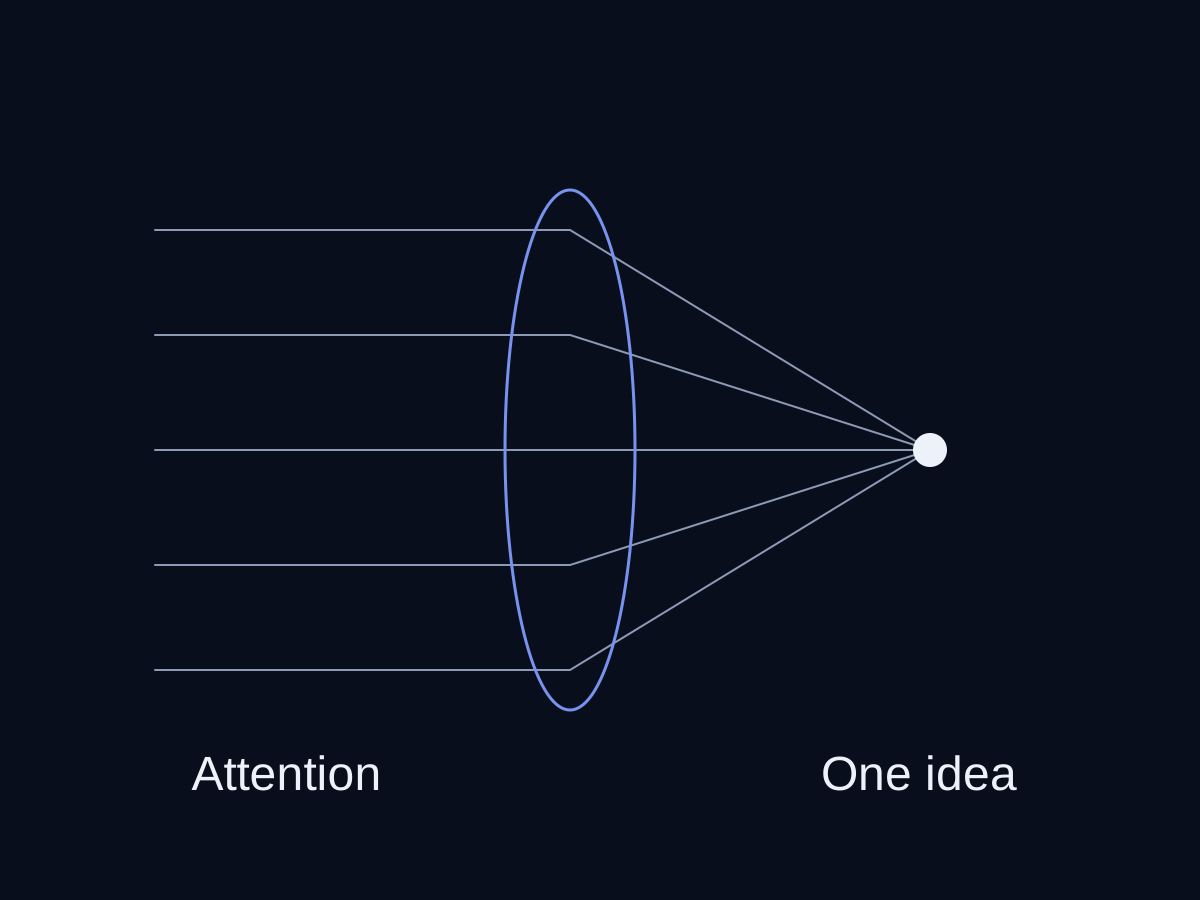
Concentrated attention gathers the mind around one idea. Sertillanges describes it as a lens bringing rays of attention together.
After A. G. Sertillanges, The Intellectual Life; Mary Ryan translation
Work · Begin Today’s note
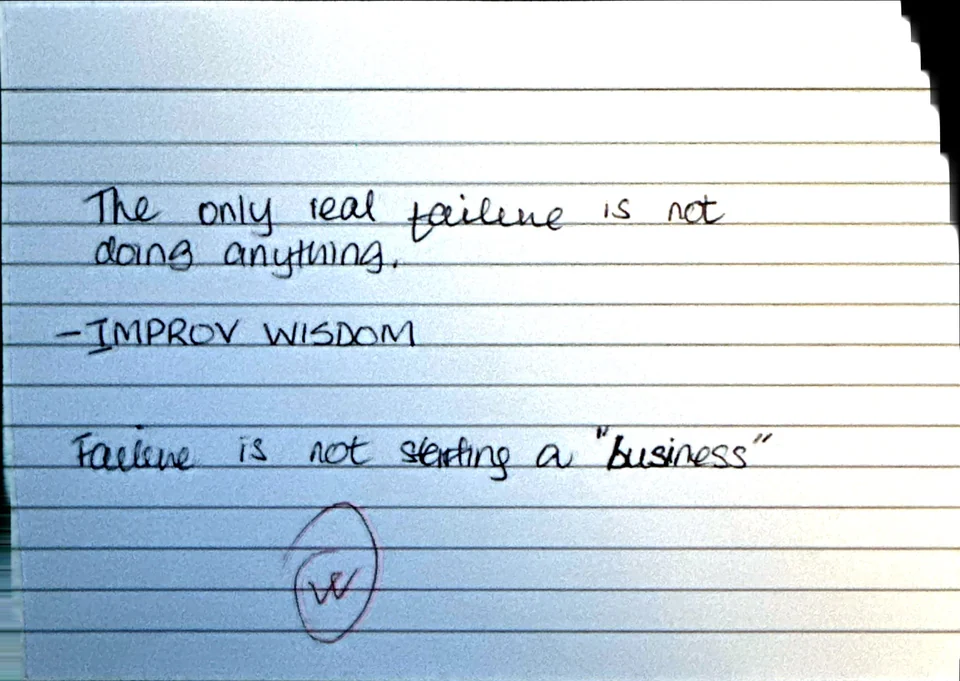
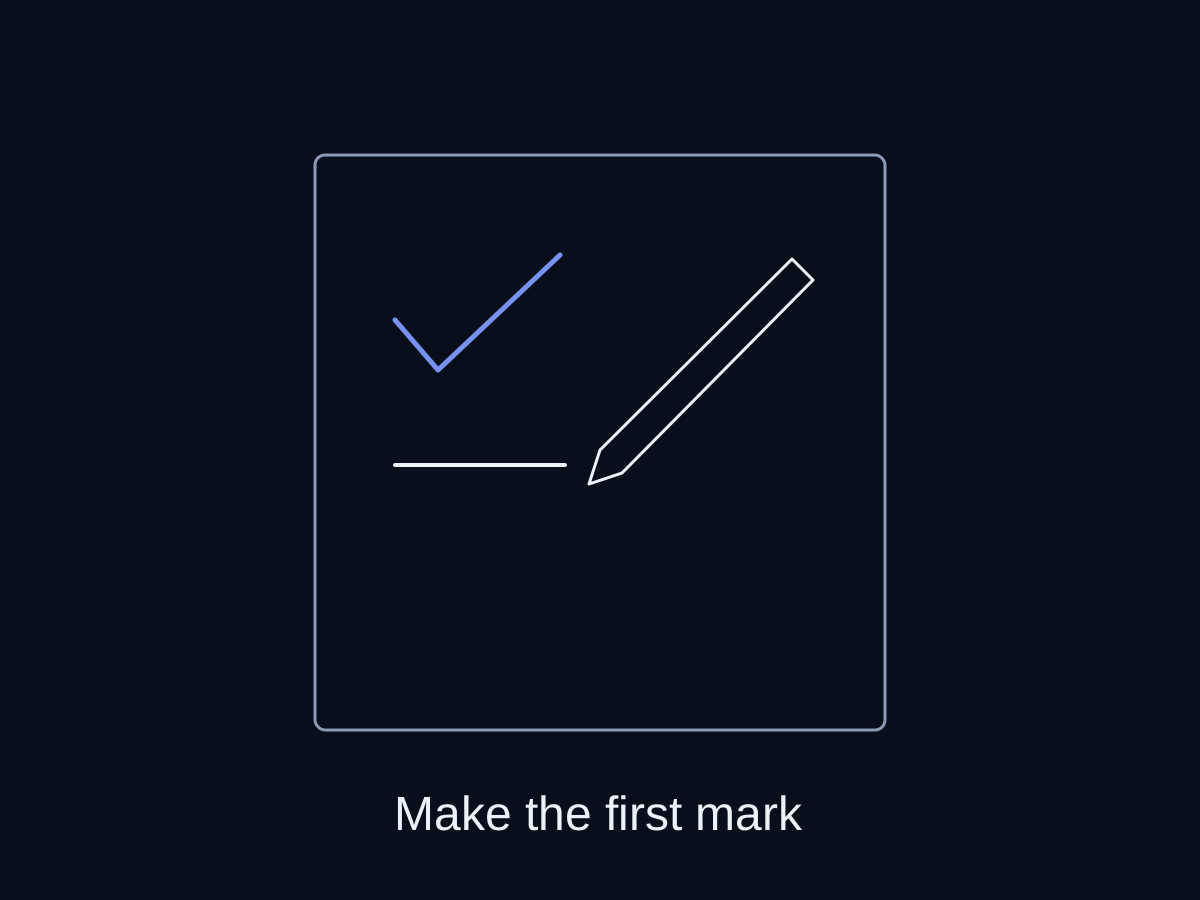
Begin. Action gives an idea a chance to become something you can learn from. The card applies this to starting a business.
After Patricia Ryan Madson, Improv Wisdom
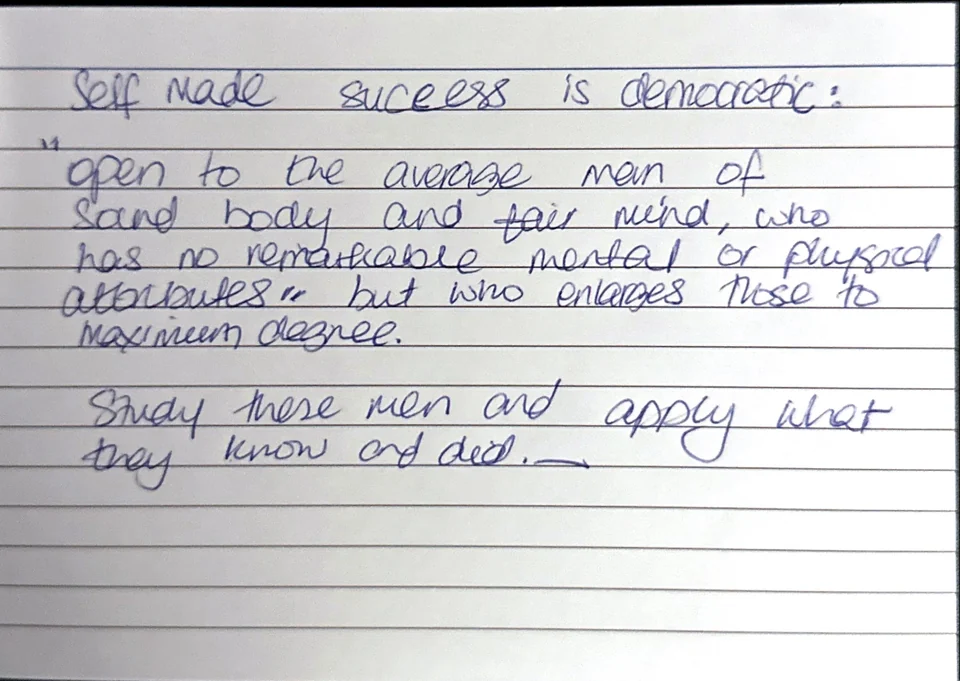
Work · Self-made success Today’s note
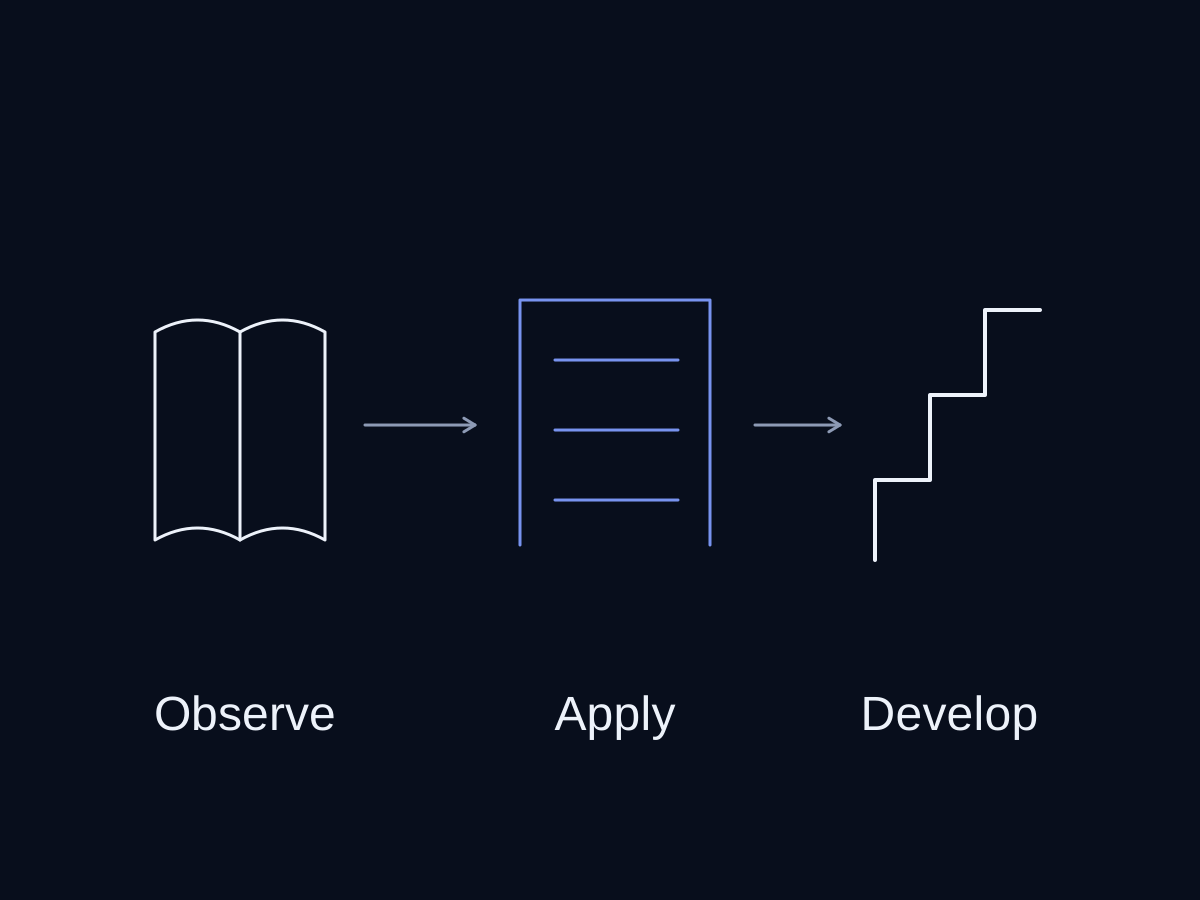
Roosevelt describes a life open to an ordinary person who develops the abilities they have. The card adds a practical intention: study people's actions and apply what you learn.
After Theodore Roosevelt, An Autobiography, chapter II
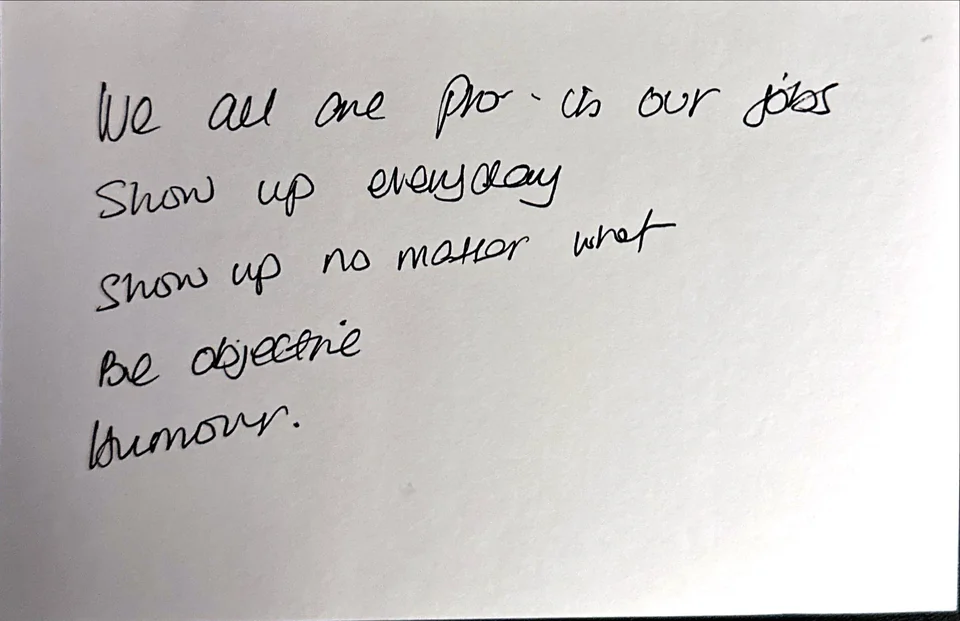
Work · Showing up Today’s note
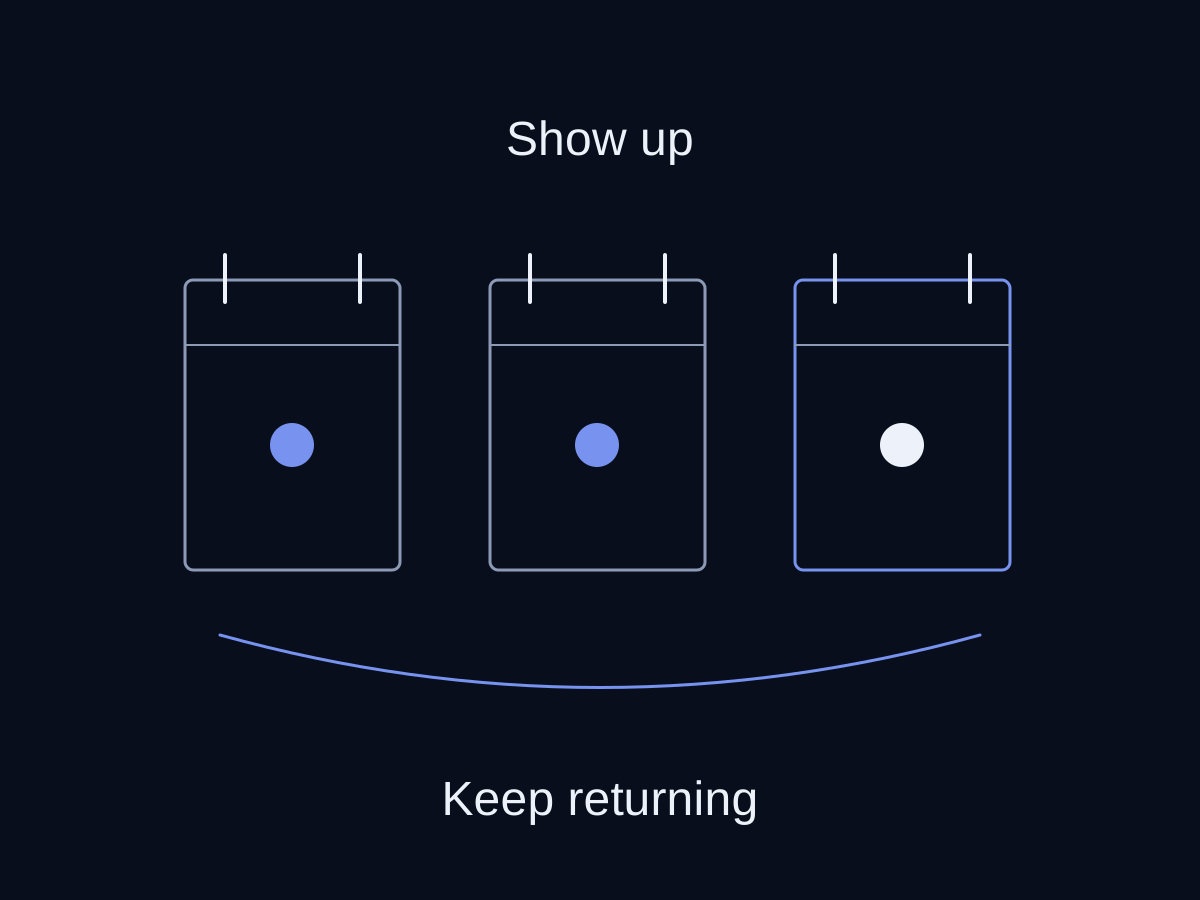
Bring the habits of working life to your chosen work: show up, keep perspective and retain a sense of humour.
Collected note; exact source unconfirmed
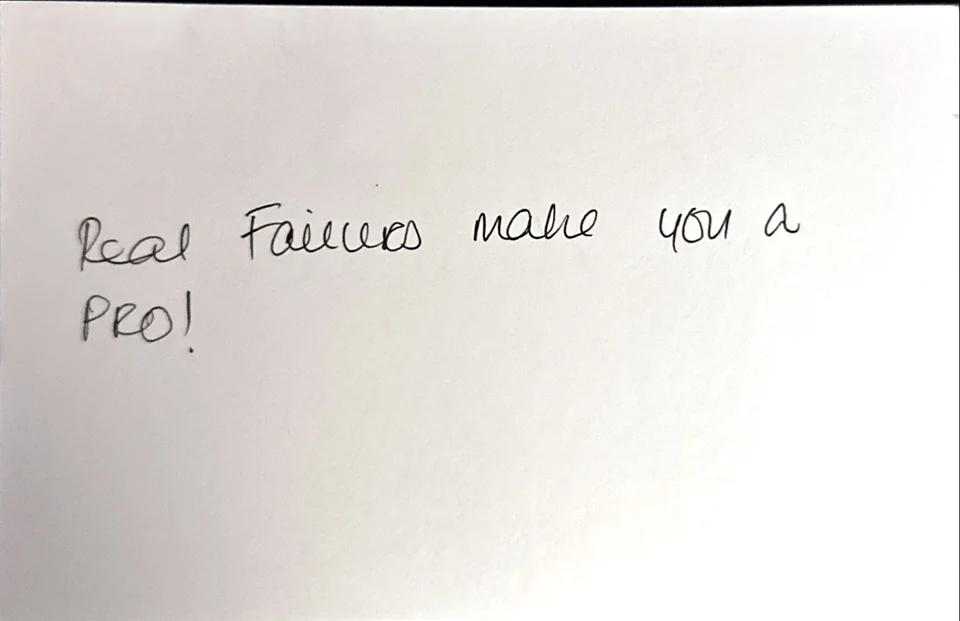
Work · Real failures Today’s note
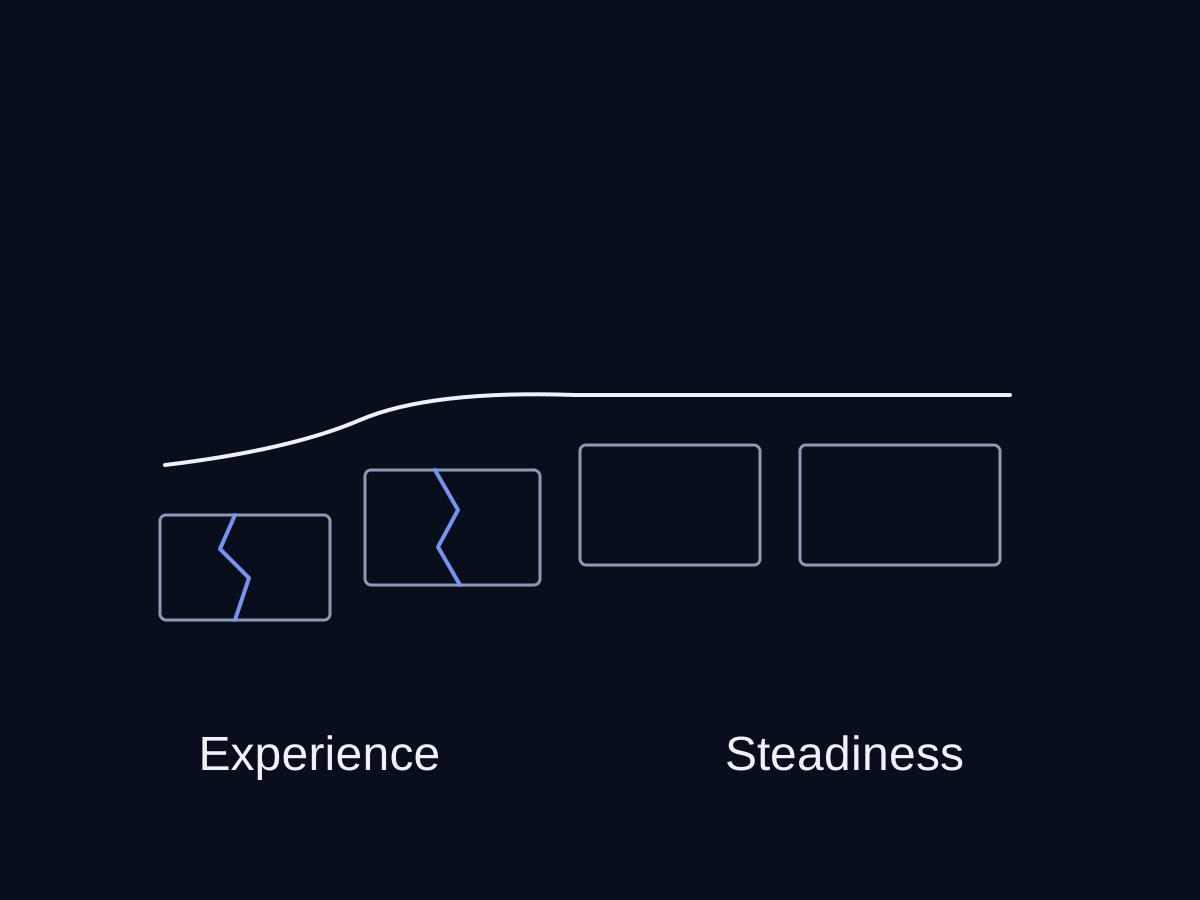
Experience of failure can help you develop the steadiness of a professional.
Collected note; exact source unconfirmed
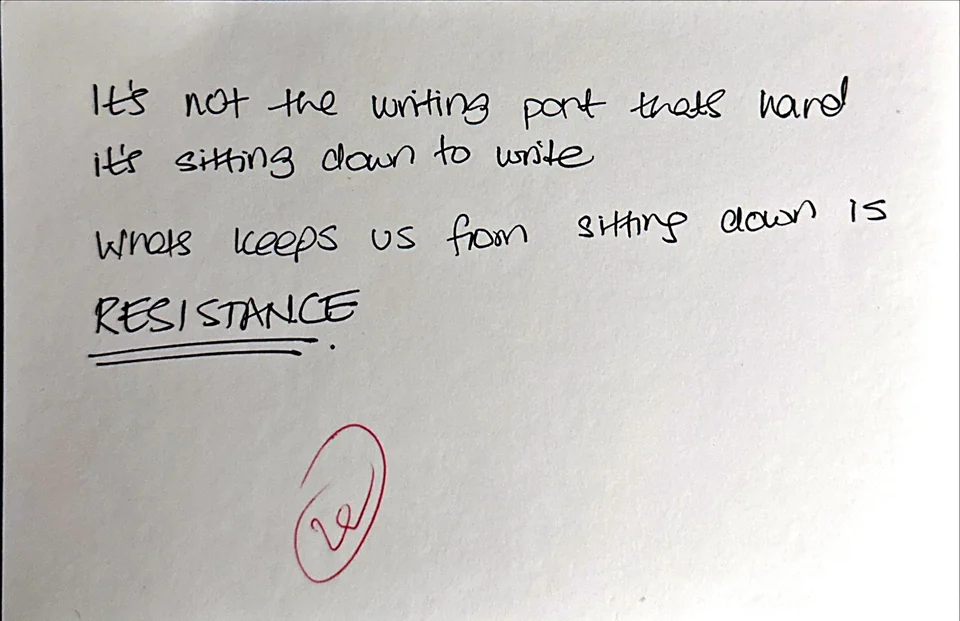
Work · Sitting down to write Today’s note
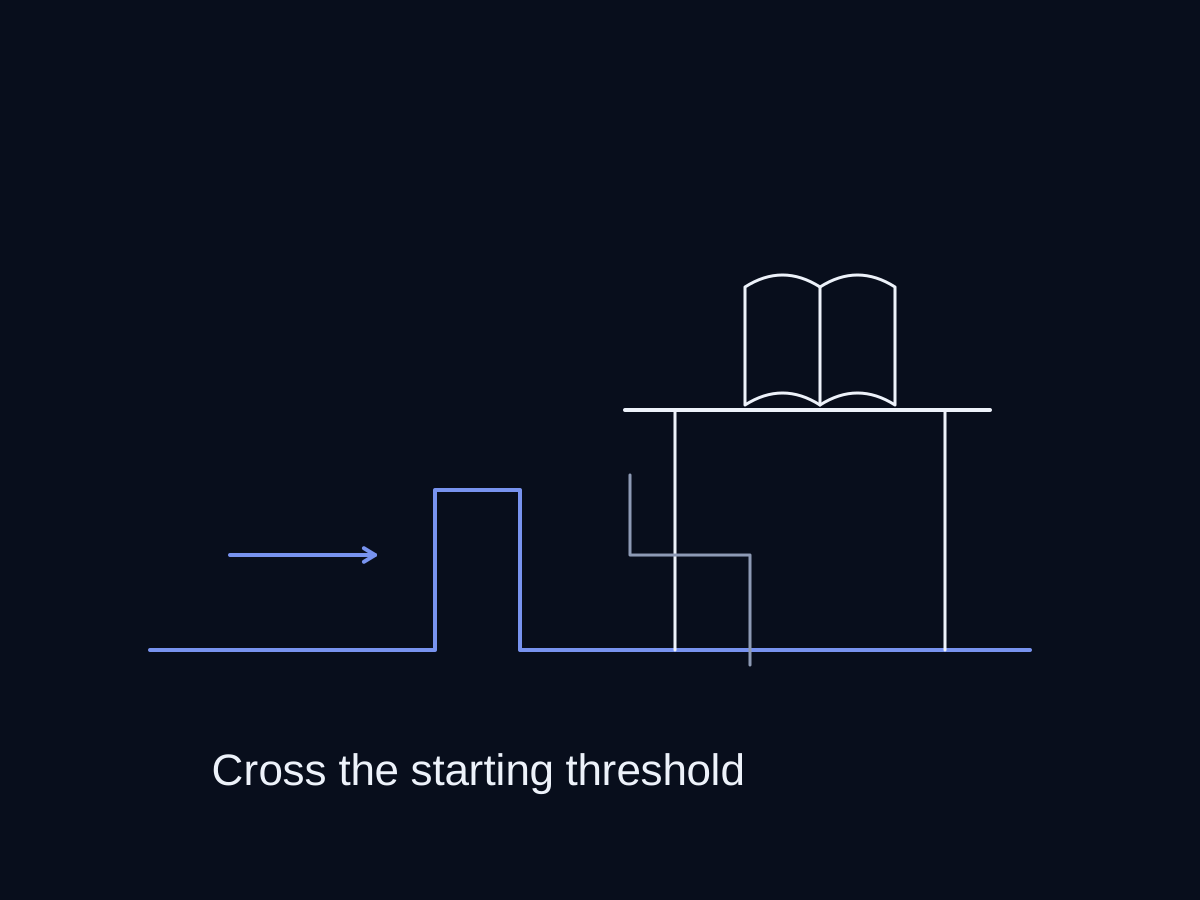
Beginning a writing session can be the hardest part. Pressfield calls the force that keeps us from sitting down resistance.
Reading note after Steven Pressfield, The War of Art
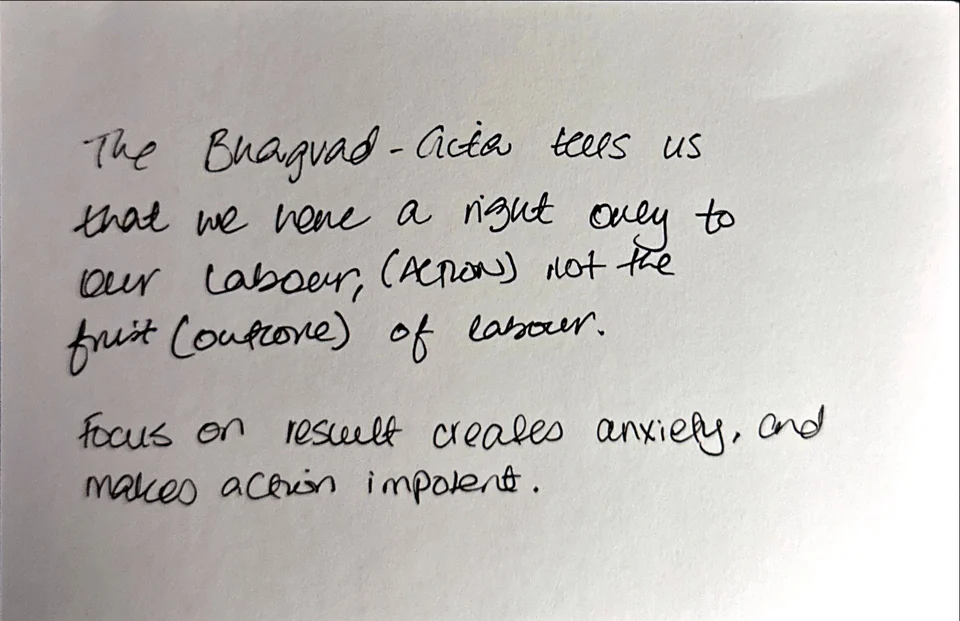
Work · Labour and its fruit Today’s note
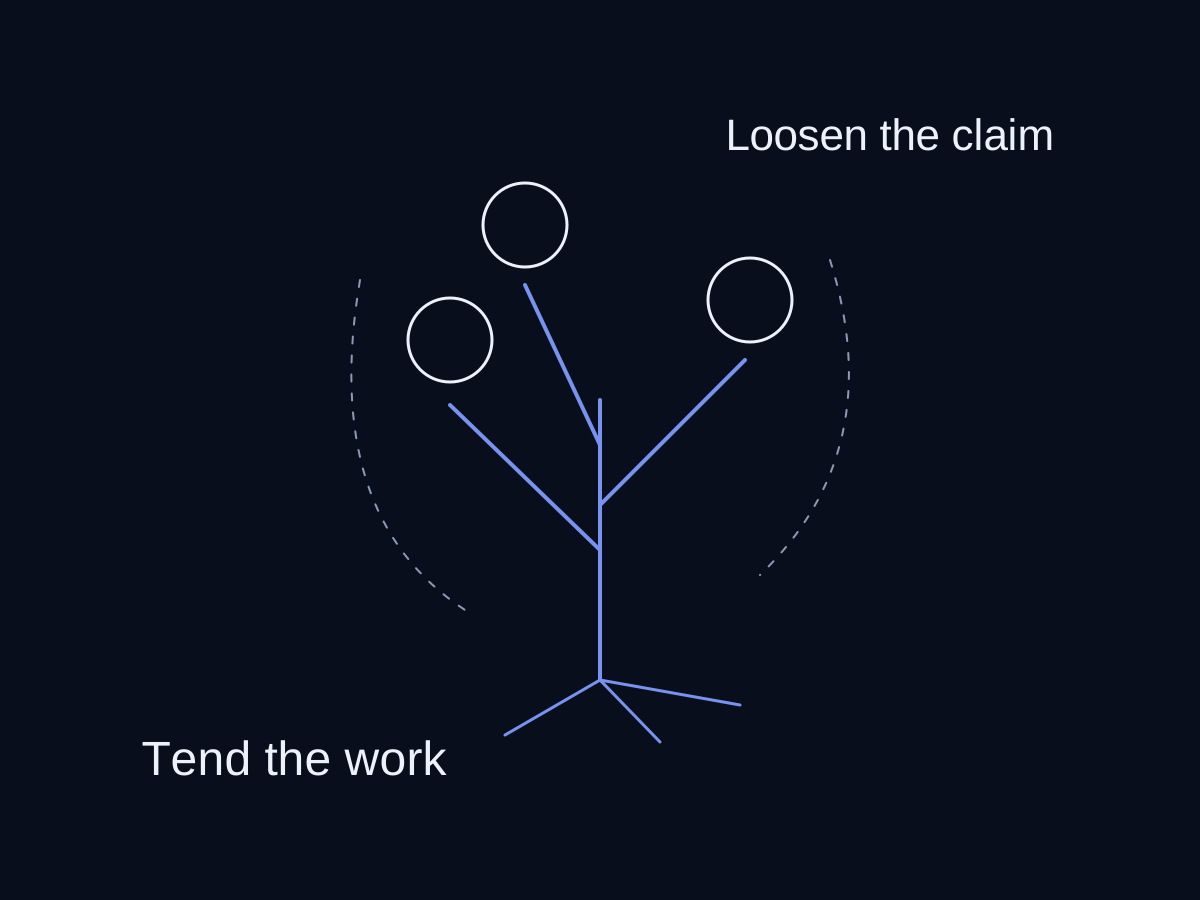
Bhagavad Gita 2.47 directs attention to action while loosening the claim on its fruits. The card applies this to work and the anxiety attached to outcomes.
After Bhagavad Gita 2.47
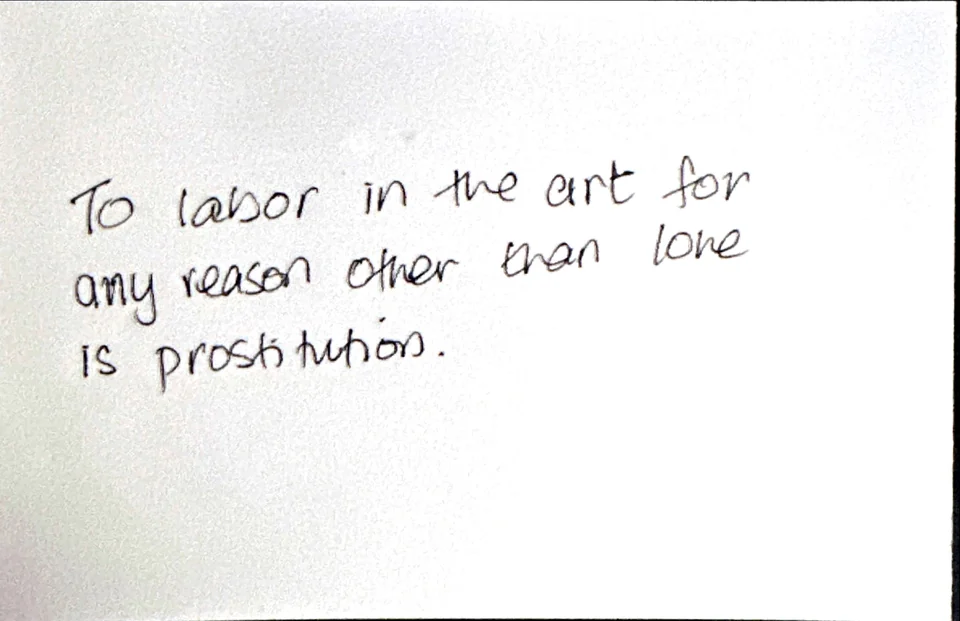
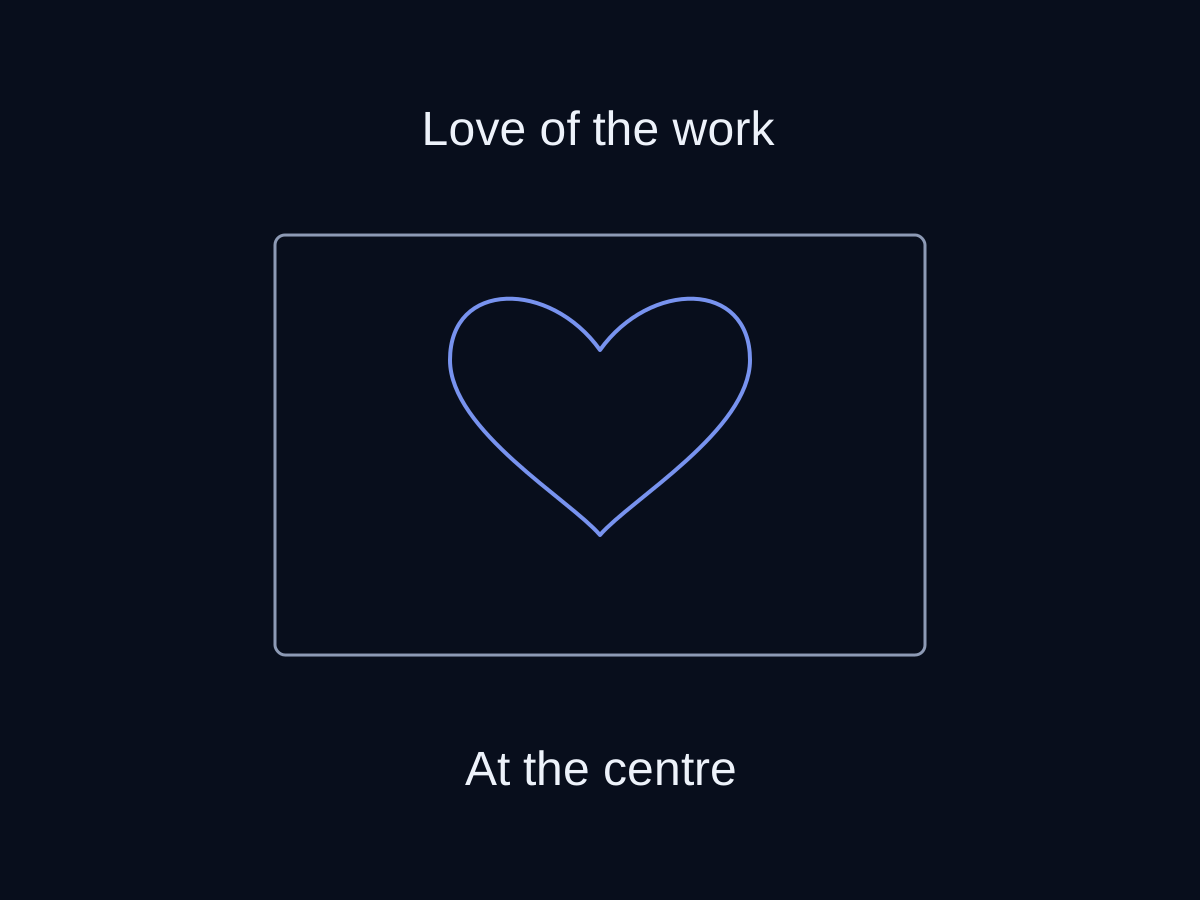
Work · Love of the art Today’s note
Let love of the work have a central place in why you do it.
Collected reading note; probable source: Steven Pressfield, The War of Art
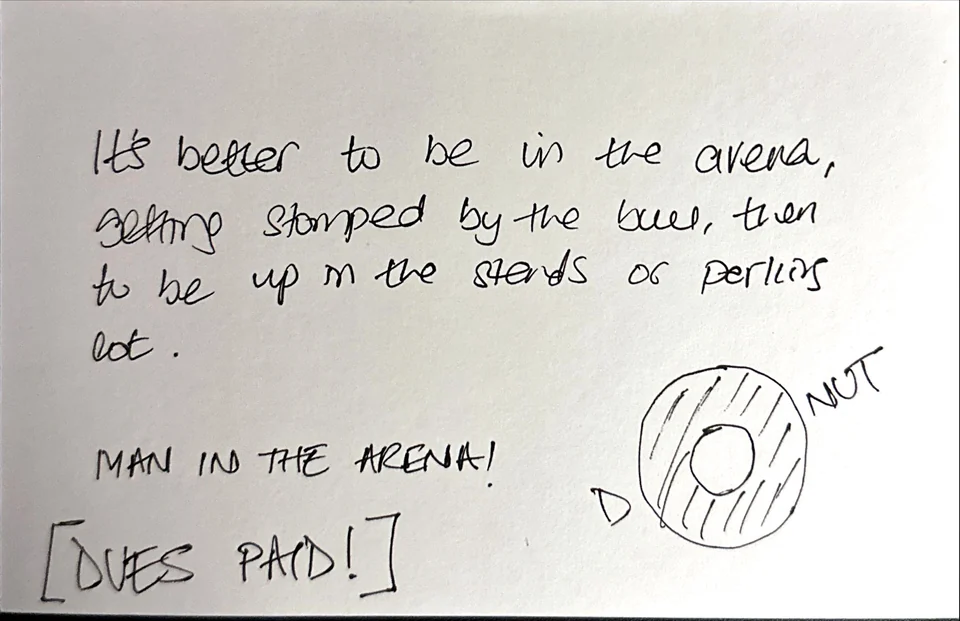
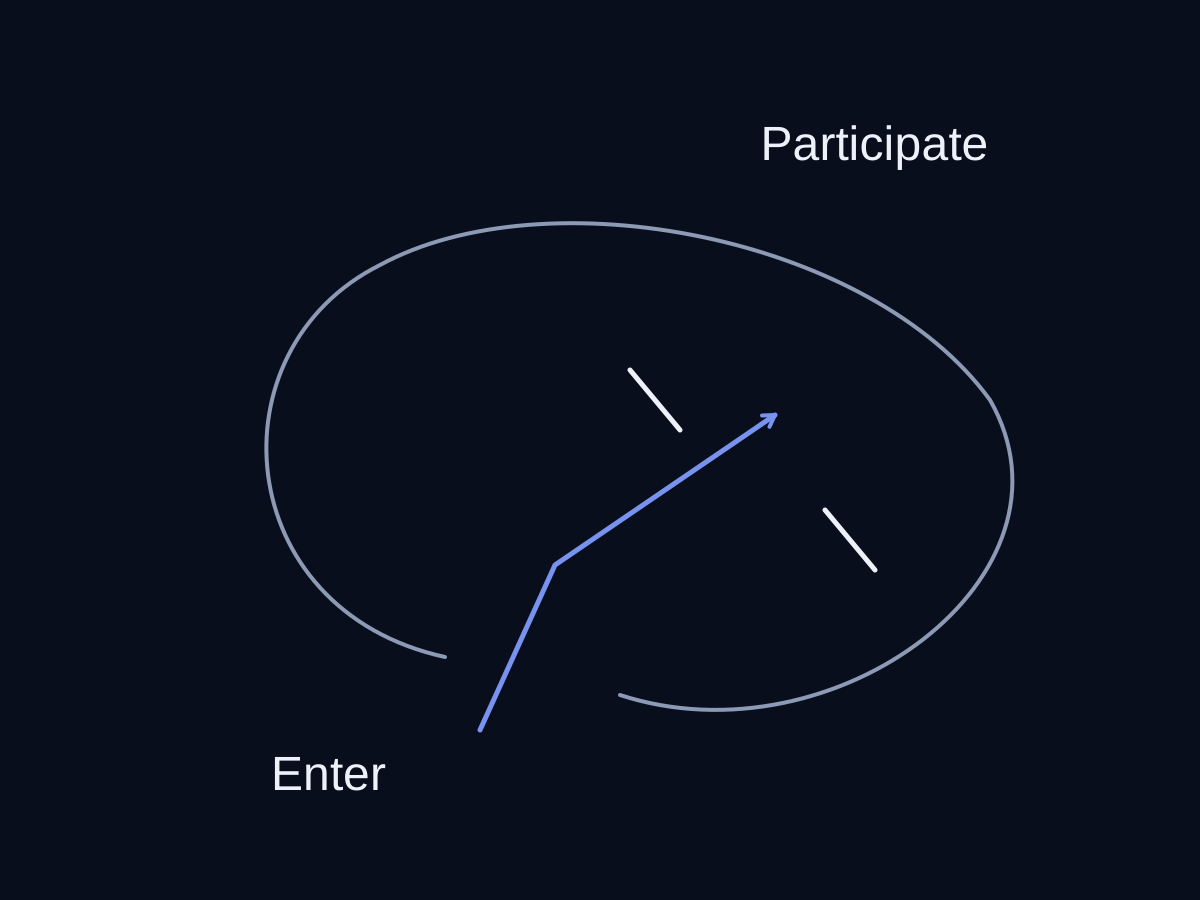
Work · In the arena Today’s note
Take part in the work and encounter its difficulties. The card uses the image of entering the arena and paying your dues.
Reading note after Steven Pressfield, The War of Art
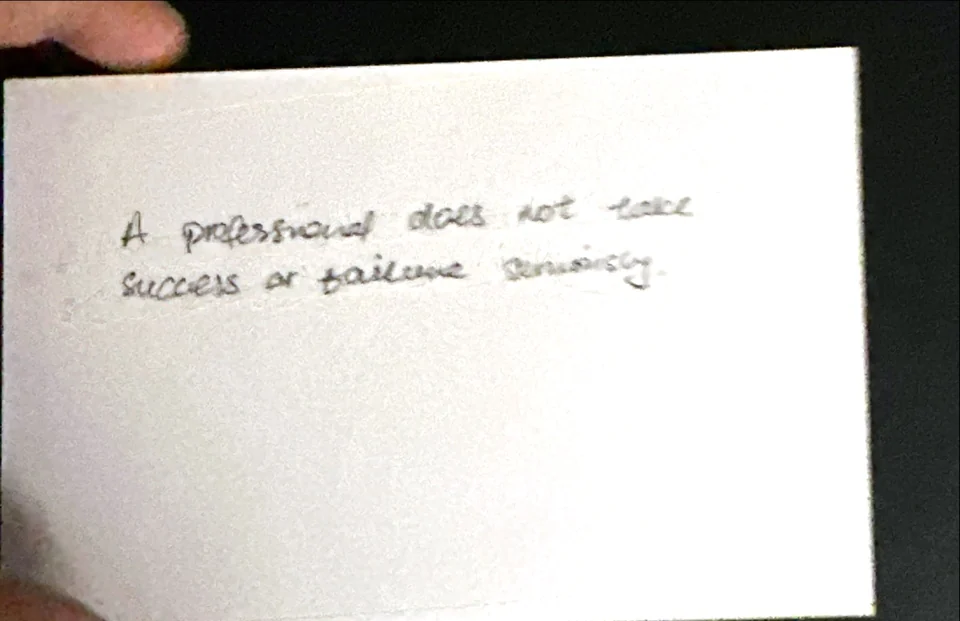
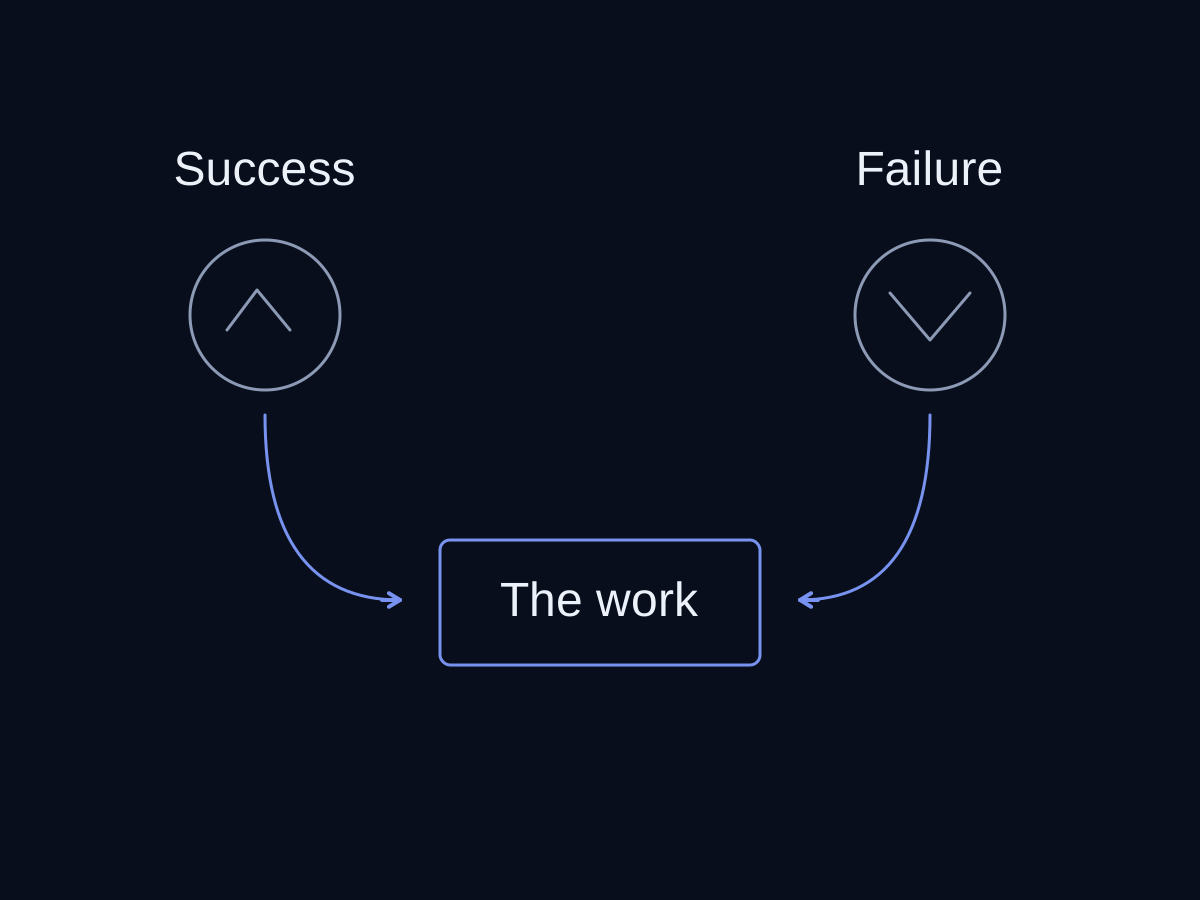
Work · Success and failure Today’s note
Keep success and failure from becoming your whole identity. Return to the work.
Reading note after Steven Pressfield, The War of Art
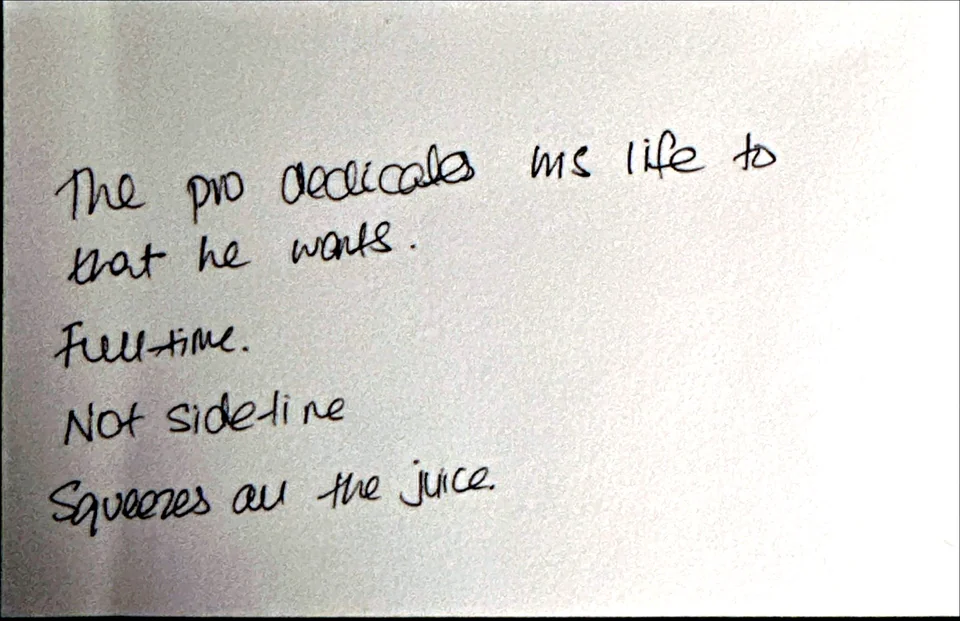
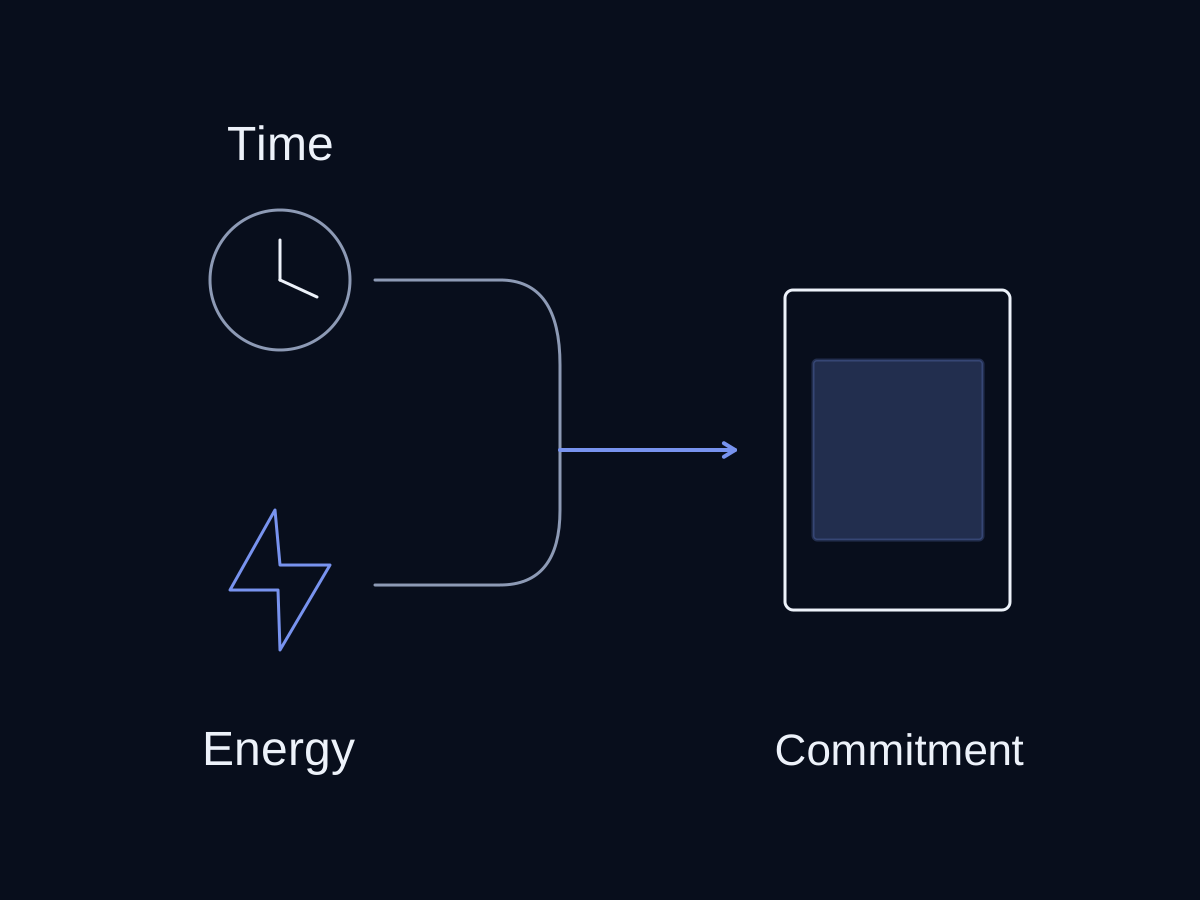
Work · Full-time commitment Today’s note
Give the work a committed place in your life. Put time and energy behind what you want to do.
Reading note after Steven Pressfield, The War of Art
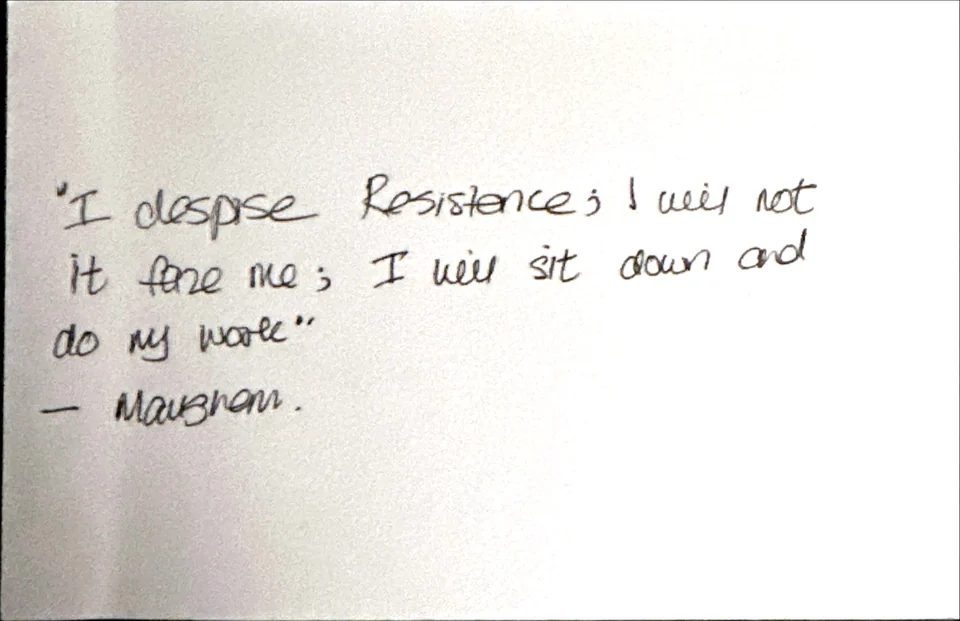
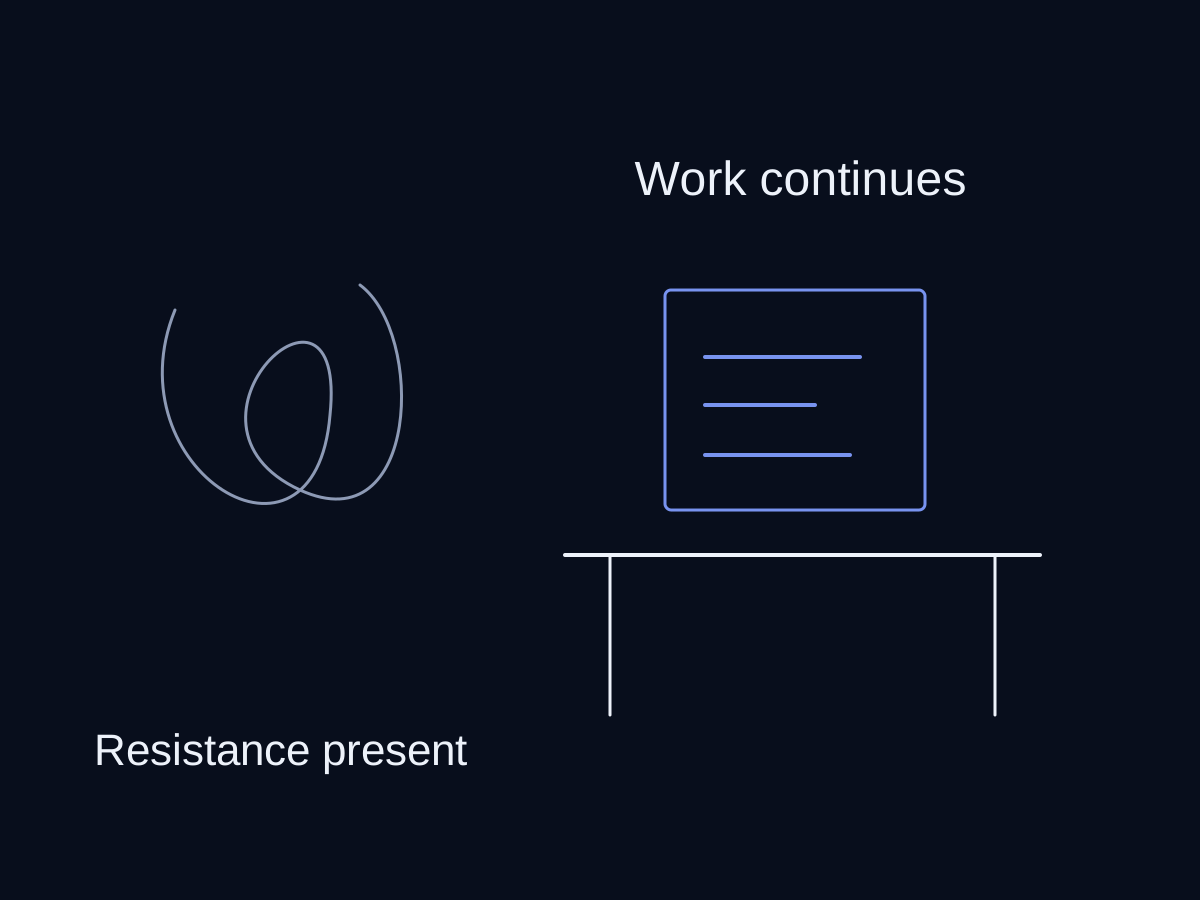
Work · Sit down and work Today’s note
Sit down and do the work, even while resistance is present.
After Steven Pressfield, discussing Somerset Maugham
1 / 52 Swipe or use the arrows
Companies

Training and employment for the security industry, helping people get qualified and find work.
450,000+people helped to get licensed
and find work

Connecting security professionals with opportunities, and helping employers find, screen and hire their teams.
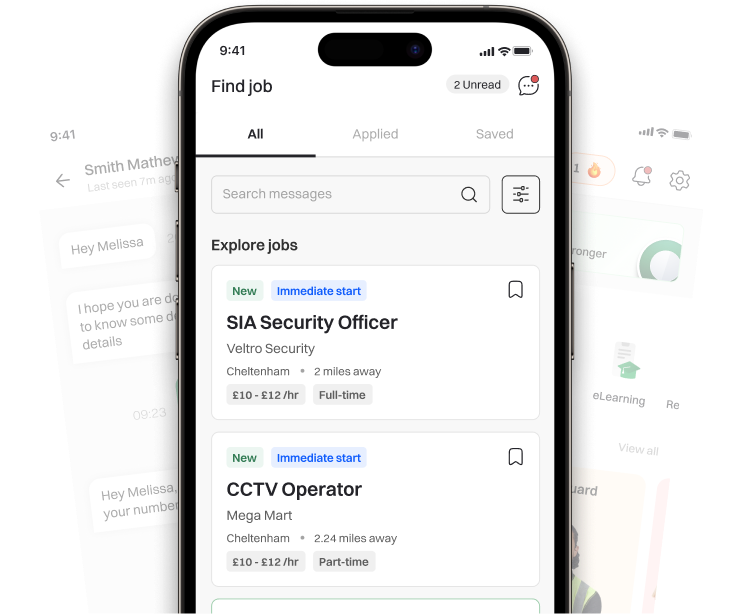

Frontline. Connected.
Connecting security officers, employers and police, with support from Alpha One, the AI in the system.
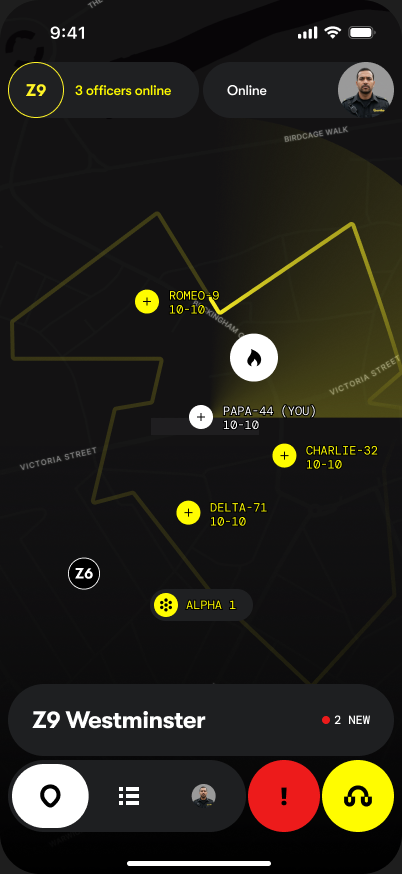
Safety you can feel.
Neighbours looking out for each other. Building safer, more connected streets through verified homes and the people who live in them.


 BiruniSystems
AI-forward engineering.
Senior engineers working alongside organisations across industries to build AI systems, automate workflows and modernise software.

Questions I get asked
I think in pictures. These are my visual notes on how AI works, what agents can do and what it means for the way I work.
Explore all my computing notesSwipe through the notes →
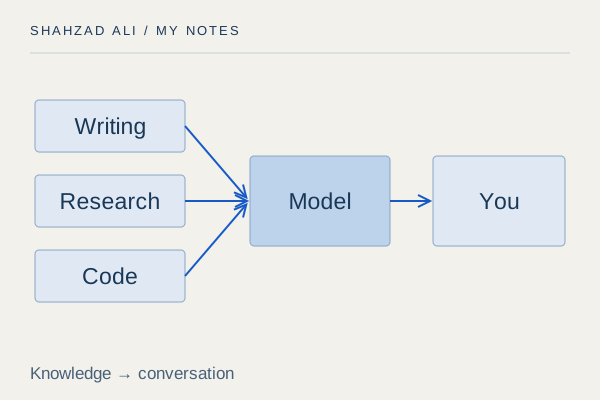
My reflection on the collective knowledge behind the machine.
Open my note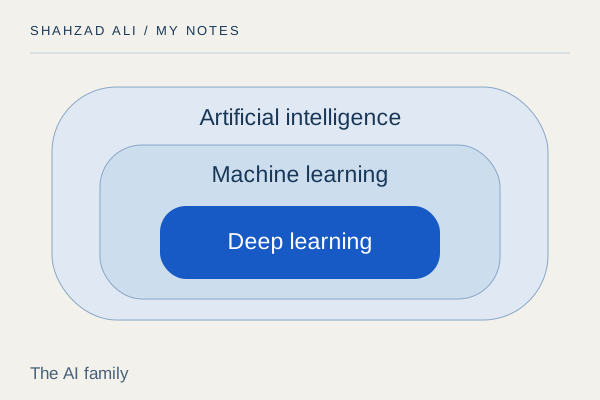
Learning methods, model designs and the jobs they do.
Open my note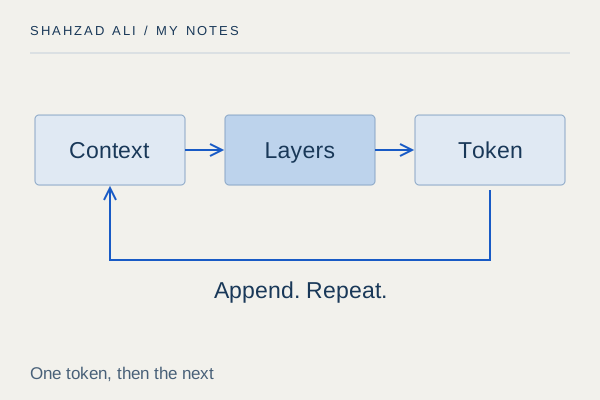
Follow a GPT-style model from text to the next token.
Open my note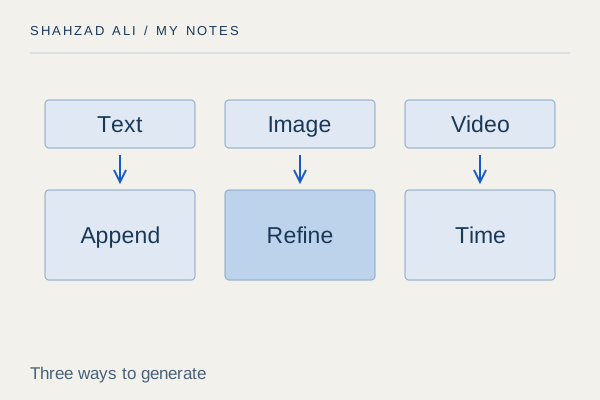
Three kinds of output, and the processes behind them.
Open my note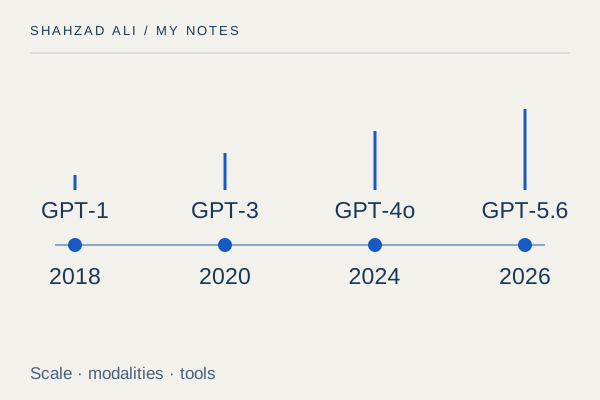
Selected milestones and how to read model comparisons.
Open my note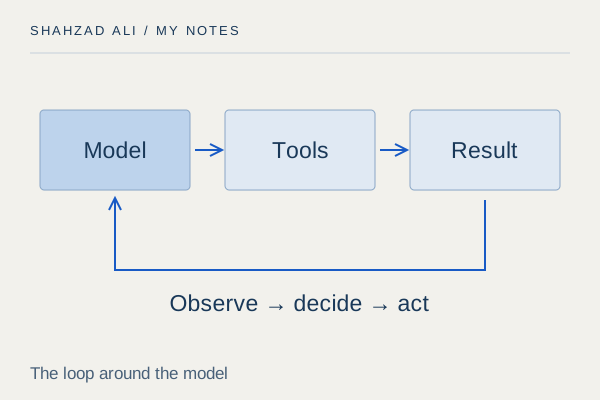
The tools, memory and decision loop around the model.
Open my note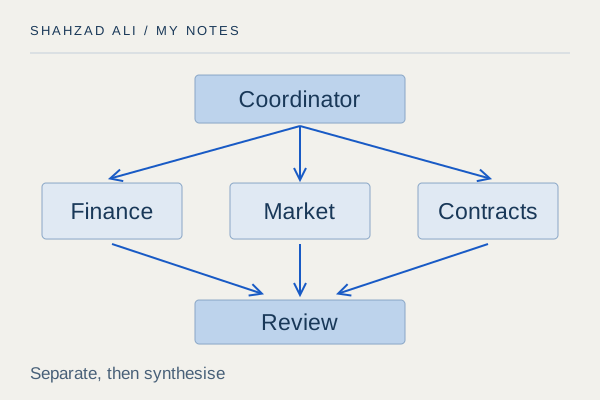
Two illustrated examples: acquisition and sales research.
Open my note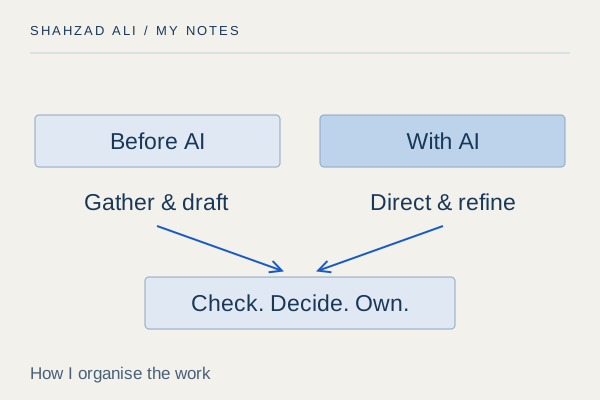
Setting the goal, delegating work and judging the result.
Open my noteCurrently building
 Living City Model
A connected city
Underground journeys, weather, air quality and events shape the local picture. News, public reports and police ward updates add context. Security workers share what they know and receive briefings from Alpha One as the shared picture changes.
Currently working on
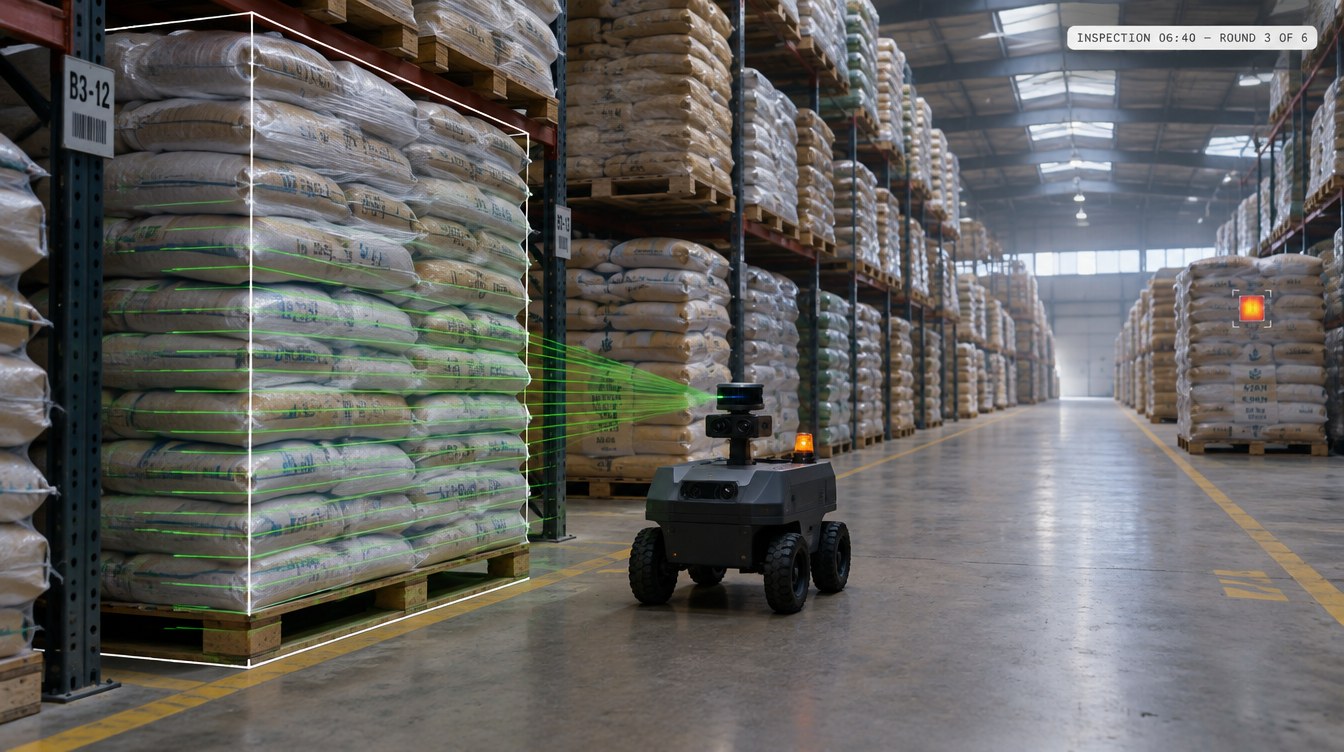
Biruni Robotics · ARIA
I’m working with Biruni Systems on ARIA, an autonomous inventory robot. I’m figuring out how it can move through a warehouse, see the stock and recognise what has changed.
Written reflections
AI & the future
I’ve started thinking of a computer as a collective-looking machine.
Building things
Crazy busy week.
Building things
Today I launched OnSiren with my team. We’re seeing a new signup every few seconds, and we’ll probably end the day with 2,000 to 2,500 people signed up. It is early, and we have a great deal to learn.
I keep speaking to people in senior roles who know AI matters but are waiting for someone from outside to come and implement it.
Working in security means understanding people. That includes understanding what speaking English means to someone who grew up in a different culture.
I often think about the difference between arrogance and confidence. Arrogance ties my identity to being right. Confidence gives me the security to admit when I’m wrong. I can change my mind and still trust myself.
Building things
I would have very little of what I have today if I had never been a security guard. That job taught me accountability, responsibility and ownership. People relied on me. I took that seriously.
Building things
The mission for the security industry should be to increase both the status of security workers and their actual contribution. The two belong together.
Life
I was thinking about the world as a theme park. There are so many games you can play. You can become an entrepreneur, a teacher, a doctor, a father or a mother. Each role gives you something different to experience.
We’re worried about how powerful AI might become. I keep wondering how much attention we give to developing our own ability to think.
AI & the future
From Earth came the silicon. From silicon came the chip. From the chip comes the intelligence.
AI & the future
Predict what comes next. Compare it with what happens. Get slightly less wrong next time.
Building things
In the UK, we like calling a security guard a security officer. We expect judgement, professionalism and the ability to deal with difficult situations. Then we build contracts around paying that person as little as possible.
Learning
I thoroughly enjoyed reading Swami Chinmayananda. There is a talk of his on Karma Yoga and goals that I really like.
When I used to fix computers, there was a thought: most problems are between the chair and the keyboard.
I go back to the neurological levels in NLP a lot. Robert Dilts calls this his logical-levels framework. It gives me a way to look at different parts of a situation.
If I am going to climb a mountain, am I climbing because I want to see the view from there, or because I want people to see me from there?
A friend of mine passed away recently. I have been thinking about how often I used to run away from feelings. Now I try to sit with them.
Life
My mind is like a calculator. Give it something and it keeps calculating. It can turn almost anything into another thing to think about.
Dan Sullivan has a question I like: imagine looking back three years from now. What would have happened for you to feel happy with your progress?
I am a beneficiary of so much that I did not create. Even this website, which I am building with ChatGPT, exists because of the work of other people.
A friend invited me to Poland for a Vision Quest with a group that included people from South America. I ended up alone in a forest for three days, with no food and no water.
People
I have a user guide. I think everyone should write one. How do you work? How do you want people to communicate with you? What should someone know before working with you?
Building things
I need to stay interested in solving the problem and be willing to change the solution. I have spent years on solutions and become attached to them. Over time, the solution became linked to my identity. Accepting that it had failed became fucking difficult.
Building things
My first business was Shahab’s Tuck Shop. I was 10. Shahab is my younger brother, who works with me now.
I would not have done what I have done without Madiha.
Learning
I became very greedy in learning. I still am.
One thing I learned through YPO is to share my experience. I can tell you what happened to me, what I did and what I learned from it. You can decide whether any of it is useful.
AI & the future
What a delight to be alive right now. If you like building digital things, I think this is a golden age for trying.
Learning
When I get stuck with something, I inspect my thinking first. What am I telling myself about this? How am I representing the situation? I often find that the way I am thinking is creating a large part of the problem I am experiencing.
People
Sometimes I look at who I am and see little pieces of so many other people. Their ideas, their experiences, things they have said that stayed with me. We learn so much from each other.
Learning
As a child, whenever I got a new toy, I had this uncontrollable urge to find out what the fuck was inside it. My parents would go to sleep and I would start taking it apart.
One of the coaching questions I return to is: “Okay, what are you going to do about it?”
Does life have an inherent purpose? I don't know. Maybe the purpose of life is living.
I want to live fully in the world. Explore it, create things, pursue my desires and understand myself as I go. That is how I think about spiritual practice.
I like the idea that a man fulfils his manhood by serving his mission and bringing joy to his home.
Learning
I see how easily, in religion, we can fall in love with a personality and lose sight of the message. We follow the person. Then we argue about the person someone else follows.
Life
What I notice in another person can tell me something about what matters to me. If wealth is on my mind, I may notice the watch or the car. If I am interested in knowledge, I may notice what the person understands. If I am focused on bodies, I may notice someone’s body shape.
People
I often make this mistake when hiring people. I keep thinking about how they disappointed me in the job, then realise I did not assess them correctly. I placed an expectation on the person and later blamed them for the gap.
My little defeats happen when I commit to doing something and then leave it undone. I said I would do it. I knew what I had committed to.
Earl Nightingale described success as “the progressive realization of a worthy ideal.” I like the idea that moving towards something worthwhile already counts.
I like to look at my life as a game. Shahzad is the character, and I am the one playing him. That makes it feel lighter and more fun to me.
Integrity, to me, is when my thoughts, words and deeds are aligned. That means telling the truth, especially when it is difficult.
Wealth, for me, is the freedom to choose. What I experience, where I go, when and where I work, who I work with and what I build.
I think of my thoughts as options. I don't have to review every one of them.
There's a line from Pascal I like. In one English translation of Pensées, he writes that “all the unhappiness of men arises from one single fact, that they cannot stay quietly in their own chamber”.
Learning
I often return to Polonius's advice to his son Laertes in Shakespeare's Hamlet. To me, it is timeless wisdom.
Naval talks about desire as an agreement to be unhappy until we get what we want. That makes me question how I pursue things.
One thing that works for me is service. Find something that feels uniquely yours, keep pursuing it and make it useful to other people. That is the direction I keep coming back to.
Building things
Sometimes I question why I am doing this. Why even make this website?
My curiosity takes me into human optimisation as well. I follow Dr Robin Carhart-Harris and find the direction of psychedelic research interesting. I also follow Andrew Huberman and Bryan Johnson.
I think of religion as a harness for human intelligence. Intelligence can go rogue when it's being used to pursue whatever we desire.
In early January I was down with norovirus. Totally flat out. I couldn't move. The only thing I wanted was my energy back.
I think of beliefs as forecasts. They are our predictions about how the world works. The results tell us how well our model is tracking reality.
AI & the future
When I think about AI and the future, I come back to something Terence McKenna said: “You don’t know enough to worry.”
AI & the future
I was listening to Tobi Lütke, Shopify's founder and CEO. One idea stayed with me: we talk about being afraid of superintelligence, but perhaps society is already a form of it.
Learning
We can learn almost anything now. There's so much content available through NotebookLM, Gemini, other large language models and YouTube.
AI & the future
When it comes to writing English, AI is becoming an equaliser. My office administrator and the kitchen staff in our Pakistan office can now use AI to write English as well as anyone.
AI & the future
Whatever this AI thing is, we're all collectively midwifing it.
AI & the future
We're making two-year and three-year plans when we don't even know what will be possible two AI models from now.
AI & the future
When I gave my son my iPad, he became frustrated with the real world. It made me think about how quickly technology changes our expectations.
People
In a group, how easy is it for everyone to assume somebody else is doing the work? That's the question behind a note I saved about social loafing.
People
The awareness I bring to what I'm doing matters. I can pursue something seriously and still leave room for peace and enjoyment along the way.
My notes on Adlerian psychology bring me back to taking responsibility for my choices and pursuing what matters to me.
When I have a particularly convincing explanation for something, I want to look at what it allows me to avoid.
Knowing that I have a blind spot gives me a question to investigate. I still need feedback, evidence and people who can see the situation from somewhere else.
People
Direct feedback can be uncomfortable to hear. I want to give the substance enough attention to ask whether it is accurate and what I should do with it.
Learning
There is a lot of satisfaction in finding another useful idea. I want some of that satisfaction to come from putting an idea to work.
Learning
I can save an idea in seconds. Understanding it takes longer.
Building things
Taking responsibility for my work includes finding out when I've done it badly.
Building things
I like creating things, changing them and sometimes taking them apart so they can work differently.
People
If I keep editing my personality to be liked, the relationships I form depend on me keeping that version going.
I can describe a big ambition very easily. What would somebody learn about it by watching how I spend an ordinary week?
The environment around me keeps suggesting what to do next. An open conversation, a notification, something left unfinished in front of me.
Building things
Before putting more energy into something, I want to be clear about the direction. What result am I trying to create, and is this activity moving it forward?
Building things
When I can make a small mistake and recover from it, I can try something and learn from the result.
I want reflection to lead somewhere. After thinking something through, what decision follows? After the decision, what am I going to do?
A lot of outcomes depend on things beyond me. I can still look closely at the part I can influence and take responsibility for that.
Life
When a feeling is intense, I want to give myself time to notice it before making a decision.
I want to notice what I bring into a conversation. The irritation or impatience may have started hours earlier, in something completely unrelated.
Building things
A new opportunity can be very appealing. I want to ask what happens to the work I've already chosen if I take it on.
Leading includes sitting with the discomfort of a decision when I have incomplete knowledge.
I can offer someone an opportunity. They have to bring their own determination to it.
Building things
I can get caught up thinking about an exit as the point at which the business becomes a success.
Building things
A venture can change what I am capable of. I want to notice what I learn, how I make decisions and what I can do afterwards that I couldn't do before.
Me, in conversation · Frontline podcast
“My personal ceiling is the business’s ceiling.”
Why I keep investing time and money in learning.
Open on YouTube1 / 12
Frontline · Episode 6 ·
Full conversation · 1 hr 40 minMy story
My playlists